
You close the door.
Your dog watches calmly.
No barking. No destruction. No chaos.
So you assume everything is fine.
But what if it isn’t?
Veterinarians and behaviorists agree on one thing: separation anxiety rarely starts with dramatic destruction.
It starts quietly—through small, easy-to-miss behaviors that look harmless until they escalate.
This article uncovers the silent early signs of separation anxiety in dogs, why they’re misunderstood, and what you can do before the problem becomes severe.
Why Separation Anxiety Is So Common (And So Misunderstood)
Dogs are social animals.
They evolved to stay close to their group.
Modern life asks them to do the opposite—stay alone, quietly, for hours.
Separation anxiety isn’t disobedience.
It’s panic triggered by isolation.
And here’s the part most owners miss:
A dog doesn’t need to destroy furniture or howl nonstop to be anxious.
Many dogs internalize stress instead of expressing it loudly.
The First Silent Sign: Over-Attachment When You’re Home
Before anxiety shows up when you leave, it shows up when you’re present.
Watch for:
- Following you from room to room
- Sitting outside the bathroom
- Becoming unsettled when you stand up
- Always needing physical contact
This behavior often gets labeled as cute or loving.
In reality, it can be the foundation of separation anxiety.
Subtle Sign #2: Intense “Pre-Departure” Anxiety

Many dogs don’t panic after you leave.
They panic before you go.
Look closely when you:
- Pick up keys
- Put on shoes
- Grab your bag
- Change clothes
Early anxiety signs include:
- Pacing
- Lip licking
- Yawning
- Freezing or staring
- Leaving the room
These signals are quiet—but meaningful.
Subtle Sign #3: Loss of Appetite Only When Alone
Some anxious dogs refuse food only when their owner is gone.
They may:
- Ignore treats you leave behind
- Eat immediately when you return
- Lose interest in enrichment toys when alone
This isn’t stubbornness.
It’s stress suppressing appetite—similar to how humans feel during anxiety.
Subtle Sign #4: Excessive Sleeping While You’re Away

This one surprises many owners.
Instead of destroying things, some anxious dogs:
- Sleep excessively
- Stay motionless for hours
- Wait by the door without moving
This is shutdown behavior, not relaxation.
The dog isn’t calm—he’s emotionally overwhelmed.
Subtle Sign #5: Repetitive, Quiet Behaviors
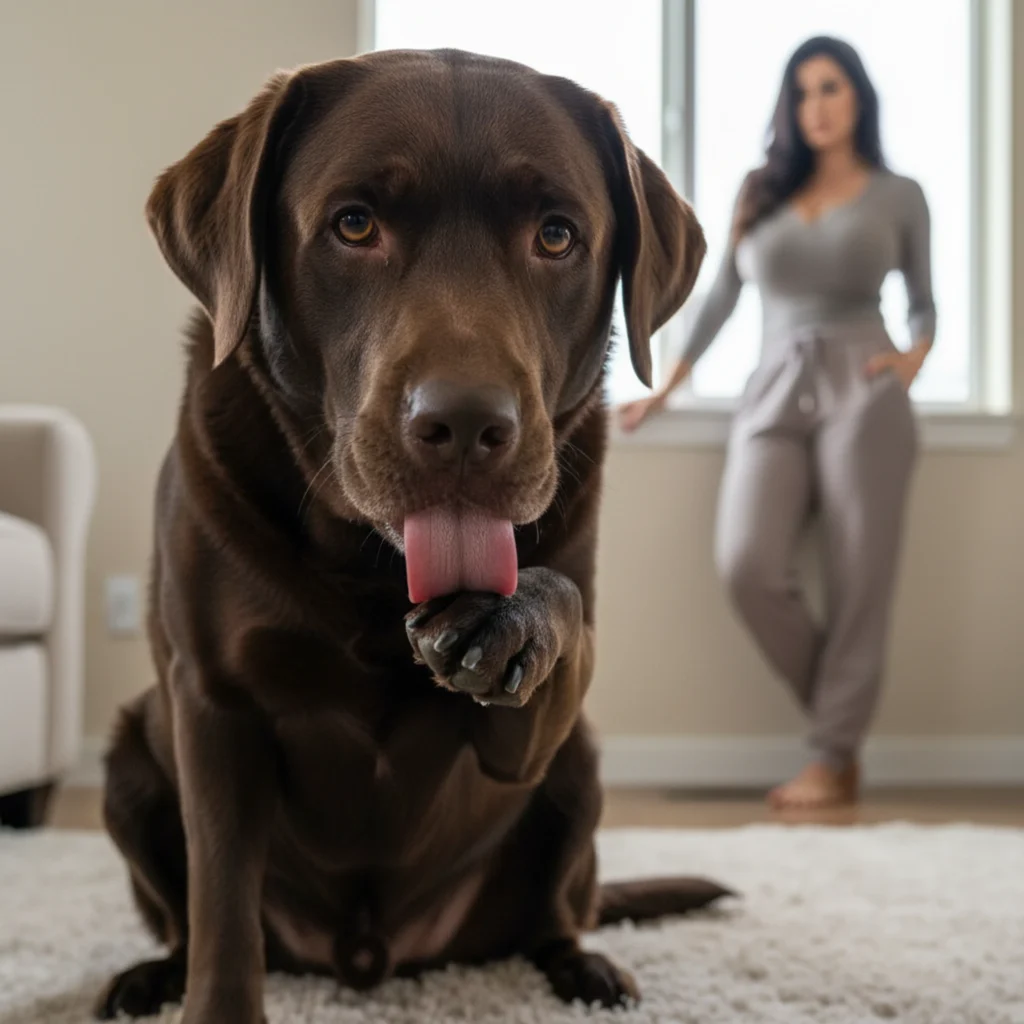
These often go unnoticed on cameras:
- Repeated yawning
- Constant repositioning
- Licking paws
- Whining softly
- Sitting up suddenly, then lying back down
These behaviors indicate chronic low-grade anxiety, not boredom.
Subtle Sign #6: Accidents in an Otherwise House-Trained Dog
A dog with separation anxiety may:
- Urinate shortly after you leave
- Defecate near exits
- Have accidents only when alone
This is stress-related, not a training failure.
Punishment worsens the anxiety.
Subtle Sign #7: Over-Excitement When You Return

Many owners see this as affection.
But extreme greetings—jumping, crying, spinning, vocalizing—can indicate:
- Emotional distress
- Relief response
- Fear of abandonment repeating
Healthy dogs are happy to see you.
Anxious dogs are desperate.
Separation Anxiety vs Normal Attachment
| Behavior | Normal Bonding | Separation Anxiety |
|---|---|---|
| Following owner | Occasional | Constant |
| Alone time | Relaxed | Distressed |
| Eating alone | Normal | Refuses food |
| Greetings | Happy | Intense, frantic |
| Accidents | Rare | Only when alone |
| Sleep | Balanced | Shutdown or restless |
Real-Life Example Vets See Often
A 3-year-old Labrador never barked or destroyed anything.
Owner thought he was “easy.”
A camera revealed:
- Sitting by the door for 4 hours
- Refusing treats
- Heavy sighing
- No movement
This dog wasn’t calm.
He was silently anxious.
Early intervention prevented full-blown panic later.
Common Mistakes That Make Anxiety Worse
Avoid these:
- Making dramatic goodbyes
- Sneaking out quietly every time
- Punishing accidents
- Getting another dog “to keep company”
- Leaving anxious dogs alone for long periods without training
Well-intended actions often backfire.
Actionable Steps to Help Early Separation Anxiety
1. Build Independence While You’re Home
- Encourage solo resting spots
- Avoid constant physical contact
- Reward calm independence
2. Neutralize Departure Cues
- Pick up keys without leaving
- Put on shoes randomly
- Break the cue-panic cycle
3. Practice Short Absences
- Leave for seconds, not hours
- Gradually increase duration
- Return calmly
4. Use Mental Enrichment (Not Just Toys)
- Snuffle mats
- Food puzzles
- Calm-inducing routines
5. Seek Professional Help Early
Early behavior support prevents medication later.
Why This Matters Today
Dogs today:
- Spend more time alone
- Form deeper human bonds
- Live longer with chronic anxiety risks
Unchecked separation anxiety doesn’t just damage furniture—it affects:
- Immune health
- Digestion
- Heart rate
- Quality of life
Catching it early changes everything.
Key Takeaways
- Separation anxiety often starts silently.
- Calm behavior doesn’t always mean comfort.
- Early signs appear before destruction.
- Anxiety is emotional distress, not bad behavior.
- Early training saves years of stress.
FAQ: Separation Anxiety in Dogs
1. Can a dog have separation anxiety without barking or destruction?
Yes. Many dogs internalize stress instead of acting out.
2. Is clinginess always a problem?
Not always—but extreme dependency can signal early anxiety.
3. Can puppies grow out of separation anxiety?
Only with proper guidance. Ignoring it often makes it worse.
4. Should I get another dog to fix it?
Usually no. Anxiety is about human attachment, not loneliness.
5. When should I consult a vet or behaviorist?
If anxiety affects eating, elimination, or daily wellbeing.
Conclusion
Your dog may look calm when you leave.
Your house may stay intact.
But anxiety doesn’t always scream.
Sometimes, it waits quietly by the door.
Noticing the early signs isn’t overthinking—it’s responsible love.
And when addressed early, separation anxiety is one of the most manageable behavioral issues in dogs.

Dr. Sofia Romano, DVM, is an experienced veterinarian specializing in small-animal medicine and preventive care. She has treated thousands of cases using evidence-based diagnostics and modern clinical practices. Dr. Romano is dedicated to providing science-backed pet-health guidance that helps owners make informed decisions and improve their pets’ quality of life.




Pingback: What Your Dog’s Sleeping Position Says About Their Health
Pingback: Why Your Dog Suddenly Stops Eating (Real Reasons + Fixes)
Pingback: Why Your Dog Acts Different After Grooming (The Reasons Most Owners Don’t Expect)
Pingback: Why Dogs Eat Dirt Or Mud — Is It A Nutrient Deficiency Or Something Else?
Pingback: Why Dogs Suddenly Explode With Energy At Night — The Real Science Behind Zoomies (Every Owner Should Know)
Pingback: Why Your Dog Suddenly Wants To Sleep Alone (The Quiet Reasons Most Owners Miss)
Pingback: Why Adult Dogs Still Chew Everything — The Hidden Reasons Owners Overlook
Pingback: The Silent Signs Of Anxiety In Puppies Most Owners Miss (And How To Fix Them Early)
Pingback: Why Dogs Roll In Garbage Or Dead Animals — The Instinct Owners Don’t Expect
Pingback: Why Dogs Suddenly Start Digging Indoors — The Hidden Reasons Most Owners Miss
Pingback: Why Dogs Are Afraid Of Men More Than Women (The Psychology Behind This Common Fear)
Pingback: Why Your Dog Suddenly Refuses To Eat Dry Food (Real Reasons Vets See Every Day)
Pingback: The Real Reason Your Dog Won’t Listen To You — It’s Not Stubbornness
Pingback: Why Dogs Destroy The House When You Leave — The Real Reasons Vets And Trainers See
Pingback: Why Your Dog Pants Even When It’s Not Hot — Hidden Causes Vets Watch For
Pingback: Why Dogs Eat Their Own Poop — Behavioral And Medical Causes Vets Explain
Pingback: Why Dogs Chase Their Tail — Cute Habit Or Hidden Medical Warning?
Pingback: Why Your Dog Suddenly Refuses Walks — Hidden Reasons Most Owners Miss
Pingback: 10 Things You’re Doing That Accidentally Stress Your Dog — A Vet-Backed Reality Check
Pingback: Why Your Dog Suddenly Becomes Clingy — A Vet Explains The Triggers Most Owners Miss
Pingback: Why Your Dog Suddenly Starts Barking At Night — A Vet Explains The Hidden Reasons
Pingback: Why Your Dog Is Drinking So Much Water Suddenly — What It Really Means
Pingback: Why Dogs Lick Their Owners Excessively — What They’re Really Trying To Say
Pingback: Why Dogs Hump Even When Neutered — The Real Reasons Vets And Trainers Explain
Pingback: Why Dogs Start Fighting With Other Pets — The Hidden Triggers Most Owners Miss
Pingback: Why Dogs Get Constipated — Vet Solutions That Actually Work
Pingback: Why Dogs Eat Too Fast — The Dangerous Condition Behind This Habit Most Owners Miss
Pingback: Why Dogs Hate Their Crate Suddenly — The Hidden Reason This Safe Space Stops Feeling Safe
Pingback: Why Dogs Act Different After Visiting The Vet — What Their Behavior Is Really Telling You
Pingback: Why Dogs Stay Close When You’re Sick — The Deep Instinct That Makes Them Your Quiet Guardian
Pingback: How Domestication Changed Dog Brains Forever — The Invisible Evolution Inside Your Pet
Pingback: Why Dogs Pace The House Repeatedly — The Quiet Signal Something Isn’t Settled Inside
Pingback: Why Dogs Suddenly Stop Playing — The Quiet Shift In Mood, Body, Or Mind Most Owners Miss
Pingback: Why Dogs Hide More Than Usual — The Quiet Signal They’re Hoping You’ll Notice
Pingback: Why Dogs Sit Facing Away From You — The Surprisingly Meaningful Behaviour Most Owners Misread
Pingback: Why Dogs Develop Anxiety After Surgery — What Their Brains Experience That Owners Never See
Pingback: The Dangerous Home Items Every Dog Owner Should Remove Immediately
Pingback: Why Dogs Bark At Nothing — Vets Explain What They’re Really Reacting To
Pingback: Why Your Dog Won’t Sleep At Night Anymore — Vet Causes Most Owners Miss
Pingback: Why Dogs Burp Or Hiccup Frequently (What It Really Means For Their Health)
Pingback: Why Dogs Snap When Touched In Certain Areas — The Hidden Pain And Fear Signals Owners Miss
Pingback: Why Puppies Vocalize At Night — The Quiet Biological Reasons Behind Night-time Crying, Whining, And Barking
Pingback: Why Dogs React To Silence More Than Noise — The Quiet Trigger That Makes Dogs Uneasy