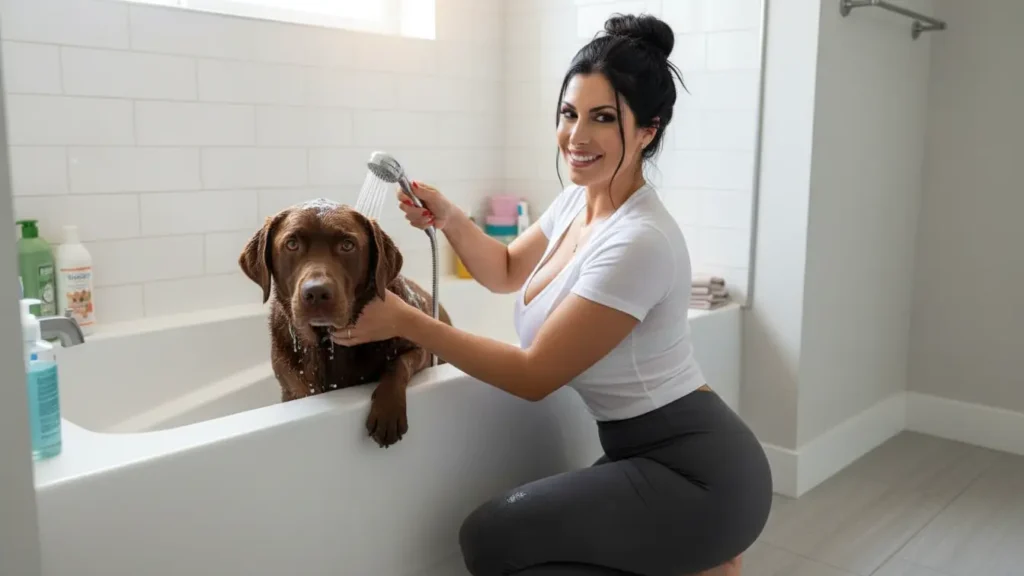
Your dog goes in one way and comes home a little bit someone else — clingier, quieter, oddly shaky, or suddenly zooming around the house like something’s chasing them. It happens often enough that most groomers and vets treat it as completely unremarkable, but it’s rarely explained well to owners in the moment, which leaves a lot of people genuinely worried they’re watching something wrong. Most of the time, they’re not — but knowing which specific behavior you’re seeing actually matters for telling the difference.
Reading the Specific Behavior
Post-grooming behavior isn’t one single thing — it’s a cluster of different reactions, and each one tends to point toward a slightly different cause.
Hiding or unusual clinginess most often reflects straightforward stress recovery. A grooming session, even a good one, asks a lot of a dog: extended handling, staying still, unfamiliar people and tools. Retreating somewhere quiet or sticking close to you afterward is frequently just decompression, not distress about anything specific.
Trembling or shaking is commonly a physiological release of built-up tension — a dog’s body processing accumulated stress hormones after a period of forced stillness and sensory input, similar in principle to how a person might feel shaky after a stressful appointment even once it’s over.
Excessive licking, particularly of paws, legs, or the groin area, is frequently self-soothing behavior — a stress-coping mechanism — though it’s also worth checking as a genuine physical response to lingering shampoo residue or mild skin irritation from the grooming process itself, especially if it’s localized and persistent.
Sudden bursts of hyperactivity or zoomies, somewhat counterintuitively, can be the flip side of the same coin as hiding — a release of pent-up nervous energy once the stressful part is over and a dog suddenly has freedom of movement again, not unlike the general pattern behind ordinary zoomies elsewhere in a dog’s day.
General quietness or lethargy for the rest of the day is usually just what it looks like: grooming is physically and mentally taxing, closer to a workout than most owners realize, and some dogs simply need to rest and recover afterward.
The Scent Theory Worth Knowing (and Being Careful With)
One popular explanation floating around is that dogs feel disoriented after grooming because their own scent — which plays a real role in how dogs process identity and familiarity — has been stripped away and replaced with something foreign. It’s a genuinely interesting idea, and dogs certainly do rely heavily on scent in ways humans don’t fully appreciate. But it’s worth being honest that this remains a popular, plausible theory rather than a rigorously confirmed one — there isn’t formal research directly testing whether scent loss specifically drives post-grooming behavior change, as opposed to the more straightforward and better-supported explanation of general stress and sensory overload. It’s reasonable to hold both ideas at once: scent change might be part of what feels unfamiliar to a freshly groomed dog, layered on top of the more clearly established stress response.
It’s Not Always Purely Emotional
This is the part worth taking seriously rather than defaulting straight to “they’re just stressed.” Grooming involves several moments of genuine physical vulnerability, and real discomfort during the process can absolutely carry over into afterward. Anal glands are sometimes expressed externally during a grooming session, which can cause temporary irritation — showing up as a dog walking oddly, looking back at their rear, or seeming uncomfortable sitting. Clippers can nick skin or cause minor irritation, particularly around sensitive areas like the ears, paws, or groin. Staying in awkward, held positions for an extended session can leave joints or muscles genuinely sore afterward, especially in senior dogs or those with existing mobility issues. And some dogs are sensitive or mildly allergic to specific shampoos or grooming products, producing skin irritation that has nothing to do with emotional stress at all.
None of this means something went wrong at the groomer — most of these are normal, low-grade parts of a thorough grooming session. But it does mean “acting weird” sometimes has a physical explanation sitting right alongside the emotional one, and it’s worth a quick check rather than assuming purely psychological cause every time.
How Long Is Normal
Most sources point to a fairly consistent window: post-grooming behavior changes typically settle within 12 to 48 hours as a dog decompresses and readjusts. Behavior that persists meaningfully beyond that — especially past a full week — moves from “normal adjustment” into something worth a closer look, whether that’s an unaddressed physical issue or a deeper anxiety response building around the grooming experience itself.
When to Actually Be Concerned
A few specific signs are worth treating as a prompt for a vet visit rather than more patience: behavior changes lasting more than 48 hours without improvement, visible signs of pain like yelping, limping, or guarding a particular body part, visible skin wounds, redness, swelling, or rash, vomiting or diarrhea, or extreme lethargy paired with a refusal to eat or drink. Any of these suggest something beyond ordinary post-grooming decompression and deserve a real evaluation rather than a wait-and-see approach.
Making the Next Groom Easier
Because a lot of this traces back to stress and unfamiliarity rather than anything wrong with the process itself, the most effective long-term fix is building comfort with grooming outside of actual grooming appointments — handling paws, ears, and coat regularly at home, introducing the sound of clippers or a dryer in short, low-pressure sessions, and pairing all of it with treats and calm praise. Dogs who are well-socialized to handling and grooming-adjacent sensations well before their first professional appointment tend to show a noticeably milder version of this whole pattern, if they show it at all.
A little post-grooming weirdness isn’t a sign that something went wrong. It’s usually just your dog processing a genuinely intense, unfamiliar experience the best way they know how — and in most cases, a calm evening at home is really all it takes to bring them back to themselves.
Sources & Further Reading
- We Asked Vets: Why Dogs Behave Strangely After Grooming — Not A Bully
- Why Is Your Dog Acting Weird After a Groom? 7 Post-Grooming Behaviors — WisdomTail
- How Long Will My Dog Act Weird After Grooming? — Mishka Pet
- How Long Will My Dog Act Weird After Grooming: 7 Essential Things Every Owner Must Know — DogCareOn
- 7 Possible Reasons Why Dog Acting Weird After Being Shaved — RexiPets

Dr. Sofia Romano, DVM, is an experienced veterinarian specializing in small-animal medicine and preventive care. She has treated thousands of cases using evidence-based diagnostics and modern clinical practices. Dr. Romano is dedicated to providing science-backed pet-health guidance that helps owners make informed decisions and improve their pets’ quality of life.
Pingback: Why Dogs Hate Bath Time — Vet Psychology Explains What’s Really Going On
Pingback: Why Your Dog Growls At You Randomly — The Real Message Most Owners Miss
Pingback: The Early Signs Of Liver Trouble In Dogs Most Owners Overlook
Pingback: Why Your Dog Walks In Circles — When It’s Normal And When It’s Not
Pingback: Why Your Dog Won’t Let You Trim Their Nails (The Real Reasons Behind The Struggle)