
A dog crouched in the yard, straining, again and again, with nothing happening — it’s one of those moments that looks alarming precisely because it’s so obviously uncomfortable. Most of the time, it’s constipation: common, usually manageable, and rarely as scary as it looks in the moment. But “usually manageable” isn’t the same as “ignore it,” and knowing the difference is exactly where a lot of owners get stuck.
What’s Actually Going Wrong Inside
Constipation happens when stool moves through the colon too slowly. The colon’s job is to absorb water from waste as it passes through — so the longer stool sits there, the more water gets pulled out of it, and the harder and drier it becomes. Eventually it’s dry enough that a dog can feel the urge to go, and even crouch and strain to do it, without being able to actually pass anything.
The list of underlying causes is longer than most owners expect, and it isn’t always about diet:
- Low fiber or inadequate water intake — the most common and most fixable cause
- Swallowed non-food items — hair, bone fragments, grass, or foreign objects that don’t move through easily
- Pain that makes the squatting posture difficult — arthritis or anal gland problems can make a dog physically unable to posture normally to defecate, even when the urge is there
- An enlarged prostate in unneutered male dogs, which can physically narrow the space stool needs to pass through
- Dehydration or underlying kidney and metabolic issues, especially in older dogs, which pull extra water out of the gut and worsen dry stool
- Reduced exercise or mobility, since physical activity helps stimulate normal intestinal movement
Because pain and reduced posturing ability are on that list, it’s worth remembering that constipation itself can sometimes be a downstream symptom of a dog quietly compensating for something else — arthritis being a common example most owners wouldn’t automatically connect to bathroom habits.
When It Crosses From “Watch and Wait” to “Call the Vet”
Veterinary guidance is fairly consistent on timing: most dogs have at least one bowel movement daily, and going roughly 48 to 72 hours without one is generally the point where a veterinary visit is warranted, sooner if other symptoms are present.
Certain signs should move you from “keep an eye on it” to “call today,” including:
- Repeated, forceful straining with nothing produced
- Vomiting, lethargy, or a visibly painful, swollen abdomen
- Crying or obvious distress while attempting to go
- Any uncertainty about whether the dog is straining to defecate versus straining to urinate — the latter is a genuine emergency and the two can look similar to an untrained eye
Left untreated, ordinary constipation can progress to obstipation — a severe, complete blockage the dog can’t clear on their own — and eventually to megacolon, a condition where the colon becomes so stretched and weakened that it loses the ability to contract and move stool at all. Megacolon sometimes requires manual removal of impacted stool under anesthesia, or in chronic, severe cases, surgery. It’s not the typical outcome of a mild bout of constipation, but it’s exactly why “it’ll probably pass on its own” isn’t a safe default once a dog has gone multiple days without a bowel movement.
What Genuinely Helps, According to Veterinary Guidance
For mild, uncomplicated cases — and only after a vet has ruled out something more serious — commonly recommended approaches include:
- Increasing water intake, since dehydration is one of the most fixable contributors to hard, dry stool
- A veterinarian-guided increase in dietary fiber, sometimes through a fiber supplement or a short-term diet change, tailored to the specific dog rather than applied blindly
- Encouraging regular movement and exercise, which helps stimulate normal gut motility
- Limiting access to bones and other hard-to-digest items that are a common, preventable cause of impacted stool
What Not to Do at Home
This is the part where good intentions can genuinely backfire. Veterinary sources are direct about one specific danger: never give a dog a human over-the-counter enema. Some commercially prepared enema products made for people contain phosphate compounds that are toxic to dogs and cats, and can cause serious, potentially life-threatening electrolyte disturbances. If an enema is needed, it should be a product specifically chosen and administered by a veterinarian — not something picked up at a pharmacy.
The same caution applies to human laxatives, stool softeners, or mineral oil given without veterinary guidance — dosing, safety, and appropriateness vary by the underlying cause, and using the wrong product can mask a more serious problem or cause harm on its own.
What a Vet Visit Actually Involves
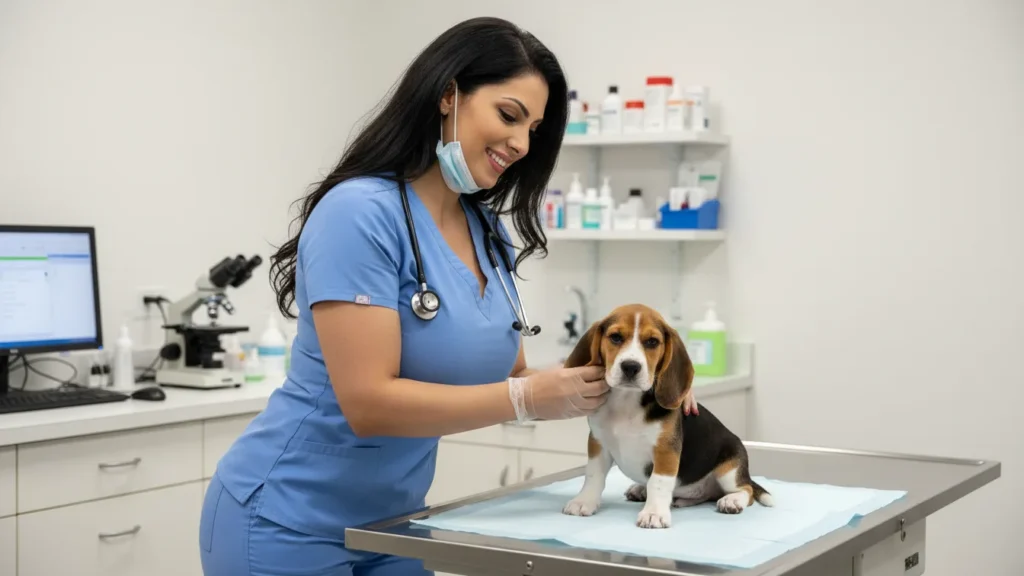
For a case that needs professional treatment, the process is usually more straightforward and less invasive than owners expect. A vet will typically start with a physical exam and history, often followed by an X-ray to see how much stool is backed up and to check for an obstruction, an enlarged prostate, or a distended, stool-filled colon consistent with megacolon. Bloodwork is common in older dogs to check hydration status and rule out kidney or metabolic issues contributing to the problem.
Treatment is scaled to severity: mild cases are often managed with fluids to rehydrate the stool from the inside, dietary changes, and a vet-prescribed stool softener or laxative appropriate for dogs. More significantly impacted stool sometimes needs to be manually removed under sedation, done this way specifically so it can happen safely and without unnecessary pain. Most dogs recover quickly and go home the same day, and the overall outlook is good once the underlying cause is identified and addressed.
Occasional, mild constipation isn’t usually a reason to panic — most dogs bounce back within a day or two with simple support. But because the same symptom can, in a smaller number of cases, be the first sign of something more serious, the safest approach is the boring one: give it a short window, watch closely for the warning signs above, skip anything from a human pharmacy shelf, and call your vet rather than waiting it out indefinitely.
Sources & Further Reading
- Constipation in Dogs — VCA Animal Hospitals
- Dog Constipation: Treatment and When To Call Your Vet — PetMD
- Constipation in Dogs — Causes & When to See a Vet — Webvet
- Megacolon in Dogs — Causes, Treatment and Associated Conditions — Vetster
- Constipation and Megacolon in Dogs and Cats — Urban Animal Veterinary Hospital

Dr. Sofia Romano, DVM, is an experienced veterinarian specializing in small-animal medicine and preventive care. She has treated thousands of cases using evidence-based diagnostics and modern clinical practices. Dr. Romano is dedicated to providing science-backed pet-health guidance that helps owners make informed decisions and improve their pets’ quality of life.



Pingback: 10 Human Foods That Are Surprisingly Safe For Dogs — Vet-Approved Guide
Pingback: Why Dogs Hate Their Crate Suddenly — The Hidden Reason This Safe Space Stops Feeling Safe
Pingback: Why Dogs Lose Muscle Even When Eating Normally — The Hidden Causes Most Owners Overlook