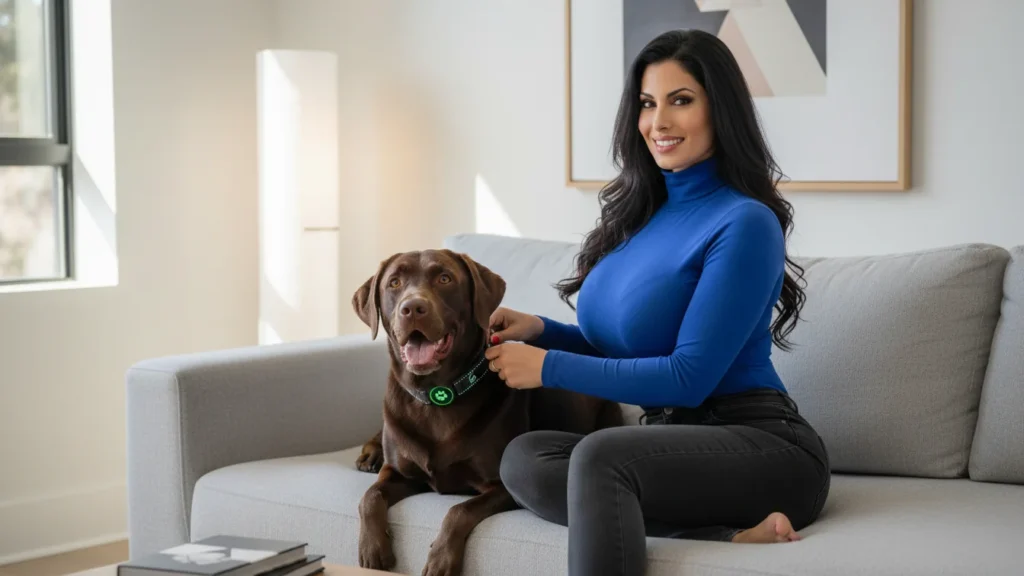
Dogs and cats are experts at hiding pain. It’s an instinct left over from their wild ancestors, who couldn’t afford to look weak in front of predators or rivals. The unfortunate result for modern pet owners: by the time your cat stops eating or your dog starts limping, the underlying problem may have been building silently for months, sometimes years.
That’s the gap artificial intelligence is now starting to close. Across veterinary clinics, research labs, and the collar on your dog’s neck, AI systems are learning to catch the tiny, easy-to-miss signals of disease long before a pet “looks sick” — sometimes catching a problem years before a vet could have found it through a normal exam. Here’s how it actually works, what it can and can’t do yet, and how to use it wisely.
Why Pets Hide Illness So Well
Cats are especially notorious for this. A cat with worsening kidney disease can look completely normal at home while its kidney function quietly declines for months. Dogs do it too, particularly with joint pain — many will keep walking, playing, and wagging their tails long after arthritis has set in, simply adjusting their gait in ways too subtle for a human eye to catch during a quick evaluation.
This is exactly the kind of problem AI is well suited for. Unlike a human observer glancing at a pet for a few minutes a day, an AI system can watch continuously, compare today’s data against weeks or months of your individual pet’s own baseline, and flag a deviation long before it becomes visible to you.
What the Research Actually Shows
This isn’t speculative marketing. Veterinary researchers have already demonstrated it works. In one notable finding highlighted by the American Veterinary Medical Association, analysis of over 100,000 feline patient records allowed chronic kidney disease to be predicted roughly two years before it would have been caught through traditional clinical diagnosis. That’s a massive head start for a disease where early dietary and medical intervention can meaningfully extend a cat’s quality of life.
Veterinary researchers are also applying similar approaches to livestock and other animals, with strong results. One study using AI-based image analysis of cattle muzzle patterns identified nearly all cases of an eye infection called infectious bovine keratoconjunctivitis before veterinarians could confirm it through visible symptoms, with very high accuracy in both catching real cases and correctly ruling out healthy animals. In poultry, thermal imaging combined with AI has been used to flag disease-related temperature changes within a day of infection, well before birds show outward signs.
The Canadian Veterinary Medical Association’s official position on the technology sums up where things stand: AI is increasingly used for clinical decision support, disease surveillance, and analysis of health records and production data, functioning as an early warning system rather than a replacement for veterinary judgment.
How This Shows Up in Your Own Living Room
You don’t need to work at a research lab to benefit from this. The same underlying technology now lives in consumer pet wearables and smart cameras:
- Smart collars and harnesses track heart rate, respiratory rate, activity level, and sleep quality continuously, building a personalized baseline for your specific pet rather than comparing them to a generic breed average.
- AI-powered cameras analyze gait and posture from video, picking up on a subtle limp or a change in how your dog gets up from lying down — often before it’s noticeable to the naked eye.
- Smart feeders and litter systems track eating habits and bathroom frequency, both of which are early tells for issues like urinary tract infections or digestive disease.
- Behavioral pattern tracking flags anxiety-related physiological changes, which matter for a dog’s mental health as much as its physical health.
The real innovation isn’t any single sensor — it’s the pattern recognition running underneath it. These systems aren’t just counting steps; they’re comparing your pet’s data against its own history and flagging meaningful deviations, then surfacing that information to you and, ideally, your vet.
A Realistic Example
Imagine a seven-year-old Labrador who still runs to greet you at the door every day, seems completely normal to every visitor, and shows no signs of pain that you can see. A wearable tracking her movement notices her stride length has quietly shortened over eight weeks and her nighttime restlessness has increased — both consistent with early arthritis. An alert goes to the owner, who mentions it at the next vet visit. A physical exam and imaging confirm early joint degeneration, and treatment starts months before the dog would have started visibly limping. That head start can mean the difference between manageable joint support and a much harder, more advanced case down the road.
The Honest Limitations
AI health monitoring is a powerful early-warning layer, not a diagnosis, and it isn’t infallible. A few things worth keeping in mind:
- It flags patterns, not conditions. An AI system can tell you something changed; it takes a veterinarian to determine what that change actually means.
- Accuracy varies by device and condition. Not every gadget on the market has been validated with the same rigor as the peer-reviewed research behind it — read reviews and look for brands that share real clinical validation data, not just marketing claims.
- It works best as a bridge to your vet, not a replacement. The goal is to get you into the exam room sooner with better information, not to skip the exam room altogether.
- False alarms happen. A device might flag something that turns out to be nothing. That’s a reasonable trade-off for catching the cases that matter, but it’s worth going in with the right expectations.
What You Can Do Starting Today
- If you’re considering a wearable or smart camera, look specifically for ones designed around personalized baselines rather than generic breed norms.
- Share any AI-generated health data with your vet at checkups — it gives them a fuller picture than a single snapshot in the exam room.
- Don’t skip annual or twice-yearly wellness exams just because a device seems to be monitoring things. Bloodwork and physical exams still catch things sensors can’t.
- Treat any alert as a reason to call your vet, not as a diagnosis in itself.
The Bottom Line
Pets can’t tell us in words when something’s wrong, and their instinct to mask pain works against early detection at exactly the moment it matters most. AI-powered monitoring is closing that gap in a meaningful, evidence-backed way — not by replacing your vet, but by giving both of you a longer head start. In a field where early detection routinely means the difference between a manageable condition and a much harder road, that head start is worth paying attention to.
This article is for general educational purposes and isn’t a substitute for individualized veterinary care. If you notice any change in your pet’s behavior, appetite, or mobility, contact your veterinarian.
Sources
- AVMA-referenced research via Ross University: Artificial Intelligence and Predictive Analytics in Veterinary Medicine
- National Library of Medicine (PMC): Early detection of infectious bovine keratoconjunctivitis with artificial intelligence
- National Library of Medicine (PMC): Early Detection of Avian Diseases Based on Thermography and Artificial Intelligence
- Canadian Veterinary Medical Association: Position Statement on Artificial Intelligence in Veterinary Medicine

Dr. Sofia Romano, DVM, is an experienced veterinarian specializing in small-animal medicine and preventive care. She has treated thousands of cases using evidence-based diagnostics and modern clinical practices. Dr. Romano is dedicated to providing science-backed pet-health guidance that helps owners make informed decisions and improve their pets’ quality of life.




Pingback: The Hidden Reason Your Dog Vomits but Acts Completely Normal
Pingback: The Early Signs Of Skin Allergies In Dogs — The Subtle Clues Most Owners Miss