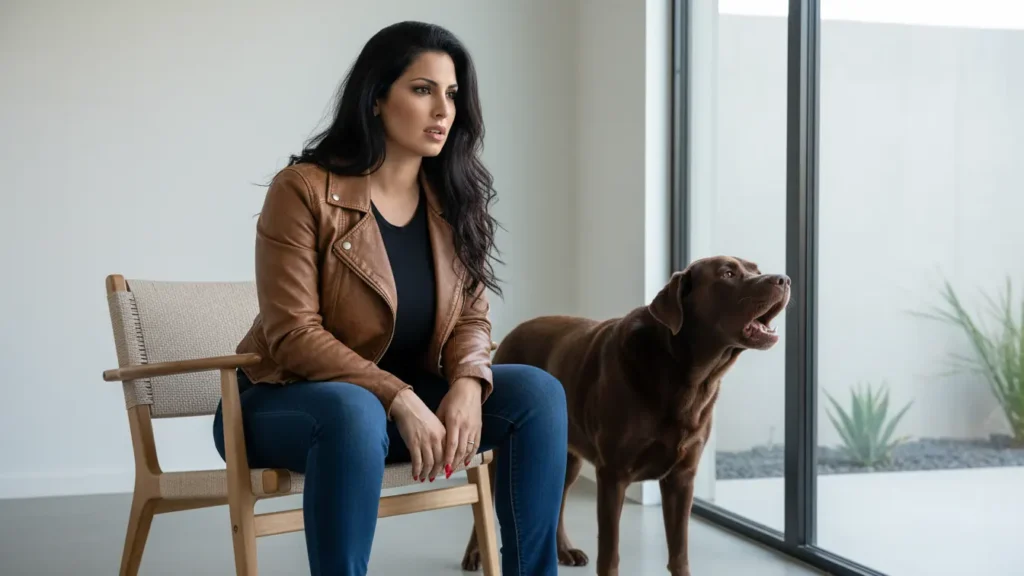
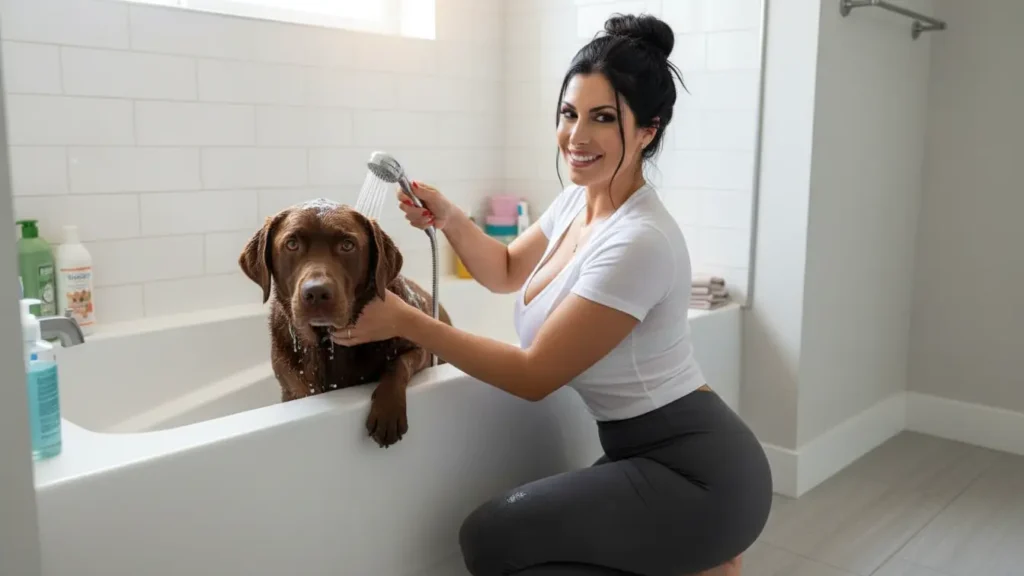
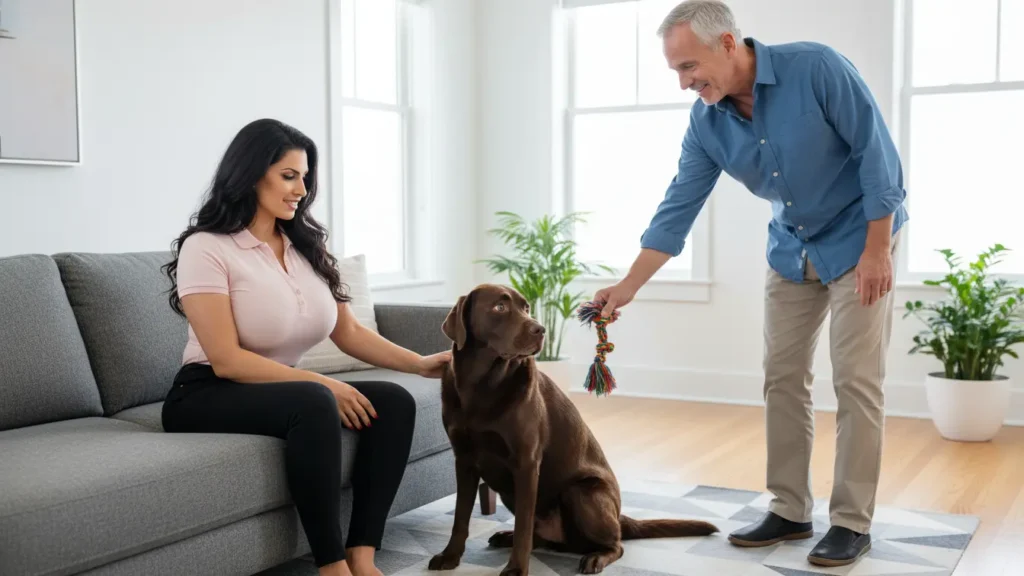
You are enjoying a beautiful, peaceful hike with your dog. Suddenly, they drop their shoulder, kick all four legs in the air, and vigorously grind their neck and back into the grass. You smile, thinking they are just enjoying the sunshine—until they trot back to you, and the smell of rotting fish or fox droppings hits your nose.
The drive home with all the windows rolled down is miserable. You are left wondering why an animal that sleeps on a memory-foam bed and eats premium salmon kibble would actively choose to cover themselves in garbage.
While it is universally disgusting to humans, your dog’s desire to roll in foul-smelling things is actually a highly sophisticated, deeply ingrained evolutionary behavior. Before you scold them, it helps to understand the fascinating survival instincts driving this pungent habit.
1. The Predator Camouflage Theory
The most widely accepted scientific explanation traces back to your dog’s ancient ancestors: the wolves.
Wolves are apex predators, but their prey (like deer and elk) have incredibly sharp senses of smell. If the wind shifts, a deer can smell a wolf coming from a mile away and easily escape. However, if a wolf rolls in the carcass of a decaying animal or the feces of an herbivore, they effectively mask their own predatory scent.
When your sweet Golden Retriever rolls in a dead squirrel, they are tapping into a primal hunting instinct. They are putting on “scent camouflage” so they can theoretically sneak up on prey undetected.
2. The Canine Bulletin Board (Information Sharing)
Dogs process the world primarily through their noses. To a canine, a strong odor is essentially breaking news.
When wild canines found something highly interesting—like a fresh carcass or a new food source—they would roll in it to absorb the scent. When they returned to the den, the rest of the pack would enthusiastically sniff them. The dog who rolled in the smell was essentially sharing a map, telling the pack, “Look what I found, and smell how far away I went to get it.”
Even though your dog is an only child living in the suburbs, bringing that terrible smell back to you is their way of sharing their exciting discovery with their pack leader.
3. Protest Against Your Fragrances
Think about the last time you gave your dog a bath. Did you use a shampoo that smells like lavender, vanilla, or tropical papaya?
While you might love a dog that smells like a spa, your dog likely hates it. A dog’s sense of smell is anywhere from 10,000 to 100,000 times more sensitive than ours. To them, artificial floral and citrus scents are overwhelming, unnatural, and deeply unpleasant.
Rolling in dirt, mud, or garbage immediately after a bath is a canine protest. They are frantically trying to scrub off the artificial perfume and restore their natural, earthy scent profile.
4. The Canine Version of Chanel No. 5
Sometimes, the explanation is incredibly simple: dogs and humans have wildly different aesthetics.
Humans love the smell of fresh laundry, baking bread, and blooming flowers. Dogs are scavengers by nature. To a dog, the sharp, pungent odor of a decaying animal or a pile of cow manure is biologically fascinating. Rolling in it is the equivalent of a human spritzing on a high-end designer cologne before a night out. They just want to smell good.
Actionable Steps: How to Save Your Car Seats
You cannot completely train the instinct out of a dog, but you can manage the behavior so you don’t have to bathe them every single day.
- Switch Your Shampoo: Ditch the heavily fragranced grooming products. Switch to an unscented, oatmeal-based dog shampoo. If your dog doesn’t feel the need to mask a strong floral scent, they are much less likely to immediately seek out a mud puddle after a bath.
- Master the “Leave It” Command: This is your best line of defense. You can usually spot the warning signs: a dog will intensely sniff a specific spot, pause, and drop their shoulder. The millisecond you see that shoulder drop, firmly say “Leave it!” and reward them heavily with a high-value treat when they look at you instead.
- The Emergency Recall: If they are off-leash, you need an emergency recall word that they know guarantees a massive reward (like real chicken or cheese). Call them back before the roll begins.
- Carry Emergency Wipes: Always keep a pack of heavy-duty, pet-safe grooming wipes in your car. Wiping down the worst of the mess before they jump into the backseat can save your upholstery until you get to a bathtub.
Key Insight: Never physically punish your dog after they roll in something foul. They do not associate the punishment with the act of rolling; they only learn that you are dangerously angry when they return to you.
High-Authority Sources & Veterinary References
To better understand your dog’s fascinating evolutionary quirks, rely on science-backed canine behavior resources. The insights in this article are supported by:
- American Kennel Club (AKC): An in-depth look at the evolutionary reasons behind Why Dogs Roll in Smelly Things.
- PetMD (Veterinary Authored): Clinical and behavioral explanations for Why Dogs Roll in Dead Animals.
- VCA Animal Hospitals: Understanding canine sensory processing and Scent Rolling Behavior.
- International Association of Animal Behavior Consultants (IAABC): Training strategies for managing instinctual drives using Positive Reinforcement and Redirection.

Dr. Sofia Romano, DVM, is an experienced veterinarian specializing in small-animal medicine and preventive care. She has treated thousands of cases using evidence-based diagnostics and modern clinical practices. Dr. Romano is dedicated to providing science-backed pet-health guidance that helps owners make informed decisions and improve their pets’ quality of life.