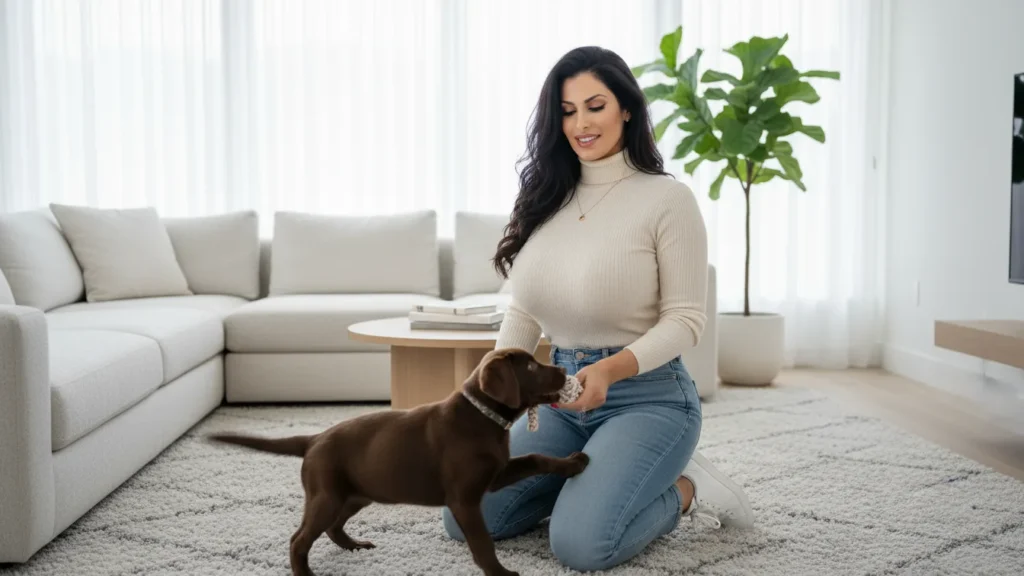
When “Cute Puppy Behavior” Isn’t So Cute
Puppies don’t cry for help the way humans do.
They don’t say they’re overwhelmed.
They don’t explain that a new sound scared them.
They don’t tell you their little nervous system is overloaded.
Instead, they communicate quietly — through subtle behaviors most owners mistake as normal puppy phases.
A puppy that freezes instead of exploring.
One that chews excessively when left alone.
Or one that seems “extra clingy” for no clear reason.
These are not personality quirks.
They are often silent signs of anxiety, and missing them early can shape your dog’s emotional health for life.
This guide breaks down the subtle anxiety signals in puppies, why they happen, how to spot them early, and what you can do — safely and effectively — to help.
Why Puppy Anxiety Is So Common (And So Often Missed)
Puppies are neurologically immature.
Their brains are still learning how to:
- Process new environments
- Regulate fear responses
- Cope with separation
- Understand unfamiliar humans, animals, and sounds
Between 8–16 weeks, puppies go through critical fear periods. During this time, even small stressors can leave a lasting emotional imprint.
The problem?
Most anxiety signs don’t look dramatic.
They look quiet.
They look manageable.
They look like “they’ll grow out of it.”
But unaddressed anxiety doesn’t disappear — it adapts.
Silent Sign #1: Freezing or Hesitation Instead of Exploration
A confident puppy explores.
An anxious puppy pauses.
If your puppy:
- Stops suddenly when walking
- Hesitates before entering rooms
- Freezes when meeting new people
- Stands still with a lowered body posture
This isn’t obedience.
It’s a stress response.
Many owners assume a quiet puppy is well-behaved. In reality, freezing often signals internal overwhelm — the puppy doesn’t feel safe enough to move.
Why this matters
Chronic hesitation can evolve into fear-based avoidance, reactivity, or shutdown behavior in adulthood.
Silent Sign #2: Excessive Licking, Chewing, or Self-Soothing
Puppies explore with their mouths — that’s normal.
But anxiety-driven behaviors look different.
Watch for:
- Repetitive paw licking
- Chewing furniture only when stressed
- Constantly licking floors, walls, or themselves
- Sucking on blankets or toys excessively
These behaviors release calming neurochemicals temporarily.
That relief trains the brain to repeat the action.
Hidden mistake to avoid
Punishing chewing without addressing anxiety worsens the problem — it removes the coping mechanism without fixing the stress.
Silent Sign #3: Over-Attachment or Shadowing Behavior
Some puppies follow their owners closely.
But anxiety-driven attachment looks intense.
Signs include:
- Panic when you leave the room
- Refusal to play independently
- Crying even during short separations
- Constant physical contact seeking
This isn’t “love.”
It’s fear of abandonment, and it can develop into separation anxiety if reinforced unintentionally.
Real-life example
A puppy that sleeps calmly only when touching their owner may seem affectionate — but may struggle severely when alone later.
Silent Sign #4: Sudden Startle Responses to Normal Sounds
Puppies should be curious — not constantly startled.
An anxious puppy may:
- Jump at everyday noises
- Bark or hide when objects fall
- Panic at doorbells or footsteps
- Struggle to recover after being startled
The key indicator isn’t fear — it’s recovery time.
Healthy puppies bounce back quickly.
Anxious puppies stay tense long after the sound ends.
Silent Sign #5: Digestive Upsets Without Clear Medical Cause
Stress affects the gut.
Anxious puppies may experience:
- Soft stools during changes
- Appetite fluctuations
- Stress-related vomiting
- Refusal to eat in new environments
When medical causes are ruled out, emotional stress is often the missing piece.
Why owners miss this
Digestive symptoms feel “physical,” so emotional causes are rarely considered early.
Silent Sign #6: Avoiding Eye Contact or Turning Away
Eye contact isn’t dominance — it’s communication.
An anxious puppy may:
- Look away when approached
- Turn their head during interaction
- Avoid direct engagement
- Move behind objects or people
These are calming signals, not disobedience.
Ignoring them teaches the puppy that subtle communication doesn’t work — which can lead to louder behaviors later.
Silent Sign #7: Hyperactivity That Looks Like Excitement
Not all anxious puppies shut down.
Some go into overdrive.
Signs include:
- Inability to settle
- Constant pacing
- Excessive jumping
- Difficulty focusing even after exercise
This isn’t high energy — it’s nervous system overload.
Exercise alone doesn’t fix it. Regulation does.
Anxiety vs Normal Puppy Behavior: A Quick Comparison
| Behavior | Normal Puppy Phase | Anxiety Signal |
|---|---|---|
| Exploration | Curious, confident | Hesitant, freezing |
| Chewing | Occasional, playful | Repetitive, stress-triggered |
| Attachment | Comfortable independence | Panic during separation |
| Noise reaction | Brief startle | Prolonged distress |
| Energy | Play → rest cycles | Constant agitation |
| Recovery | Quick bounce-back | Slow emotional recovery |
Why Catching Puppy Anxiety Early Changes Everything
Early anxiety shapes:
- Adult confidence
- Social tolerance
- Training success
- Stress resilience
- Risk of aggression or phobias
Puppies don’t “grow out of” anxiety.
They grow into it — unless guided gently through it.
What You Can Do Right Now (Actionable Steps)
1. Build Predictability
- Consistent routines
- Same feeding and walking times
- Predictable sleep schedules
Predictability reduces uncertainty — the root of anxiety.
2. Reward Calm, Not Just Excitement
- Treat relaxed body language
- Praise calm lying down
- Ignore frantic attention-seeking
3. Gentle Exposure (Not Flooding)
- Introduce new stimuli slowly
- Pair with positive experiences
- Let the puppy retreat if needed
4. Create Safe Spaces
- Quiet crate or bed
- No forced interaction
- Calm environment during rest
5. Avoid These Common Mistakes
- Forcing socialization
- Punishing fear responses
- Overexercising anxious puppies
- Labeling anxiety as “stubbornness”
Why This Matters Today
Modern puppies face:
- Early separation from litter
- Urban noise overload
- Busy households
- Inconsistent routines
Anxiety isn’t weakness.
It’s a nervous system asking for guidance.
Listening early prevents years of behavioral struggle later.
Key Takeaways
- Puppy anxiety often shows up quietly, not dramatically
- Freezing, over-attachment, and hyperactivity are common hidden signs
- Anxiety ignored early becomes harder to manage later
- Calm guidance shapes confident adult dogs
- Early support changes lifelong outcomes
Frequently Asked Questions
1. Can puppies really have anxiety this young?
Yes. Puppies experience stress and fear even before full emotional maturity.
2. Is anxiety always caused by trauma?
No. Genetics, early separation, environment, and temperament all play roles.
3. Should I comfort an anxious puppy or ignore it?
Calm reassurance is helpful. Overreacting or reinforcing panic is not.
4. Can training fix puppy anxiety?
Training helps, but emotional regulation and environment matter more early on.
5. When should I seek professional help?
If anxiety interferes with eating, sleeping, or social interaction consistently.
Conclusion: Listening to the Quiet Signals
An anxious puppy isn’t broken.
They’re learning how to feel safe in a big, confusing world.
The earlier you notice the quiet signs — the pauses, the hesitations, the subtle coping behaviors — the easier it becomes to guide them toward confidence.
Your puppy doesn’t need perfection.
They need patience, understanding, and gentle leadership.
That’s how emotionally healthy dogs are made.
Disclaimer: This article is for educational purposes only and does not replace professional veterinary or behavioral advice. If concerns persist, consult a qualified professional.

Dr. Sofia Romano, DVM, is an experienced veterinarian specializing in small-animal medicine and preventive care. She has treated thousands of cases using evidence-based diagnostics and modern clinical practices. Dr. Romano is dedicated to providing science-backed pet-health guidance that helps owners make informed decisions and improve their pets’ quality of life.


Pingback: Why Dogs Hump Even When Neutered — The Real Reasons Vets And Trainers Explain
Pingback: Why Dogs Pee When Excited — The Gentle, Proven Ways To Stop It Without Punishment
Pingback: Why Puppies Become Fearful Overnight — The Sudden Behavior Shift That Alarms Loving Owners (And What It Really Means)
Pingback: Why Dogs Become Fearful Without Trauma — The Quiet Emotional Shift Most Owners Never Notice