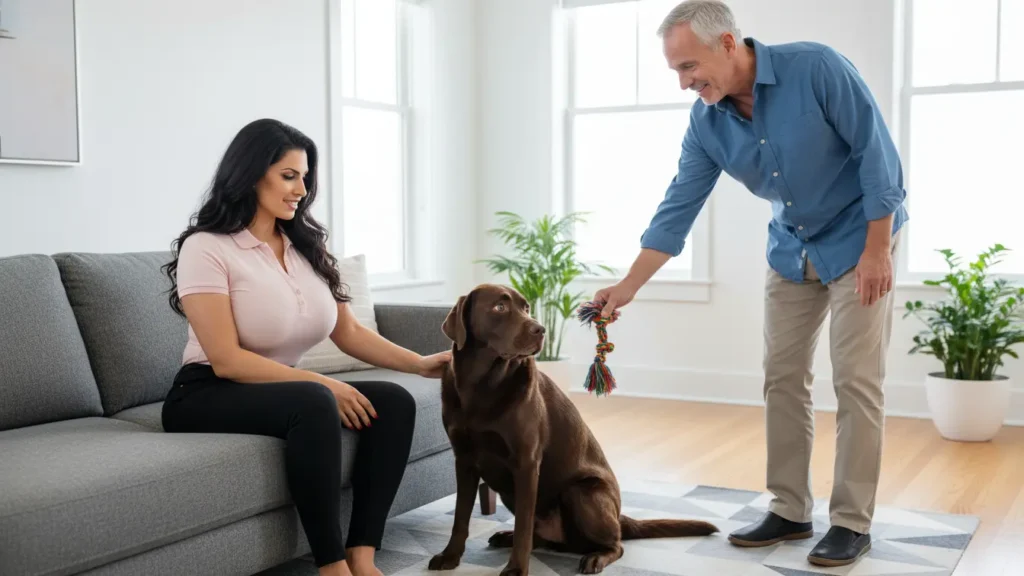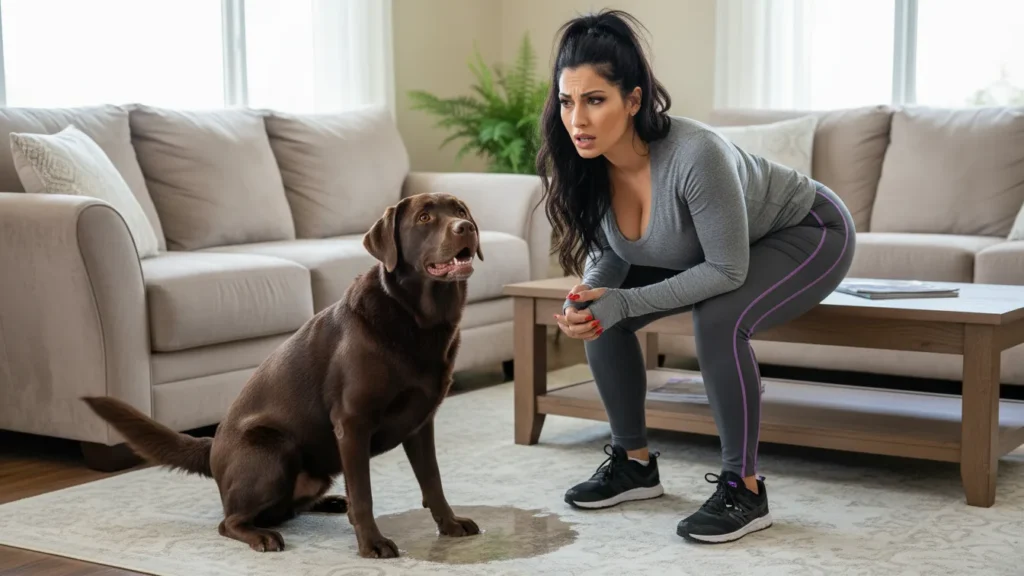
You walk through the door after work, your dog is thrilled to see you, and then there’s a small puddle on the floor before you’ve even said hello. It’s not a house-training failure. It’s not defiance. And yelling at your dog for it will almost always make the problem worse, not better.
Excitement urination is one of the most misunderstood behaviors in dogs, mostly because it looks exactly like a bathroom accident but has almost nothing to do with bladder control. Once you understand what’s actually happening in your dog’s body during those big, joyful greetings, the fix becomes a lot more obvious — and a lot kinder.
It’s Not a Training Problem — It’s a Nervous System Response
Excitement urination happens when a dog’s arousal level spikes so fast that the muscles controlling the bladder briefly relax along with everything else. It’s an involuntary reflex, not a conscious choice, which is why scolding doesn’t work: you can’t punish a dog out of a reflex any more than you could punish someone out of blushing. The dog isn’t choosing to pee any more than you’d choose to jump at a loud noise.
This is most common in puppies and young dogs, because bladder control and the ability to regulate big emotions both develop with age. Many dogs simply outgrow it as their nervous system matures — but for others, especially naturally excitable or anxious dogs, it can stick around into adulthood if it’s reinforced by the wrong response.
Excitement Urination vs. Submissive Urination
These two often get lumped together, but they come from different emotional places, and telling them apart matters for how you respond.
Excitement urination shows up during joyful moments — you coming home, a favorite person walking in, the leash coming out for a walk. The dog’s whole body is usually loose, wiggly, and happy.
Submissive urination shows up during moments that feel intimidating to the dog — being scolded, a stranger leaning over them, direct eye contact from someone new, or a loud or stern tone of voice. The dog’s body language is usually the opposite of excited: lowered head, tucked tail, rolled-over posture, or avoiding eye contact.
Both are involuntary, and both get worse with punishment, but submissive urination in particular is a signal that the dog feels unsafe in that moment — which makes a firm reaction the worst possible response.
Why Punishment Backfires Every Time
It’s an understandable instinct to want to correct the behavior the moment it happens. But because the peeing isn’t intentional, a scolding doesn’t teach the dog “don’t do that” — it teaches the dog “greetings are scary.” That association then raises the dog’s anxiety around the exact moment the accidents happen, which increases arousal, which increases the odds of it happening again. Punishment doesn’t just fail to fix excitement urination — it actively feeds the cycle that causes it.
The dogs who improve fastest are almost always the ones whose owners stopped reacting emotionally to the accident and started managing the moments that trigger it.
The Gentle, Proven Ways to Stop It
1. Lower the Emotional Temperature of Greetings
The single most effective change is making hellos boring on purpose. Skip the high-pitched voice, the big enthusiastic hug, and the direct eye contact the second you walk in. Instead, come in calmly, avoid looking directly at the dog for the first few seconds, and wait until they’ve settled slightly before offering attention. A calmer entrance means a calmer nervous system, which means a much lower chance of the bladder joining the celebration.
2. Greet at Their Level, Sideways
Crouching down to a dog’s height and approaching from the side rather than looming over them head-on feels far less overwhelming, especially for dogs prone to submissive urination. Turning your body slightly away and letting the dog approach you, rather than reaching straight for them, takes a lot of pressure off the interaction.
3. Take Greetings Outside
For dogs who reliably pee during hellos, moving the greeting ritual outdoors — on grass, where an accident isn’t a “mess” at all — removes the stress of worrying about the floor and lets both of you relax into the moment. Over time, this also weakens the connection between “exciting greeting” and “indoor accident.”
4. Build Calm Before Excitement, Not After
Rather than waiting for the dog to already be at full excitement and then trying to calm them down, work on impulse control in low-stakes moments — asking for a sit before a meal, a leash going on, or a toy being thrown. A dog who’s practiced pausing before good things happen generally arrives at greetings with a slightly lower baseline of arousal.
5. Limit Access to Water Right Before High-Excitement Moments
This isn’t a fix on its own, but for dogs with a smaller bladder or a known pattern around specific triggers (someone arriving home, guests at the door), simply not having a full bladder in the window before that moment reduces the physical odds of an accident happening at all.
6. Reward the Calm Version of the Greeting
When a greeting happens without an accident, a low-key “good” and a scratch under the chin reinforces that calm hellos are just as rewarding as chaotic ones — without pumping the excitement back up with a big celebratory reaction.
7. Be Patient With the Timeline
Because this behavior is tied to nervous system development and emotional regulation, it improves gradually rather than overnight. Puppies in particular often grow out of it on their own by twelve to eighteen months as their bladder control and emotional maturity catch up, especially if greetings have been kept low-key in the meantime.
When It’s Worth a Vet Visit
Occasional excitement peeing in a young or naturally excitable dog is normal and usually resolves with time and calmer greetings. But if an adult dog who’s never had this issue suddenly starts leaking urine, if it happens outside of exciting or stressful moments too, or if there are other changes like increased thirst, straining, or blood in the urine, that’s a different picture — one worth ruling out with a vet rather than assuming it’s behavioral.
The Bottom Line
A puddle on the floor during a happy hello isn’t a training failure, and it’s definitely not something to scold your dog for. It’s a nervous system running a little ahead of the bladder’s ability to keep up. Lower the drama around greetings, give your dog time to mature, and respond to accidents with a shrug instead of a reaction — and for most dogs, this fades out entirely with almost no effort beyond staying calm.

Dr. Sofia Romano, DVM, is an experienced veterinarian specializing in small-animal medicine and preventive care. She has treated thousands of cases using evidence-based diagnostics and modern clinical practices. Dr. Romano is dedicated to providing science-backed pet-health guidance that helps owners make informed decisions and improve their pets’ quality of life.