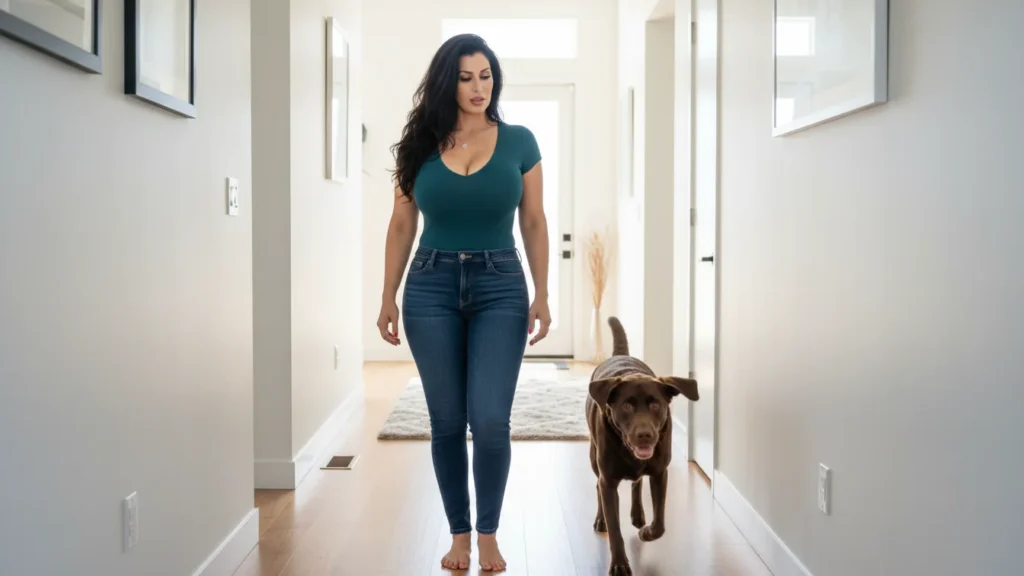
It’s 9pm and your dog won’t settle. He gets up, walks to the kitchen, turns around, walks to the living room, circles the rug, lies down for eleven seconds, and gets up again. No toy interests him. No amount of “lie down” sticks. You’re not imagining it — something has your dog too unsettled to rest, and pacing is his way of dealing with it.
Pacing is one of those behaviors that’s easy to dismiss as restlessness or a full bladder, right up until it becomes a pattern. And it’s worth taking seriously, because a dog who can’t settle is almost always uncomfortable in some way — physically, emotionally, or cognitively. The challenge is that pacing looks the same regardless of the cause, so figuring out why takes a little detective work.
Why Pacing Happens: The Short Version
A pacing dog is a dog whose body or mind won’t let it rest. That inability to settle usually traces back to one of four categories: anxiety, pain, digestive discomfort, or — in older dogs especially — cognitive decline. Occasionally it’s simpler than any of those: too much pent-up energy and not enough outlet for it. Sorting out which one you’re dealing with starts with noticing when the pacing happens and what comes with it.
1. Anxiety and Stress
This is the most common cause, particularly in younger and middle-aged dogs. Anxious pacing tends to show up around specific triggers: thunderstorms, fireworks, a change in routine, a new pet or person in the house, or the lead-up to you leaving for the day. Dogs with separation-related anxiety in particular often pace in the minutes before a owner’s departure — picking up on cues like keys jangling or shoes going on — and some continue pacing throughout the time they’re left alone.
Watch for pacing that clusters around a specific event or time of day, paired with panting, whining, drooling, or an inability to make eye contact and settle even when you try to comfort them.
2. Pain and Physical Discomfort
Dogs can’t tell you a joint aches or a wound stings, so restlessness often becomes the message instead. Arthritis, an old injury, an ear infection, or general soreness can all make lying still genuinely uncomfortable, and pacing becomes a way of avoiding that discomfort rather than confronting it. This is especially worth considering if the pacing is new, if your dog seems to struggle finding a comfortable position, or if you notice limping, stiffness, or reluctance to jump or climb stairs alongside it.
3. Digestive Discomfort — Including a True Emergency
An upset stomach can absolutely cause pacing, and most of the time it resolves on its own or with a simple vet visit. But there’s one version of this that deserves special attention: bloat, or gastric dilatation-volvulus (GDV). This is a life-threatening emergency, most common in large, deep-chested breeds, where the stomach fills with gas and can twist on itself.
The warning signs to know: a dog who is pacing and can’t settle, combined with unproductive retching (trying to vomit but nothing comes up), drooling, a visibly swollen or tight belly, restlessness that escalates rather than passes, or signs of weakness or collapse. If you see this combination, it’s not a “wait and see” situation — it calls for an emergency vet immediately, not a regular appointment the next day.
Less dramatic digestive discomfort — mild nausea, gas, or a stomach upset from something your dog ate — can also cause a milder, more transient version of pacing that usually settles within an hour or two.
4. Cognitive Dysfunction in Senior Dogs
If your dog is a senior and the pacing is a newer development — especially if it’s worse at night — canine cognitive dysfunction is a real possibility. This condition shares meaningful similarities with Alzheimer’s disease in people, and pacing or restlessness, particularly during nighttime hours, is one of its more recognizable signs. Veterinary researchers use the acronym DISHAA to describe the collection of symptoms it can cause: <cite index=”50-1″>disorientation, changes in social interactions, sleep-wake cycle changes including pacing and restlessness at night, house soiling, and changes in activity level</cite>, with anxiety often present as well.
One study found that <cite index=”50-1″>28% of owners of dogs aged 11 to 12 reported at least one sign of cognitive decline, a number that rose to 68% in dogs aged 15 to 16</cite>. If your senior dog is pacing at night, seeming confused in familiar spaces, having house-training lapses, or showing a flipped sleep schedule, it’s worth raising cognitive dysfunction with your vet — early management options exist and tend to work better the sooner they’re started.
5. Boredom or Excess Energy
The least concerning explanation, but a real one: a dog who hasn’t had enough physical exercise or mental stimulation that day may pace simply because it has energy with nowhere to go. This tends to look different from anxious pacing — less frantic, more like general restlessness — and usually resolves with a longer walk, a training session, or some puzzle-toy enrichment.
How to Tell Which One You’re Dealing With
A few questions can narrow things down quickly:
- When does it happen? Around a specific trigger (anxiety), mainly at night in a senior dog (possible cognitive dysfunction), or seemingly random (worth watching closer)?
- Is your dog trying to vomit but nothing’s coming up, drooling, or does the belly look swollen? Treat this as an emergency, full stop.
- Does your dog seem uncomfortable finding a position to lie in, or favor a limb, or hesitate before jumping? Consider pain.
- Is this a new behavior in an older dog, especially paired with confusion or a disrupted sleep schedule? Consider cognitive dysfunction.
- Has your dog had less exercise than usual lately? Rule out simple boredom before assuming something more serious.
When to See a Vet — And When to Go Now
Go to an emergency vet immediately if pacing is paired with unproductive retching, drooling, a swollen or tight abdomen, pale gums, labored breathing, collapse, or sudden weakness — these are signs of a potential emergency, not something to monitor overnight.
Book a regular vet visit if pacing is new, persistent, worsening, or paired with any of the following: signs of pain or limping, appetite changes, disorientation, house-training lapses in a previously trained dog, or a disrupted sleep-wake cycle in a senior dog.
Try environmental and behavioral fixes first if the pacing is mild, tied to an obvious short-term trigger like a storm, or clearly linked to under-exercise — more physical activity, mental enrichment, a calmer routine, and a predictable schedule solve a surprising number of pacing cases on their own.
The Bottom Line
A dog who can’t stop moving around the house is telling you, in the clearest way available to him, that something isn’t sitting right — literally. Sometimes that’s as simple as an under-stimulated dog with energy to burn. Sometimes it’s early-stage arthritis, a brewing stomach issue, situational anxiety, or the beginning signs of cognitive decline in an older dog. Rarely, it’s a genuine emergency. Paying attention to when the pacing happens and what else shows up alongside it is almost always enough to point you toward the right next step.
Sources & Further Reading
- Behavior Counseling – Senior Pet Cognitive Dysfunction — VCA Animal Hospitals
- Separation Anxiety in Dogs — VCA Animal Hospitals
- Treating Cognitive Dysfunction Syndrome in Cats and Dogs — VCA Voice
- Canine Cognitive Dysfunction — Wikipedia (veterinary literature overview)

Dr. Sofia Romano, DVM, is an experienced veterinarian specializing in small-animal medicine and preventive care. She has treated thousands of cases using evidence-based diagnostics and modern clinical practices. Dr. Romano is dedicated to providing science-backed pet-health guidance that helps owners make informed decisions and improve their pets’ quality of life.





Pingback: Why Dogs Lick The Air Repeatedly — The Subtle Signal Your Dog Is Trying To Send
Pingback: Why Dogs Get Anxious During Quiet Evenings — The Subtle Trigger Most Owners Never Connect
Pingback: Why Dogs Mirror Household Tension — The Emotional Sensitivity Most Families Underestimate
Pingback: Why Dogs Become Restless At The Same Time Daily — The Hidden Clock Their Bodies Follow
Pingback: Why Dogs Develop Anxiety After Surgery — What Their Brains Experience That Owners Never See
Pingback: Why Dogs Respond Differently To Smells At Night — The Sensory Shift That Changes Everything After Dark
Pingback: Why Dogs Become Restless During Full Moons — The Hidden Sensory Changes Their Bodies React To