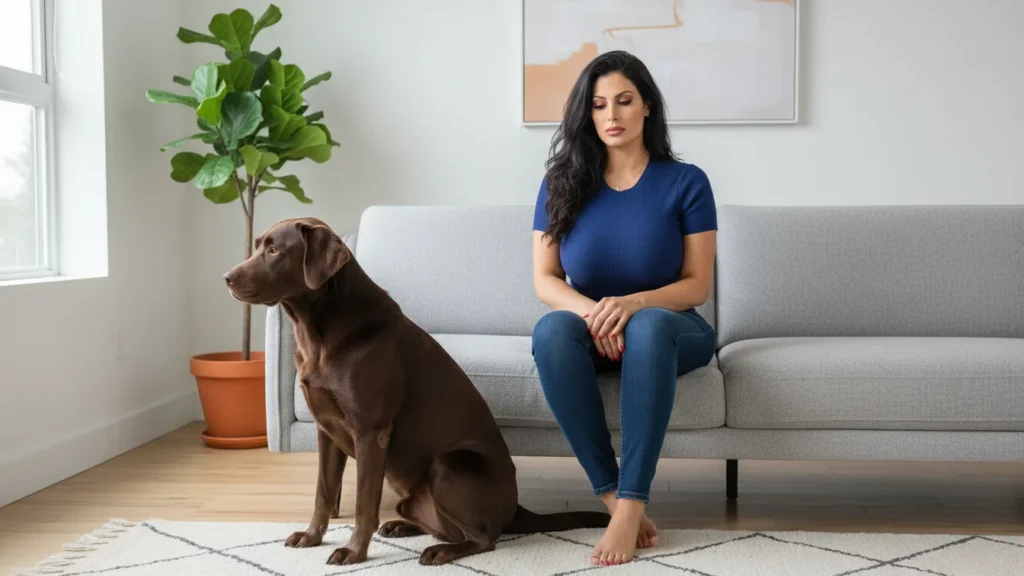
There’s a particular kind of quiet heartbreak in watching a dog who used to greet you at the door every single time start staying on his bed instead. He’s not sick, not obviously in pain, not avoiding you exactly — he’s just… further away than he used to be. Less likely to nose his way into your lap. Slower to react when you walk in. A little harder to reach.
It’s easy to read this as a dog simply “losing interest” or mellowing out with age, and sometimes that’s part of it. But emotional distance in an older dog is rarely just personality drift — it’s usually the visible edge of something physical happening underneath: pain they’re not showing, hearing they’ve quietly lost, or cognitive changes reshaping how they experience you and their world. Understanding which one is at play changes how you respond, and often how much of that closeness you can get back.
Why “Getting More Distant” Isn’t Really About Losing Interest
Dogs don’t withdraw from affection because they’ve decided they care less. When an older dog seems less responsive, less affectionate, or less present, it’s almost always because something has made connection harder — physically uncomfortable, harder to perceive, or harder to process — not because the bond itself has faded. Veterinary sources note that senior dogs experiencing behavioral or social changes commonly have an underlying cause tied to discomfort, illness, hearing loss, vision changes, or cognitive dysfunction. The emotional distance is a symptom, not the whole story.
1. Pain: The Invisible Wall
Chronic pain — especially arthritis, which affects the majority of senior dogs to some degree — changes how a dog interacts with the world in ways that are easy to misread as emotional withdrawal. A dog who used to bound over for a greeting might now stay put simply because standing up and walking over hurts. A dog who used to lean into every petting session might pull away sooner because a hip or shoulder aches under sustained pressure.
This kind of pain-driven distance often looks like:
- Staying on a bed or in one spot rather than following you around the house
- Shorter, more clipped interactions — a quick greeting rather than a lingering one
- Reluctance to be picked up, hugged, or touched in certain areas
- Slower or absent responses to you entering a room
The distinction that matters here: it’s not that your dog doesn’t want connection, it’s that the cost of engaging has gone up. Managing the underlying pain — through vet-guided treatment, joint support, or environmental changes like ramps and orthopedic bedding — often brings a surprising amount of the old affection back.
2. Hearing Loss: When the World Gets Quieter
Age-related hearing loss is extremely common in senior dogs and is one of the most under-recognized causes of what looks like emotional distancing. A dog who no longer hears you come home, call his name, or shift around in another room simply has fewer opportunities to engage — not because he’s uninterested, but because the cues that used to prompt connection aren’t reaching him anymore.
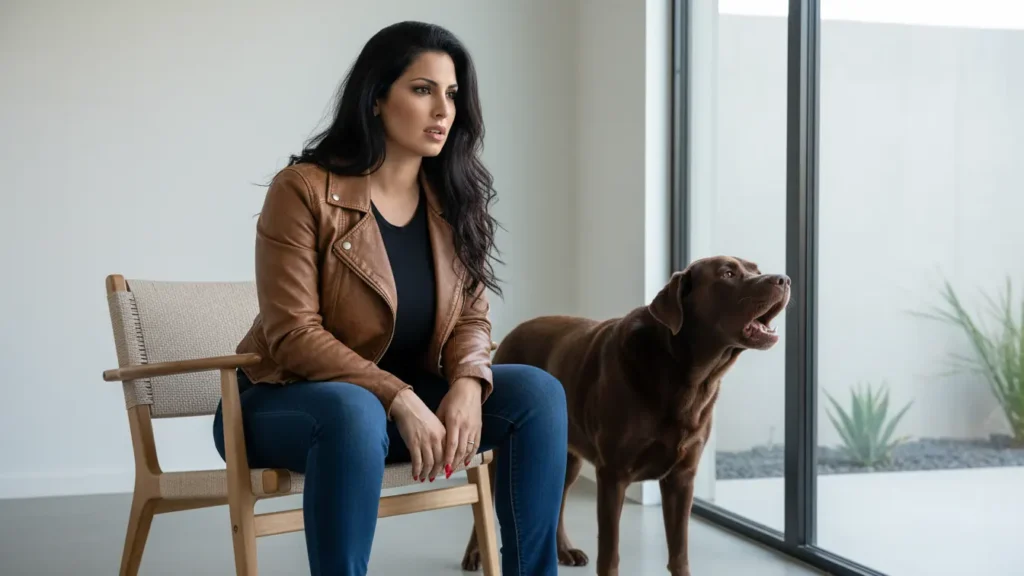
Veterinary behavior sources describe this pattern clearly: some dogs with hearing loss <cite index=”60-1″>become more withdrawn or less active due to reduced environmental stimulation</cite>, while others go the opposite direction and become more clingy, nervous, or easily startled — especially when approached from behind, since they can no longer hear someone coming. Other tell-tale signs include ears that no longer swivel toward sounds, sleeping through noises that used to wake them instantly, and changes in how much or how little they bark.
The encouraging part: hearing loss doesn’t have to mean disconnection. Dogs adapt well to visual and touch-based cues — hand signals, gentle taps to get attention before approaching, consistent routines — and many owners find their dog’s affection returns to something close to normal once communication shifts to channels the dog can still access.
3. Cognitive Dysfunction: When the Brain Itself Is Changing
This is the cause most owners don’t consider first, and it’s often the most significant. Canine cognitive dysfunction (CCD) is a genuine neurodegenerative condition, sharing real similarities with Alzheimer’s disease in humans, and changes in social behavior are one of its core symptoms.
Veterinarians use the acronym DISHAA to track its signs, and the “Interactions” component maps directly onto emotional distance: <cite index=”63-1″>changes in social interactions with household people and pets, including becoming more clingy, becoming reclusive, or showing irritability when approached</cite>. A dog who used to be your shadow might start avoiding contact; a dog who was independent might suddenly become anxious and clingy instead. Either direction can appear, which is part of why CCD is so often missed or misread as simple aging.
Other DISHAA signs worth watching for alongside the social changes: disorientation in familiar spaces, a disrupted sleep-wake cycle (restless at night, sleepy during the day), house-training lapses, and a general dip in activity or responsiveness. Cognitive decline is notably common — <cite index=”63-1″>research found 28% of owners of dogs aged 11 to 12 reported at least one sign, rising to 68% in dogs aged 15 to 16</cite> — and it’s progressive, which makes early recognition meaningful: the sooner it’s identified, the more can be done to slow it down and support quality of life.
Untangling the Overlap
Here’s the complicating part: these three causes frequently overlap, and pain, hearing loss, and vision changes can all look like cognitive dysfunction on the surface, which is why veterinarians insist on ruling out medical causes before landing on a CCD diagnosis. A urinary tract infection can cause house-soiling that looks like disorientation. Arthritis pain can cause a dog to stop greeting you at the door in a way that looks like emotional withdrawal. Vision loss can cause a slow, hesitant response to your presence that looks like indifference.
This is exactly why a proper vet workup matters more than guessing from home. A thorough exam — often including bloodwork, a hearing and vision check, and a joint assessment — can separate a treatable medical cause from cognitive decline, and frequently a dog is dealing with more than one of these at once.
What Tends to Point to Each Cause
More likely pain:
- Reluctance to move, jump, or get up
- Distance increases specifically around activity, not just presence
- Irritability when a specific area is touched
- Slower rising, stiffness, or a changed gait
More likely hearing loss:
- Doesn’t react to you entering the room or calling their name
- Easily startled when approached from behind or woken suddenly
- Ears rarely move toward sounds
- Sleeps more deeply than they used to
More likely cognitive dysfunction:
- Confusion in a familiar home, getting “stuck” in corners
- A flipped or disrupted sleep schedule
- House-training accidents in a previously reliable dog
- Social changes paired with disorientation, not just reduced responsiveness
How to Help a Dog Who’s Growing More Distant
- Get a full veterinary workup before assuming it’s “just age.” Many of the conditions behind this behavior are manageable, and some are very treatable.
- Adapt how you initiate contact. For hearing loss, use visual cues and gentle touch before approaching rather than calling from across the room. For pain, let your dog come to you rather than pulling them into a hug.
- Make engagement lower-cost. Bring the interaction to them — sit near their bed rather than expecting them to cross the room; use ramps or steps to reduce the physical toll of getting close to you.
- Keep routines predictable, especially if cognitive changes are present — consistency reduces the anxiety that so often drives further withdrawal.
- Don’t mistake distance for disinterest. A senior dog who can’t easily move, hear, or process the world the way he used to still wants the relationship — the physical form it takes just needs to change with him.
The Bottom Line
An older dog pulling away from affection isn’t falling out of love with you — he’s very likely managing pain, adapting to a quieter world, or navigating a brain that’s changing in ways he can’t explain. The emotional distance you’re feeling is real, but so is the underlying cause behind it, and in most cases, that cause is identifiable and at least partially manageable. A vet visit that separates pain from hearing loss from cognitive change is the single most useful thing you can do — not just for your dog’s comfort, but for getting some of that closeness back.
Sources & Further Reading
- Behavior Counseling – Senior Pet Cognitive Dysfunction — VCA Animal Hospitals
- Helping Our Senior Dogs Age Gracefully — VCA Animal Hospitals
- How to Help a Senior Dog With Hearing Loss — PetMD

Dr. Sofia Romano, DVM, is an experienced veterinarian specializing in small-animal medicine and preventive care. She has treated thousands of cases using evidence-based diagnostics and modern clinical practices. Dr. Romano is dedicated to providing science-backed pet-health guidance that helps owners make informed decisions and improve their pets’ quality of life.




Pingback: Why Dogs Become Guarded With Age — The Subtle Behavioral Shift Most Owners Misread