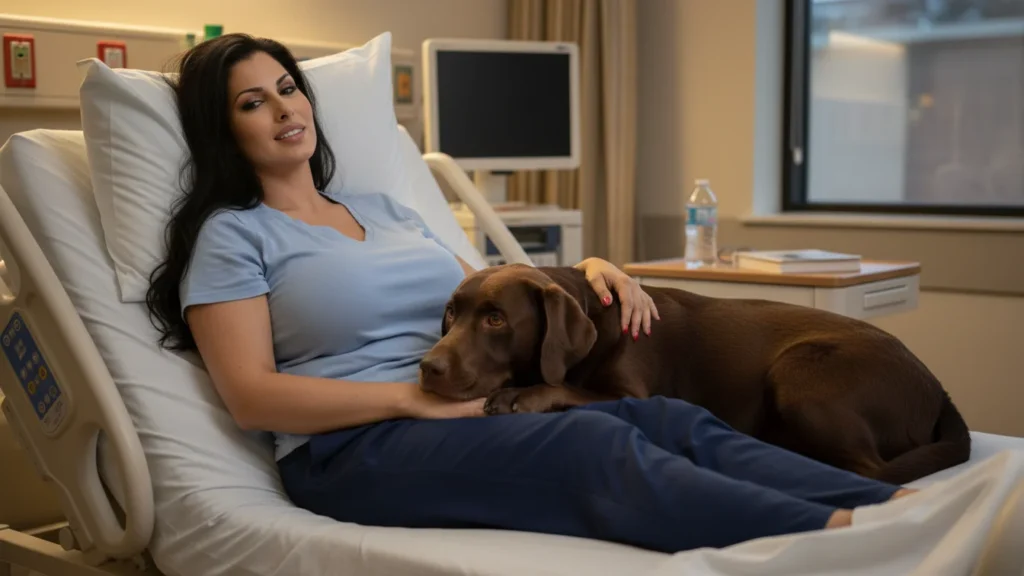
“When Illness Changes the Room — Even Before You Speak”
You wake up feeling off.
Not dramatic.
Not alarming.
Just… not right.
Before you’ve said a word, your dog is already there.
Curled closer than usual.
Watching you more intently.
Following you even to the bathroom door.
They don’t demand walks.
They don’t bring toys.
They simply stay.
For many dog owners, this moment is deeply familiar—and quietly emotional. Dogs often stay unusually close when you’re sick, even before symptoms fully appear.
This behavior isn’t accidental.
And it isn’t just affection.
It’s instinct, biology, and bond working together.
Dogs Don’t “Understand” Illness — They Detect Change
Dogs don’t know what a fever or infection is.
What they do know is change.
Your body, when sick, subtly alters:
- Scent
- Hormones
- Breathing rhythm
- Movement
- Emotional signals
These shifts are small—but to a dog, they’re unmistakable.
Dogs evolved to survive by noticing what others missed. A slight weakness in a pack member once meant danger—or protection was needed.
That instinct never left.
The Nose That Notices What Humans Miss
A dog’s sense of smell is extraordinary.
While humans rely on visible symptoms, dogs detect illness through chemical changes in the body that occur early.
When you’re sick, your body releases:
- Stress-related hormones
- Immune response chemicals
- Metabolic byproducts
- Subtle changes in skin and breath odor
Dogs can smell these shifts long before you feel truly unwell.
This ability is recognized and studied by organizations like the American Kennel Club, especially in the context of medical alert and service dogs.
Why Staying Close Is the Natural Response
Once a dog senses something is different, their instincts take over.
Staying close serves several purposes:
1. Protection
A vulnerable pack member attracts danger in nature. Dogs instinctively guard those who appear weaker.
2. Monitoring
By staying near, dogs continuously track:
- Breathing changes
- Movement
- Emotional shifts
3. Comfort Exchange
Physical closeness helps regulate stress—for both you and your dog.
This isn’t learned behavior.
It’s deeply wired.
Emotional Bonds Activate During Illness
Dogs don’t just detect physical illness.
They feel emotional shifts too.
When you’re sick:
- Your tone changes
- Your energy drops
- Your mood shifts
Dogs are incredibly sensitive to these signals. Studies show dogs respond to human emotional distress by increasing proximity and contact.
In simple terms:
When you feel worse, your dog feels closer.
Why Dogs Seem “Extra Calm” When You’re Sick
Many owners notice something surprising.
Their energetic dog suddenly becomes quiet.
Playful behavior stops.
Rest replaces excitement.
This is intentional.
Dogs often match your energy during illness. High activity could overwhelm a weakened pack member. Calm presence is safer—and more supportive.
This behavioral adjustment is one of the clearest signs your dog is responding to your condition.
Real-Life Example: A Pattern Too Common to Ignore
Many people describe the same experience.
A dog who:
- Sleeps beside them for days
- Skips playtime voluntarily
- Watches them closely
- Refuses to leave the room
Later, a diagnosis follows—flu, infection, or something more serious.
Dogs aren’t diagnosing.
They’re responding to changes that started long before symptoms became obvious.
It’s Not “Clinginess” — It’s Communication
One of the biggest mistakes owners make is mislabeling this behavior.
Common misunderstandings include:
- “My dog has separation anxiety”
- “They’re being needy”
- “They just want attention”
But context matters.
If your dog’s closeness:
- Appears suddenly
- Coincides with you feeling off
- Persists calmly (not anxiously)
It’s likely a response—not a demand.
Why This Matters More Today Than Ever
Modern life disconnects us from bodily signals.
We push through fatigue.
Ignore mild symptoms.
Normalize feeling unwell.
Dogs, however, don’t rationalize discomfort.
They respond honestly.
Paying attention to their behavior can help you:
- Slow down sooner
- Rest earlier
- Seek care before illness worsens
In a world that encourages ignoring the body, dogs quietly remind us to listen.
What Your Dog’s Positioning Can Tell You
Where your dog stays matters.
Common patterns include:
- Sleeping near your chest or head (breathing awareness)
- Lying against your back or legs (grounding)
- Guarding doorways (protective instinct)
These positions aren’t random. They reflect monitoring and safety behaviors rooted in pack dynamics.
When Dogs Focus on One Specific Body Area
Some dogs do more than stay close.
They sniff, paw, or rest near a specific spot.
This can indicate:
- Localized inflammation
- Pain-related posture changes
- Temperature differences
While not a diagnosis, repeated focus deserves attention—especially if accompanied by your own discomfort.
How You Should Respond (And What to Avoid)
If your dog stays close while you’re sick:
Helpful responses:
- Allow calm closeness
- Maintain gentle routines
- Stay emotionally steady
Avoid:
- Punishing or pushing them away
- Reinforcing anxiety with worry
- Over-interpreting without observation
Your calm reassures them—and keeps the bond balanced.
Dogs Stay Close to Other Sick Dogs Too
This behavior isn’t exclusive to humans.
Dogs often:
- Guard ill companions
- Avoid rough play
- Rest nearby quietly
This confirms the behavior isn’t trained—it’s instinctive.
Comparison: How Dogs vs Humans Respond to Illness
| Response | Dogs | Humans |
|---|---|---|
| Detect early changes | Yes | Often miss |
| React emotionally | Immediate | Delayed |
| Stay close | Instinctive | Conditional |
| Ignore discomfort | Rarely | Often |
| Prioritize rest | Yes | No |
Hidden Tip: Your Dog May Help You Heal Faster
Physical closeness with dogs has been shown to:
- Reduce stress hormones
- Lower heart rate
- Improve emotional comfort
Your dog staying close isn’t just protective—it may actively support recovery.
Key Takeaways
- Dogs stay close when you’re sick due to instinct, not coincidence
- They detect early physical and emotional changes
- Calm closeness is a protective and monitoring behavior
- Mislabeling it as “clingy” can miss important signals
- Listening to your dog can improve awareness and recovery
Frequently Asked Questions
Do dogs always know when you’re sick?
They often detect changes, but sensitivity varies by individual dog.
Is this behavior learned or instinctive?
It’s largely instinctive, reinforced by emotional bonding.
Should I worry if my dog won’t leave my side?
Not immediately. Observe patterns and trust calm awareness, not fear.
Can dogs sense emotional illness too?
Yes. Dogs are highly responsive to stress, anxiety, and mood changes.
Does this mean my illness is serious?
Not necessarily. Dogs respond to change, not severity.
A Quiet Conclusion
When your dog stays close during illness, they aren’t being dramatic.
They’re doing what generations of instinct taught them to do:
Protect.
Observe.
Stay.
In a loud world that pushes us to ignore discomfort, your dog chooses presence instead.
And sometimes, that silent companionship is exactly what healing needs.
Disclaimer: This article is for general informational purposes only and does not replace professional medical or veterinary advice.

Dr. Sofia Romano, DVM, is an experienced veterinarian specializing in small-animal medicine and preventive care. She has treated thousands of cases using evidence-based diagnostics and modern clinical practices. Dr. Romano is dedicated to providing science-backed pet-health guidance that helps owners make informed decisions and improve their pets’ quality of life.




Pingback: Why Dogs Choose One Person As “Their Human” — The Deep Bond Science Can Finally Explain
Pingback: Why Dogs Can Sense Emotional Stress Through Smell — The Hidden Science Behind Their Uncanny Awareness
Pingback: Why Dogs Can Smell Your Stress — The Hidden Emotional Sense That Explains Their Uncanny Bond With Humans
Pingback: Why Dogs Change Sleeping Spots Often — The Quiet Signals Your Dog Is Sending Without Making A Sound
Pingback: Why Dogs Become Over Attached After Illness — The Emotional Shift Most Owners Don’t See Coming