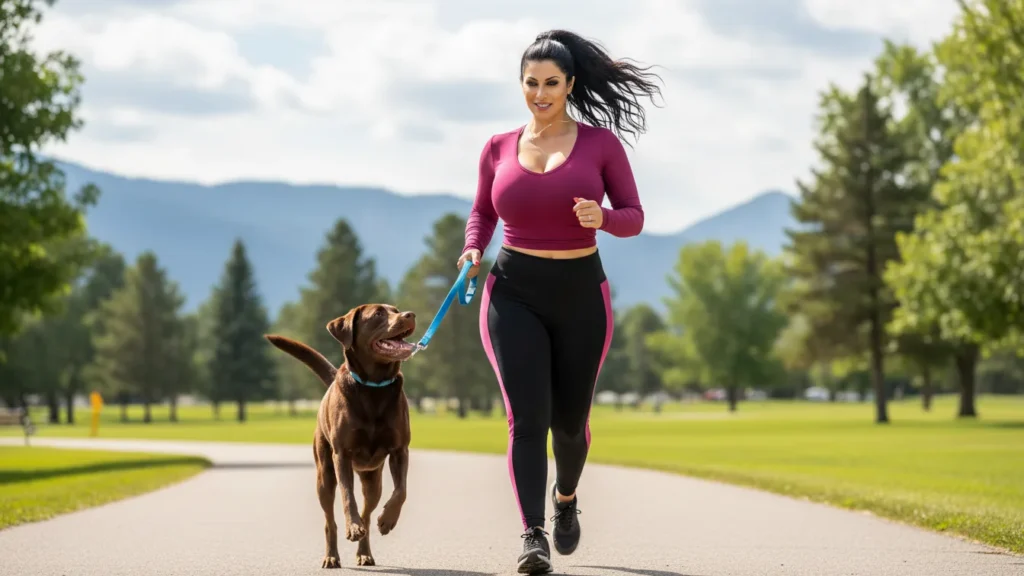
In a lot of multi-person households, there’s an open secret nobody quite says out loud: the dog has a favorite. Maybe it’s not even the person who feeds them or takes them on the most walks — sometimes it’s the person who’s home the least, or the one who seems, on paper, to put in the least effort. It can feel arbitrary, even a little insulting to whoever didn’t get picked. But the science behind how dogs form that one-person attachment is more specific, and more explainable, than it looks from the outside.
The Window Where the Bond Actually Forms
A huge part of the answer traces back to a developmental window most owners never witness directly, because it happens before most puppies even come home. Foundational research by John Paul Scott and John L. Fuller, published in their landmark 1965 study Genetics and the Social Behavior of the Dog, identified what’s known as the canine socialization period — roughly from 3 to 12 weeks of age — as the single most influential stretch of a dog’s entire social development.
During this window, puppies are unusually open to forming lasting bonds with the people, animals, and environments they’re exposed to. Research since then has refined the picture: this is better understood as a sensitive period rather than a rigid, all-or-nothing cutoff, and the exact timing can vary somewhat by breed. But the core finding has held up well: puppies that receive rich, positive social exposure during this window — including consistent, positive contact with specific people — tend to carry the effects of those early bonds into adulthood, while puppies who miss this exposure are measurably more prone to fear, avoidance, and anxiety-related behavior later in life.
In practical terms, this means a dog’s foundational template for “who is safe and important to me” gets substantially laid down extremely early — often before a puppy has even left their breeder or shelter. Whoever was present, attentive, and positive during that window has a genuine developmental head start in becoming a dog’s primary attachment figure, even if that person doesn’t end up being the one doing the daily feeding and walking years later.
It’s Not Just Who Feeds Them
One of the most persistent myths about dog attachment is that it comes down to who provides the most resources — food, walks, physical care. Research and clinical observation both push back on that assumption. Dogs commonly form their strongest attachment to someone other than their primary caregiver, which suggests that resource provision alone doesn’t explain the bond.
What seems to matter more is the quality and emotional tone of interaction, not just its frequency. A person who is calm, consistent, emotionally regulated, and engages the dog in genuinely rewarding activity tends to become more central to a dog’s attachment system than someone who simply handles logistics. This tracks with what’s known more broadly about dog-human attachment: dogs treat a trusted person as something like a secure base and safe haven, a role that’s built through consistent, positive emotional experience rather than task completion.
Dogs Extend Trust Based on Who Treats Their Person Well, Too
The depth of a dog’s attachment to their primary person doesn’t just shape how the dog treats that person — it appears to shape how the dog evaluates other people as well. In one study examining canine social evaluation, researchers found that dogs with stronger attachment bonds to their owner were significantly more likely to favor strangers who had been observed helping their owner, compared to strangers who hadn’t. This suggests a dog’s central attachment relationship functions as something like a social reference point, coloring how they judge everyone else who enters their world — a level of social sophistication that goes beyond simple bond formation.
Breed and Individual Temperament Play a Role Too
While the socialization window and quality of interaction explain a lot, they’re not the whole story. Certain breeds — often those historically developed for close, one-on-one working partnerships with a single handler, such as guarding or herding breeds — appear more prone to forming an intense, near-exclusive bond with one person rather than distributing their attachment more evenly across a household. This isn’t universal or absolute, but it’s a recognized pattern that layers on top of the early-life and interaction-quality factors already at work.
Individual temperament matters as well. Just as human children vary in how broadly or narrowly they form early attachments, dogs vary too — some settle into secure, flexible bonds with multiple household members, while others gravitate strongly toward a single figure regardless of how evenly care is distributed among the people around them.
What This Means If You’re Not “The Favorite”
- It’s rarely about effort, and it’s not usually a reflection of how much your dog trusts or loves you overall. A dog can be deeply attached to you and still show a stronger behavioral preference for someone else — attachment isn’t a zero-sum resource.
- The bond can shift over time. Because attachment is built substantially through consistent, positive, emotionally engaged interaction, increasing the quality of your time together — not just the quantity — can meaningfully deepen your position in your dog’s attachment hierarchy.
- If you’re bringing home a puppy, the early weeks matter enormously. Positive, calm, varied social exposure during the socialization period has outsized influence on a dog’s lifelong attachment style and general temperament — far more than most owners realize at the time.
- A strong one-person bond isn’t a problem on its own. It only becomes a concern if it manifests as significant separation-related distress when that person is unavailable — a distinct clinical issue worth addressing with a vet or behaviorist, not simply a sign of “being your dog’s favorite.”
Your dog’s favorite person usually isn’t chosen by coincidence, and it isn’t a referendum on who works hardest to take care of them. It’s the outcome of a developmental window most people never get to witness, layered with thousands of small, calm, positive moments that told your dog, specifically, that you were safe.
Sources & Further Reading
- The importance of early life experiences for the development of behavioural disorders in domestic dogs — Behaviour / Brill
- The Puppies’ Age at Adoption Time Influences the Behavioral Responses of Adult Dog — PMC/NIH
- Optimising Puppy Socialisation — Short- and Long-Term Effects of a Training Programme — PMC/NIH
- Impact of the Dog–Human Bond on Canine Social Evaluation: Attachment Predicts Preference toward Prosocial Actors — PMC/NIH
- Socialization of animals — overview of the critical socialization period

Dr. Sofia Romano, DVM, is an experienced veterinarian specializing in small-animal medicine and preventive care. She has treated thousands of cases using evidence-based diagnostics and modern clinical practices. Dr. Romano is dedicated to providing science-backed pet-health guidance that helps owners make informed decisions and improve their pets’ quality of life.

Pingback: Why Dogs Trust Humans So Deeply — The Bond Science Can Explain
Pingback: Why Dogs Remember Emotional Events Better Than Commands — The Hidden Way Their Brains Store Memory
Pingback: Why Dogs Become Over Attached To One Person — The Hidden Bond That Can Quietly Turn Into Anxiety
Pingback: How Domestication Changed Dog Brains Forever — The Invisible Evolution Inside Your Pet
Pingback: Why Dogs Are So Sensitive To Human Voice Tone — The Emotional Language They Understand Instantly