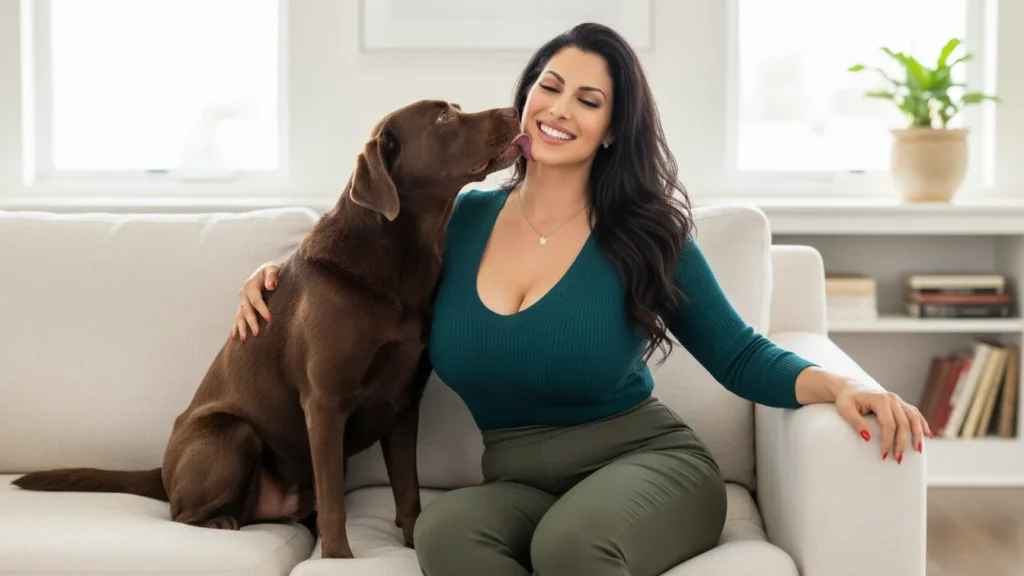
“I Love You… But Please Stop Licking Me” — A Common Owner Dilemma
It starts sweet.
A gentle lick on your hand.
A quick kiss on your cheek.
But then it doesn’t stop.
Your dog keeps licking:
- Your hands
- Your face
- Your arms
- Even your feet
You laugh at first.
Then you wonder.
👉 Why does my dog lick me so much?
Is it affection?
Anxiety?
A bad habit?
The answer is rarely just one thing.
Excessive licking is one of the most misunderstood dog behaviors — and understanding it can strengthen your bond while reducing frustration.
Let’s break down what your dog is really communicating.
First, Understand This: Licking Is a Language
Dogs don’t speak with words.
They communicate through:
- Body posture
- Eye movement
- Tail position
- And yes — licking
According to behavior guidance from the American Kennel Club, licking is a multi-purpose social behavior, not just a sign of affection.
The key is context.
❤️ 1. Affection and Bonding (The Most Recognized Reason)
Yes — licking can mean love.
Dogs lick people they feel safe with.
Why Licking Feels Good to Dogs
- It releases calming brain chemicals
- It strengthens social bonds
- It mirrors puppy-to-mother behavior
When puppies lick their mother’s face, it reinforces connection and care.
Many adult dogs carry this behavior into human relationships.
But Here’s the Catch
Affection-based licking is usually:
- Gentle
- Short-lived
- Responsive to cues
When it becomes constant, other factors are often involved.
🧠 2. Stress Relief and Anxiety Soothing
Licking is a powerful self-soothing behavior.
Much like:
- Nail-biting in humans
- Rocking motions
- Repetitive fidgeting
Dogs lick to calm themselves.
Common Anxiety Triggers
- Separation or reunions
- Loud noises
- Changes in routine
- Owner stress
Dogs are emotional mirrors.
If you are tense, your dog may lick more to regulate both their emotions — and yours.
🐶 3. Attention-Seeking That Accidentally Got Reinforced
This one surprises many loving owners.
Dogs repeat behaviors that work.
If licking results in:
- Eye contact
- Talking
- Laughing
- Touch
Then licking becomes a guaranteed attention button.
Real-Life Example
A dog licks → owner reacts → dog learns
“Licking gets results.”
Even saying “stop” can reinforce the behavior.
🧂 4. Taste and Sensory Curiosity
Sometimes, the reason is surprisingly simple.
Human skin carries:
- Salt
- Natural oils
- Food residues
To a dog, that’s fascinating.
When This Is Likely the Cause
- Licking hands after eating
- Licking legs after sweating
- Licking faces after skincare products
This licking is usually:
- Targeted
- Situational
- Less emotional
🧩 5. Habit Formed Over Time
Not all licking starts with emotion.
Some starts with:
- Boredom
- Curiosity
- Random exploration
And becomes habitual.
Once a behavior becomes a habit, dogs may do it:
- Without clear trigger
- During rest periods
- As part of routine
Habits persist unless replaced with alternatives.
🧠 6. Submission and Social Signals
In dog communication, licking can mean:
“I’m friendly.”
“I mean no harm.”
“I respect you.”
This is especially common in:
- Sensitive dogs
- Dogs meeting new people
- Dogs unsure of social situations
It’s not fear — it’s appeasement.
🐕 7. Mental Understimulation and Boredom
A bored dog looks for stimulation.
Licking provides:
- Sensory input
- Movement
- Interaction
Dogs lacking:
- Mental challenges
- Play variety
- Enrichment
May default to licking as an outlet.
This is common in intelligent breeds.
🚫 What Excessive Licking Is Usually Not
Let’s remove unnecessary fear.
Most excessive licking is not:
- Dominance behavior
- A sign of disobedience
- A deliberate attempt to annoy
- A character flaw
According to insights summarized by the American Veterinary Society of Animal Behavior, repetitive behaviors usually reflect emotional state or learned patterns, not intent.
🔍 Comparison Table: Types of Licking and What They Mean
| Licking Type | Common Trigger | What It Signals |
|---|---|---|
| Gentle, brief | Calm interaction | Affection |
| Rapid, repetitive | Stress or anxiety | Self-soothing |
| Targeted (hands/face) | Taste or smell | Sensory curiosity |
| During greetings | Excitement | Emotional overflow |
| Constant habit | Reinforcement | Learned behavior |
| Around strangers | Uncertainty | Appeasement |
Mistakes Owners Accidentally Make
Many loving owners:
- React emotionally every time
- Laugh or reward unconsciously
- Push dogs away suddenly
- Ignore underlying stress
Hidden Insight
Inconsistent reactions confuse dogs — and strengthen the habit.
What You Can Do (Actionable, Calm Steps)
Behavior professionals often suggest:
- Redirect licking to toys or chews
- Reward calm, non-licking interaction
- Avoid dramatic reactions
- Increase mental enrichment
- Maintain predictable routines
The goal isn’t punishment — it’s replacement.
Why This Matters Today
Dogs live closer to humans than ever.
They:
- Absorb our stress
- Adapt to our routines
- Communicate in the only ways they know
Excessive licking is often a relationship signal, not a behavior problem.
Understanding it deepens trust instead of creating frustration.
✅ Key Takeaways
- Licking is a form of communication
- Excessive licking often signals emotion or habit
- Affection is only one possible cause
- Attention can unintentionally reinforce behavior
- Calm redirection works better than correction
❓ Frequently Asked Questions
1. Is it normal for dogs to lick their owners?
Yes. Licking is a natural social behavior in dogs.
2. When does licking become excessive?
When it’s constant, difficult to interrupt, or linked to stress.
3. Should I stop my dog from licking me?
You can set boundaries gently without punishment.
4. Does licking mean my dog loves me?
Often yes — but love isn’t the only reason.
5. When should I seek professional guidance?
If licking becomes obsessive or paired with distress, expert help can be useful.
A Healthier Way to Understand the Licks
Your dog isn’t trying to annoy you.
They’re expressing:
- Connection
- Regulation
- Curiosity
When you understand why the licking happens, responses become calmer — and the behavior often softens naturally.
Communication improves.
Frustration fades.
And the bond grows stronger.
Disclaimer: This article is for general educational purposes only and does not replace personalized advice from a qualified veterinarian or professional animal behaviorist.

Dr. Sofia Romano, DVM, is an experienced veterinarian specializing in small-animal medicine and preventive care. She has treated thousands of cases using evidence-based diagnostics and modern clinical practices. Dr. Romano is dedicated to providing science-backed pet-health guidance that helps owners make informed decisions and improve their pets’ quality of life.