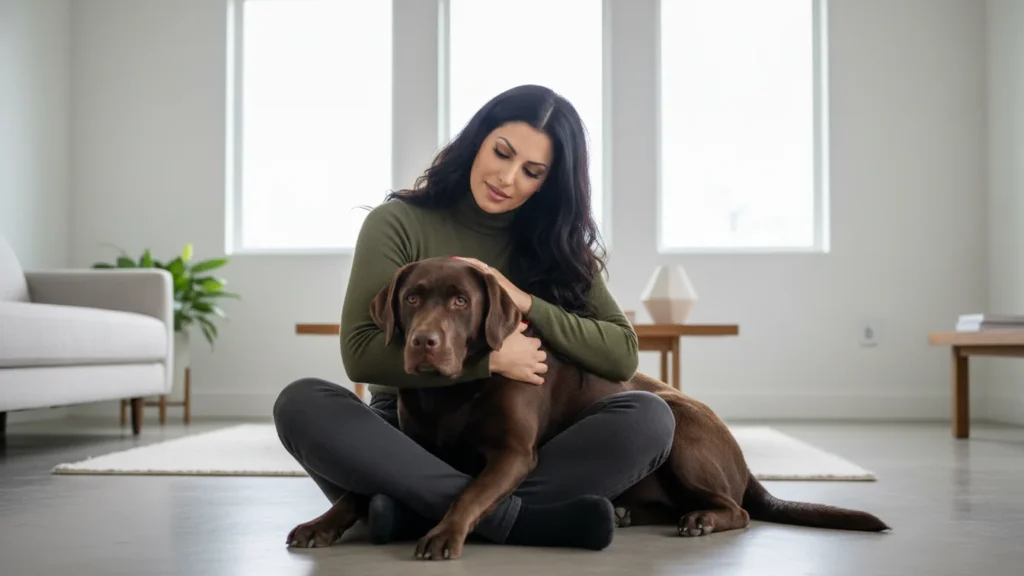
The ball rolls to a stop a few feet away, and for the first time in years, your dog just looks at it. No sprint, no snatch-and-parade-around-the-yard. Just a glance, maybe a half-hearted sniff, then he wanders off to lie down somewhere quiet instead.
It’s easy to miss moments like this, or to write them off as a random off-day. But according to veterinary behaviorists, this exact kind of subtle disengagement — quiet, gradual, easy to explain away — is often the clearest early signal of canine depression, long before anything more dramatic shows up.
What “Dog Depression” Actually Means
Worth saying upfront: canine depression isn’t a formal medical diagnosis the way it is in human medicine. What veterinarians and behaviorists are describing is a genuine, observable shift in mood and behavior — decreased interest in things a dog used to enjoy, changes in appetite, altered sleep, and withdrawal from normal social interaction. It’s real, it’s worth taking seriously, and it’s also something that needs careful attention rather than a quick label, because so many of its signs overlap with physical illness.
Dr. Leslie Sinn, a board-certified veterinary behaviorist, put the core signal simply: the main thing to watch for is a change in your dog’s normal demeanor — a dog who was previously eager to engage in something they clearly enjoyed, and now just… isn’t. She points to a common example: a dog who normally loves fetch, but now loses interest after just one or two throws. That drop-off is the tell, far more than any single dramatic moment.
The Subtle Signs Owners Miss
Depression in dogs rarely announces itself. It tends to show up as small shifts that only become obvious once you notice the pattern:
A duller version of daily enthusiasm. Not full disinterest, just less of it — a slower tail wag at the door, one lap around the yard instead of three, a walk that ends early because your dog seems ready to turn back.
Body language that’s quietly closed off. Drooping ears, a lower-carried tail, and eyes that look less alert than usual are consistent signals behaviorists point to, even in dogs who aren’t obviously “sad” in any dramatic sense.
A shift in appetite, in either direction. Some dogs eat less. Others graze more without real enthusiasm. Either change, sustained over several days, is worth noting rather than dismissing as pickiness.
Sleep that’s different, not just more of it. Extra napping is the obvious one, but disrupted or restless sleep can be just as telling — a dog who used to sleep soundly through the night now shifting positions constantly or waking more often.
Clinginess, or the opposite. This is where depression can genuinely confuse owners, because it doesn’t look the same in every dog. Some become unusually needy, staying closer to their owner than usual and seeking more physical contact. Others go the other direction entirely — seeking isolation, avoiding the family gatherings they used to join, or removing themselves from interaction altogether.
Out-of-character irritability. A normally easygoing dog snapping, growling, or reacting defensively to touch or noise can be a sign of emotional distress just as much as sadness is — frustration and withdrawal often travel the same road.
Repetitive self-soothing behaviors. Excessive licking of paws, a specific patch of fur, or bedding can function as a coping mechanism, providing a small physical comfort in place of the engagement that’s missing elsewhere.
The Caution Every Vet Wants Owners to Hear First
Here’s the part that matters most, and it’s not optional: before assuming depression, physical causes need to be ruled out. Dr. Sinn is direct about this. If a dog is slowing down or reluctant to engage, especially without an obvious life event behind it, her instinct is to bet heavily that something medical or pain-related is driving it — not mood alone.
This isn’t a small caveat. Arthritis, dental pain, thyroid issues, and a range of other conditions can produce a behavioral picture that looks identical to depression from the outside: low energy, reduced interest in play, appetite changes. A proper veterinary exam — history, physical exam, and often baseline bloodwork — is the only reliable way to tell the two apart, and it should always come before assuming the cause is purely emotional.
What Actually Triggers It
Once medical causes are ruled out, situational depression in dogs tends to cluster around a fairly consistent set of triggers:
- Loss of a companion, whether another pet in the household or a person the dog was closely bonded to — consistently named as one of the most common and significant causes
- A major routine or environment change, like a move, a new baby, a new pet, or even a previously stay-at-home owner returning to an office
- Reduced stimulation, including less exercise, less outdoor time, or fewer opportunities for mental engagement than the dog is used to
- Sensing a grieving household. Dogs are notably perceptive of emotional shifts in the people around them, and can mirror a family’s grief or stress even without a direct personal loss of their own
What Actually Helps
Most mild cases genuinely do improve, often within days to a few weeks, especially with a few consistent adjustments:
- Keep to a stable routine. Predictability is genuinely comforting to dogs during a period of change, even a small one like consistent walk and meal times.
- Rebuild engagement gradually, rather than all at once. If fetch has lost its shine, a short, low-pressure sniff walk or a new puzzle toy can re-open interest without pressure.
- Resist the urge to over-comfort moping. It’s a natural instinct to shower a sad-seeming dog with extra attention and treats, but doing so while they’re withdrawn can inadvertently reinforce the very behavior you’re trying to shift.
- Watch for what still sparks joy, and lean into it. If a car ride is the one thing that still gets a tail wag, short, frequent versions of that activity can help rebuild a positive baseline.
- Loop in your vet if it persists. Beyond a couple of weeks, or if appetite loss and withdrawal are significant, a veterinary behaviorist can help confirm the cause and, in more pronounced cases, discuss whether medication alongside behavioral support makes sense.
The Takeaway
Your dog can’t tell you he’s not feeling like himself. He’ll show you instead — in a slower tail wag, a skipped game of fetch, a few more hours spent staring at nothing in particular. None of these moments mean much on their own. Together, sustained over days or weeks, they’re worth exactly the attention they’re asking for.
Sources
- American Kennel Club – Depression in Dogs: Signs, Symptoms, Treatments
- PetMD – Dog Depression: Symptoms and How to Help Your Dog
- WebMD – Depression in Dogs: Symptoms, Causes, Treatments, and More
- Whole Dog Journal – How to Tell If a Dog Is Depressed
- Halo Collar – Understanding Dog Depression: Signs, Causes, and Solutions

Dr. Sofia Romano, DVM, is an experienced veterinarian specializing in small-animal medicine and preventive care. She has treated thousands of cases using evidence-based diagnostics and modern clinical practices. Dr. Romano is dedicated to providing science-backed pet-health guidance that helps owners make informed decisions and improve their pets’ quality of life.





Pingback: Why Dogs Eat Their Own Poop — Behavioral And Medical Causes Vets Explain
Pingback: Why Your Dog Pants Even When It’s Not Hot — Hidden Causes Vets Watch For
Pingback: Why Your Dog Suddenly Becomes Food Aggressive — The Hidden Triggers Most Owners Miss
Pingback: Why Dogs Act Different After Visiting The Vet — What Their Behavior Is Really Telling You
Pingback: Why Dogs Develop Anxiety After Moving Homes — The Quiet Stress That Changes Their Behavior
Pingback: Why Dogs Watch You More Than You Realize — The Quiet Behavior That Explains Everything
Pingback: Why Puppies Attach To Objects — The Hidden Emotional Reason They Cling To Toys, Blankets, And “Random” Things