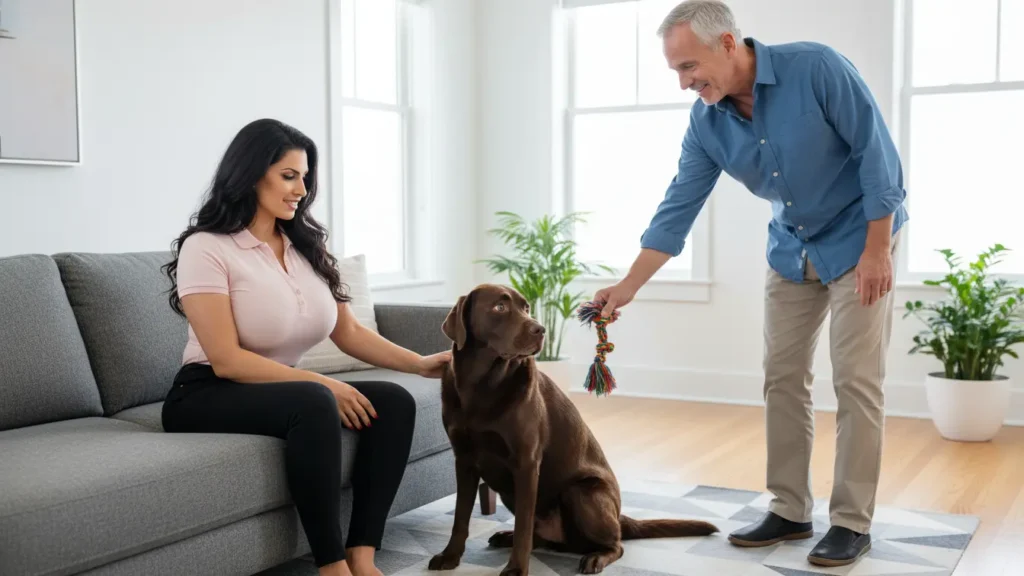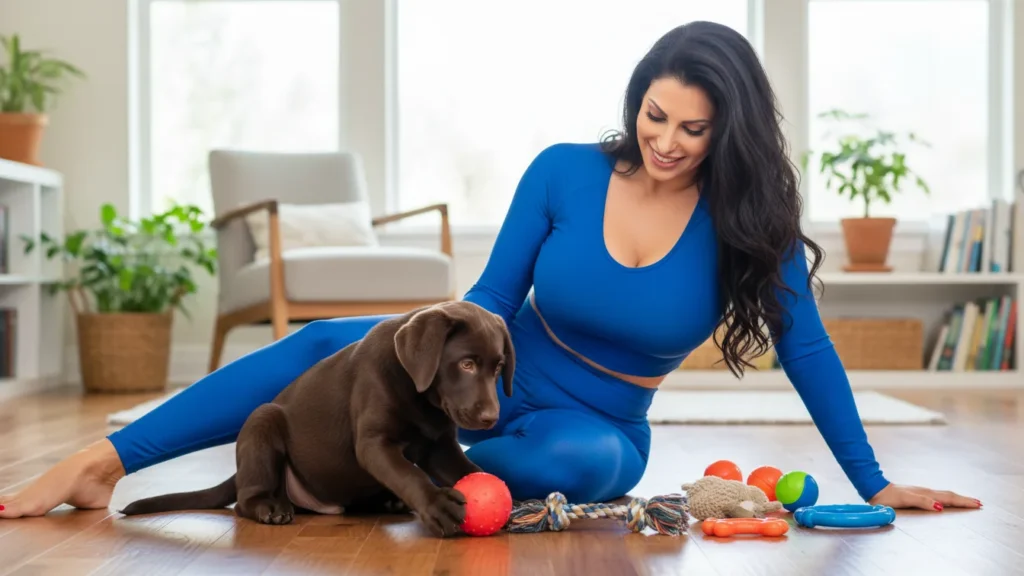
You’ve probably seen it: a puppy who won’t go anywhere without a particular stuffed toy, drags a specific blanket from room to room, or absolutely melts down when a certain worn-out chew rope goes missing for cleaning. Meanwhile, a dozen other perfectly good toys sit ignored in the basket.
It’s easy to write this off as a quirky preference, but there’s real developmental and behavioral science behind why puppies form such strong, specific attachments to particular objects — and understanding it says a lot about how puppies process comfort, security, and the enormous transition of early life.
Object Attachment Is a Well-Documented Developmental Behavior
What looks like a simple favorite toy is often functioning as what behavioral scientists in both human and animal development call a transitional object — something that provides comfort and a sense of security during a period of significant change or separation from a primary attachment figure.
This concept is well established in human child development (most parents recognize it instantly — the beloved stuffed animal, the specific blanket) and researchers studying animal behavior have observed strikingly similar patterns in young mammals, including puppies, particularly during the vulnerable window after separation from their mother and littermates.
Why This Happens Specifically in Puppies
1. The Loss of Constant Physical Contact
For the first weeks of life, puppies experience near-constant physical contact — warmth, movement, and closeness with their mother and littermates. When a puppy moves to a new home, that constant tactile comfort disappears abruptly, often for the first extended period in their life.
A soft toy or blanket can partially substitute for some of that lost sensory experience — providing a consistent texture, warmth (especially when snuggled against a body or warmed slightly), and a stable physical presence a puppy can return to repeatedly. This is thought to be a significant part of why plush, blanket-like objects are disproportionately popular attachment objects compared to harder toys.
2. Scent Becomes the Anchor
Puppies rely heavily on scent to build a sense of familiarity and security, and a favorite object accumulates a puppy’s own scent, along with the scent of their environment and people, over repeated contact. Some breeders send new owners home with a blanket or small item that carries the scent of the puppy’s mother and littermates specifically because this scent-based familiarity has a measurable calming effect during the stressful early transition period.
Once a puppy has an object saturated with familiar, comforting scent, that object becomes functionally different from any other identical-looking toy — which is exactly why a “spare” of the same toy often doesn’t provide the same comfort until it, too, has been sufficiently “broken in.”
3. Predictability in an Unpredictable World
Early puppyhood is full of novelty: new environments, new routines, new people, new expectations. A specific object that remains constant — same texture, same scent, same location — offers a small, reliable point of predictability during a period when almost everything else is new and uncertain.
This predictability appears to serve a genuine self-soothing function, similar to how consistent routines help regulate stress in young animals more broadly. The object itself doesn’t need to be special or high quality; its value comes almost entirely from its familiarity and consistency.
4. Redirected Comfort-Seeking Behavior
Puppies engage in natural comfort behaviors inherited from nursing and littermate contact — nuzzling, kneading, mouthing, and pressing against something soft. When a puppy is separated from littermates, these instinctual behaviors don’t disappear; they often redirect toward an available soft object that can approximate some of that original sensory experience, which is part of why so many favorite objects are soft, chewable, and roughly body-temperature-friendly once warmed by contact.
5. Individual Temperament Influences Intensity
Not every puppy forms an intense object attachment, and that variation is normal. Puppies with a naturally more anxious temperament, those separated from their litter earlier than the ideal 8-week mark, or those going through a particularly significant environmental transition (a big move, a busy household, multiple new experiences at once) often show stronger and more specific object attachment than puppies with calmer temperaments or gentler transitions.
Is This Something to Worry About?
In the vast majority of cases, no — object attachment in puppies is a normal, healthy coping mechanism, not a sign of insecurity or a problem requiring intervention. It typically becomes less intense as a puppy matures, gains confidence, and builds a stronger sense of security in their environment and relationships with their people.
It’s worth paying closer attention if:
- The attachment is paired with significant distress (frantic searching, destructive behavior, prolonged crying) whenever the object is unavailable, suggesting the coping mechanism has become a source of anxiety itself rather than relief.
- The puppy shows resource-guarding behavior around the object (growling, snapping) that goes beyond normal possessiveness, which may benefit from gentle guidance from a trainer.
- The behavior doesn’t gradually ease as the puppy matures and settles into their home, which can sometimes indicate broader underlying anxiety worth discussing with a vet or behaviorist.
What Helps
- Let the attachment happen naturally. There’s generally no need to discourage a healthy object attachment; it’s serving a real comfort function during a genuinely significant developmental transition.
- Keep the object accessible, especially during known stressful moments — bedtime, alone time, car rides, vet visits — since this is when the comfort function tends to matter most.
- Avoid frequent washing if possible, since washing removes the accumulated scent that gives the object much of its comforting value; light spot-cleaning is often a better compromise than a full wash cycle.
- Have a backup on hand, introduced early and used in rotation, in case the original is ever lost, damaged beyond repair, or needs a full wash — a puppy accustomed to two familiar objects adjusts far more easily than one bonded exclusively to a single irreplaceable item.
- Use the object intentionally during transitions, like introducing a puppy to a new environment or during a stressful vet visit, since it can meaningfully ease acute stress in these moments.
The Bigger Picture
That worn-out, slightly gross, endlessly beloved toy your puppy refuses to be separated from isn’t just a preference — it’s a small, soft stand-in for the closeness, predictability, and security your puppy is still learning to find in their new world. It’s not a sign of weakness or an oddity to correct. It’s a completely normal, often quite touching part of how young animals cope with one of the biggest transitions of their early life.
Give it time, and most puppies gradually loosen that grip as confidence grows — but there’s nothing wrong with letting them hold on a little longer while they need to.
Sources
- American Kennel Club – Why Do Puppies Get Attached to Certain Toys?
- American Veterinary Society of Animal Behavior – Position Statement on Puppy Socialization
- ASPCA – Comfort Behaviors and Coping Mechanisms in Young Dogs
- Cornell University College of Veterinary Medicine – Puppy Developmental and Attachment Behavior
- Journal of Veterinary Behavior – Attachment and Comfort-Seeking Behavior in Domestic Dogs
Dr. Sofia Romano, DVM, is an experienced veterinarian specializing in small-animal medicine and preventive care. She has treated thousands of cases using evidence-based diagnostics and modern clinical practices. Dr. Romano is dedicated to providing science-backed pet-health guidance that helps owners make informed decisions and improve their pets’ quality of life.