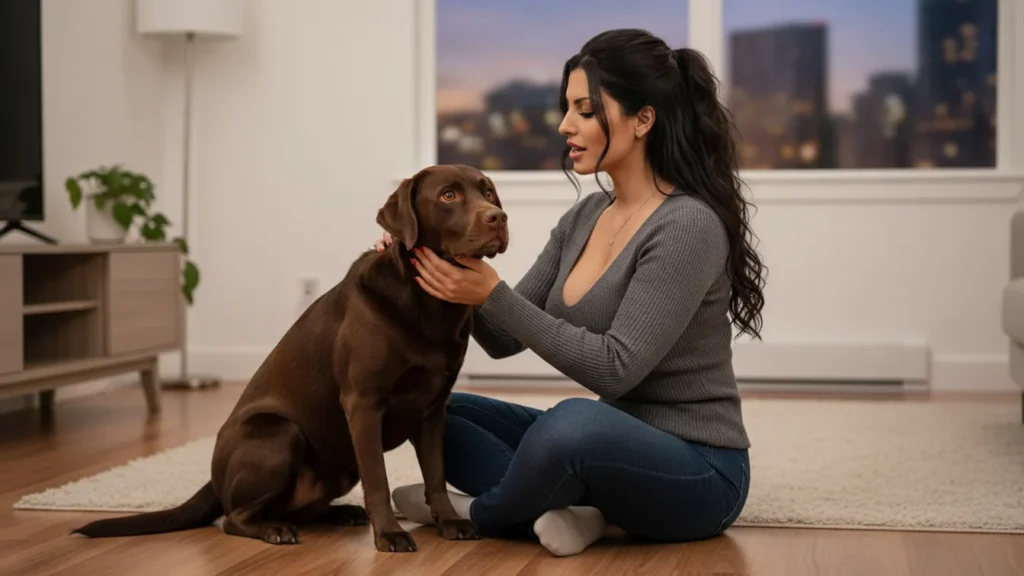
When the Day Slows Down—but Your Dog Doesn’t
The lights are dim.
The TV is low.
Everyone is finally sitting still.
And that’s when it starts.
Your dog begins pacing.
They stare at you.
They whine, hover, or refuse to settle.
Many owners expect dogs to relax when the house gets quiet.
For some dogs, the opposite happens.
And it’s rarely talked about.
Why This Matters More Than It Seems
Evening anxiety is often dismissed as:
- Attention-seeking
- Excess energy
- “Just a phase”
But repeated nightly anxiety can:
- Disrupt sleep
- Increase clinginess
- Create long-term stress patterns
- Slowly erode emotional confidence
Understanding why quiet evenings feel uncomfortable for some dogs allows you to fix the root cause—without force or frustration.
Quiet Doesn’t Always Mean Calm to a Dog
For humans, quiet signals rest.
For dogs, quiet can signal uncertainty.
During the day, dogs rely on:
- Movement
- Sound
- Predictable activity
- Environmental feedback
When all stimulation suddenly drops, some dogs lose their emotional anchor.
The world feels… unclear.
The Role of Anticipation and Unmet Expectation
Evenings are loaded with learned expectations.
Dogs associate certain times with:
- Walks
- Play
- Feeding
- Owner availability
When the evening becomes still but the expected event hasn’t happened yet, the brain stays alert.
That alertness looks like anxiety.
How the Canine Brain Reacts to Sudden Stillness
Dogs are pattern-based animals.
Abrupt transitions—busy to silent—can confuse the nervous system.
Instead of relaxing, the brain asks:
“Did something stop too early?”
“Is something missing?”
“Should I stay alert?”
This is especially common in:
- High-sensitivity dogs
- Working breeds
- Dogs with strong routines
Hormonal Shifts That Happen in the Evening
As daylight fades, hormone levels change.
In dogs:
- Cortisol may rise briefly (alertness)
- Melatonin release depends on emotional safety
- Digestive and metabolic activity increases
If emotional needs aren’t met earlier in the day, these shifts amplify restlessness instead of calm.
Why Quiet Amplifies Emotional Awareness
During busy hours, dogs are distracted.
In quiet moments, awareness increases.
They notice:
- Your mood
- Subtle tension
- Changes in breathing
- Unresolved energy
If the household carries stress—even unspoken—quiet evenings magnify it.
Common Signs of Quiet-Evening Anxiety
Dogs express discomfort differently.
Common behaviors include:
- Pacing or circling
- Staring at owners
- Whining or sighing
- Hovering without settling
- Restlessness despite exercise
These aren’t “bad habits.”
They’re communication signals.
Quiet Evening Anxiety vs Normal Wind-Down Behavior
| Normal Evening Calm | Quiet-Evening Anxiety |
|---|---|
| Dog settles gradually | Dog cannot relax |
| Body posture softens | Body remains tense |
| Dog sleeps easily | Dog startles or paces |
| Calm increases with silence | Anxiety increases with silence |
Recognizing the difference prevents mislabeling the behavior.
A Real-Life Pattern Many Owners Miss
A dog gets a walk in the morning.
Another short walk in the afternoon.
Evening arrives.
No mental stimulation.
No structured activity.
Just silence.
The dog paces—not from excess energy, but from unfinished emotional processing.
The Most Common Owner Mistake
The biggest mistake is waiting until anxiety appears to respond.
This teaches the dog:
“Anxiety brings interaction.”
Instead, prevention works better than reaction.
Another Mistake: Overstimulating Late at Night
Some owners try to fix anxiety with intense play at night.
This backfires.
It raises arousal when the nervous system needs gentle regulation.
Why Some Dogs Need “Transition Time”
Dogs don’t switch modes instantly.
They need a bridge between:
Active → Calm
Without it, the brain stays halfway alert.
This is why structured wind-down routines are powerful.
How to Help Your Dog Feel Safe During Quiet Evenings
Step 1: Add a Predictable Evening Ritual
Not excitement—structure.
Examples:
- Sniff walk
- Licking mat
- Gentle training cues
This signals:
“The day is ending safely.”
Step 2: Use Mental Fatigue, Not Physical Exhaustion
Mental work settles the nervous system faster than running.
Sniffing and problem-solving reduce anxiety hormones.
Step 3: Normalize Calm Presence
Sit calmly.
Avoid overstimulation.
Reward quiet settling with soft acknowledgment.
Step 4: Avoid Sudden Silence
Soft background sounds can help:
- Low-volume music
- White noise
- Familiar ambient sound
Total silence can feel unnatural to some dogs.
A Hidden Tip Most Owners Don’t Hear
Dogs often mirror unresolved human stress most strongly at night.
If you struggle to relax, your dog may too.
Calm evenings start with calm energy.
Why This Matters Today
Modern dogs live structured but emotionally complex lives.
They’re busy all day—then suddenly expected to switch off.
Understanding quiet-evening anxiety helps:
- Prevent nighttime stress
- Improve sleep quality
- Reduce clinginess
- Strengthen emotional resilience
When Quiet-Evening Anxiety Signals Something More
Occasionally, anxiety at night may relate to:
- Pain that worsens at rest
- Cognitive changes in senior dogs
- Digestive discomfort
- Chronic stress overload
If behavior escalates or changes suddenly, professional guidance is appropriate.
Frequently Asked Questions
1. Why does my dog get anxious when everything is calm?
Sudden stillness can increase awareness and uncertainty in sensitive dogs.
2. Is evening anxiety a sign of boredom?
Often yes—especially mental boredom rather than physical.
3. Should I ignore my dog when they pace?
No. Calm structure works better than ignoring or reacting emotionally.
4. Can background noise help dogs relax?
Yes. Soft, consistent sound can reduce vigilance.
5. Will this behavior go away on its own?
It often improves when routines and emotional needs are balanced.
Key Takeaways
- Quiet evenings can feel emotionally loud to dogs
- Sudden stillness increases vigilance
- Anticipation and unmet routines fuel anxiety
- Gentle transitions calm the nervous system
- Prevention works better than reaction
A Calm Ending to a Quiet Problem
Your dog isn’t “acting up” at night.
They’re responding to a moment when the world goes still—but their nervous system hasn’t yet learned it’s safe to rest.
With the right structure, calm doesn’t have to be confusing.
It can finally feel peaceful—for both of you.
Disclaimer: This article is for general educational purposes and does not replace individualized veterinary or behavioral advice.

Dr. Sofia Romano, DVM, is an experienced veterinarian specializing in small-animal medicine and preventive care. She has treated thousands of cases using evidence-based diagnostics and modern clinical practices. Dr. Romano is dedicated to providing science-backed pet-health guidance that helps owners make informed decisions and improve their pets’ quality of life.





Pingback: Why Dogs Mirror Household Tension — The Emotional Sensitivity Most Families Underestimate
Pingback: Why Dogs Become Restless At The Same Time Daily — The Hidden Clock Their Bodies Follow
Pingback: Why Dogs Struggle After Routine Changes — The Hidden Stress Response Most Owners Miss