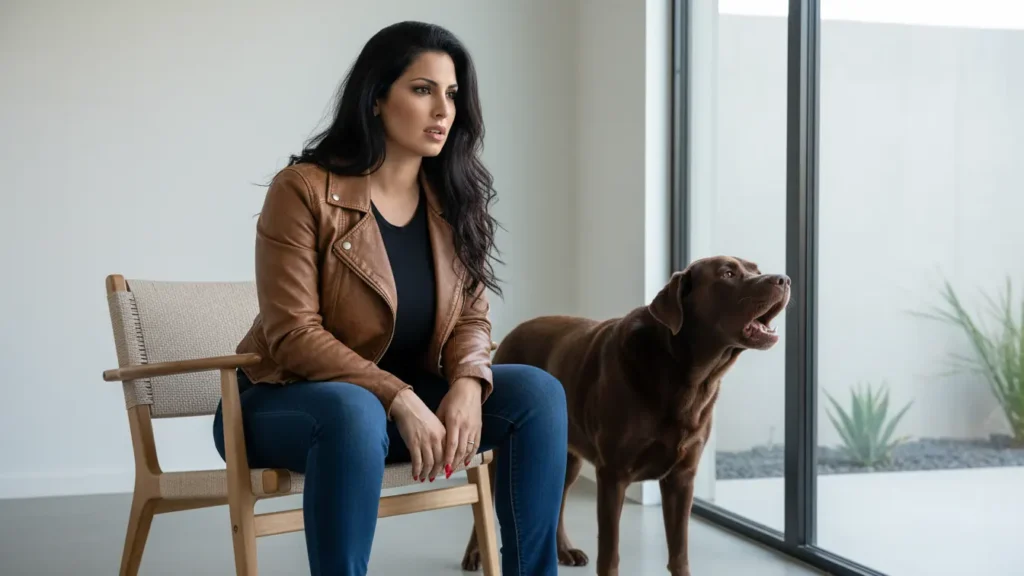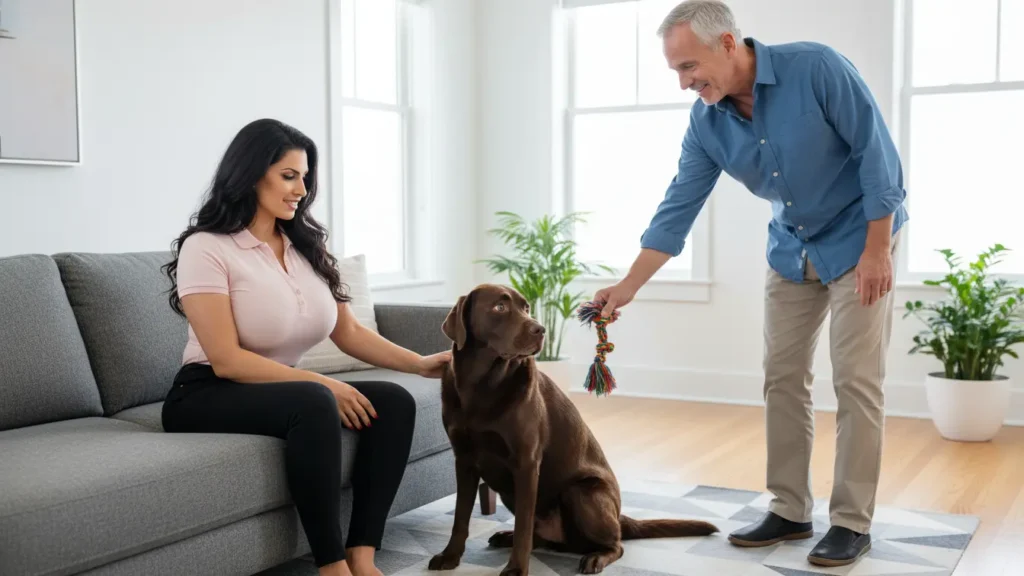
There’s a moment a lot of dog owners eventually recognize: the easygoing dog who used to tolerate anything — kids climbing on him, strangers reaching for his head, a nap interrupted without complaint — starts stiffening up. A low growl when someone gets too close to his bed. A snap when a grandchild leans in for a hug. Less enthusiasm at the door, more time alone in another room.
The instinct is to read this as a personality change — “he’s just getting grumpy in his old age.” But veterinary behaviorists see this pattern constantly, and it’s rarely about temperament at all. It’s almost always the dog telling you, in the only language available to him, that something about his body or his world has changed and he no longer feels as safe as he used to.
It’s Usually Pain Wearing a Different Face
The single biggest driver of new “guardedness” in older dogs is physical pain, and the most common source is osteoarthritis. Joint disease affects a striking number of dogs — roughly 1 in 5 dogs over age one, and around 80% of dogs over age eight, according to veterinary estimates — and it causes ongoing inflammation and discomfort that dogs are instinctively wired to hide rather than announce.
That instinct to mask pain is exactly what makes it so easy to misread. A dog in chronic joint pain often becomes withdrawn — greeting family less enthusiastically, spending more time alone, and pulling away from touch, especially grooming or handling near sore areas, because discomfort that starts in one joint can eventually make the whole body feel more sensitive to contact. A dog who used to love being brushed or picked up may start flinching, stiffening, or growling at the exact same handling that never bothered him before. That’s not a change in how much he loves you. It’s a change in how much it hurts.
Fading Senses Turn Ordinary Moments Into Startling Ones
Vision and hearing naturally decline with age, and that decline quietly rewires how a dog experiences everyday household life. A dog who can no longer hear you approaching from behind, or can no longer clearly see a fast-moving child cutting across the room, loses the early warning system that used to let him prepare for contact. Being touched or approached without warning is startling for any animal — and a startled, already-uncomfortable senior dog is far more likely to react defensively than the same dog would have at two years old.
This is one of the most misread shifts in aging dogs. Owners often interpret the growl or snap as sudden bad behavior, when it’s frequently a dog who was simply caught off guard by something he used to sense coming.
The Guarding Instinct: Comfort and Space Start to Matter More
As mobility declines, everyday comforts take on outsized importance. A senior dog with arthritis may rely heavily on one particular soft bed that eases pressure on aching joints, or on being able to slowly, safely retreat when he’s overstimulated. Veterinary behavior specialists note that illnesses like arthritis and neurologic disease can cause real anxiety or frustration when a dog can no longer easily reach a favorite resting spot, or can’t move away quickly from an approaching child or another pet the way he once could.
Put simply: an older dog who feels physically vulnerable and less able to escape a situation is more likely to guard the resources and spaces that make him feel secure — his bed, his food, his corner of the room — because for the first time, he isn’t confident he can simply walk away if things go wrong.
When It’s Cognitive: Canine Cognitive Dysfunction
Sometimes the shift isn’t about pain or senses at all — it’s about the brain itself aging. Canine cognitive dysfunction (CCD), the dog equivalent of Alzheimer’s disease, is remarkably common in senior dogs: studies cited by veterinary sources found that about 28% of dogs aged 11–12 show at least one sign of cognitive decline, rising to roughly 68% of dogs aged 15–16.
Veterinarians describe the hallmark signs using the acronym DISHAA — disorientation, changes in social interactions, altered sleep-wake cycles, house soiling, and changes in activity level, along with increased anxiety. A dog with CCD may become more clingy or, just as often, more withdrawn and irritable when approached, simply because he’s more confused and less able to process what’s happening around him. What looks like a personality change is often a brain quietly losing some of its former clarity.
How to Tell the Difference — And What to Do
Because pain, sensory loss, and cognitive decline can all produce the same surface behavior — guarding, growling, withdrawal — the right first step is never punishment or assuming your dog has simply “gotten difficult.” It’s a veterinary visit.
- Describe the specific change, not just “he’s grumpy now” — when it started, what triggers it (touch, approach, specific body areas), and whether it’s paired with stiffness, sleep changes, or confusion.
- Ask about a pain and mobility assessment, especially if the guarding centers around being touched, picked up, or approached while resting.
- Bring up cognitive symptoms directly — disorientation, night waking, house soiling, or a change in how he interacts with the family — since these point veterinarians toward CCD screening rather than a pain workup.
- Adjust the environment in the meantime: supportive orthopedic bedding, a predictable routine, warning cues before approaching or touching him, and a quiet retreat space where he won’t be disturbed.
A dog that becomes guarded with age isn’t losing his sweetness. He’s adapting, as best he can, to a body and a world that no longer feel as manageable as they used to — and that shift deserves patience and a vet’s attention, not a new label.
Sources
- VCA Animal Hospitals — How to Recognize Pain in Aging Dogs
- Cornell University College of Veterinary Medicine — Osteoarthritis
- American Kennel Club — Can Senior Dogs Get Alzheimer’s?
- VCA Animal Hospitals — Behavior Counseling: Senior Pet Cognitive Dysfunction
- VCA Animal Hospitals — Behavior Counseling: Senior Pet Behavior Problems

Dr. Sofia Romano, DVM, is an experienced veterinarian specializing in small-animal medicine and preventive care. She has treated thousands of cases using evidence-based diagnostics and modern clinical practices. Dr. Romano is dedicated to providing science-backed pet-health guidance that helps owners make informed decisions and improve their pets’ quality of life.