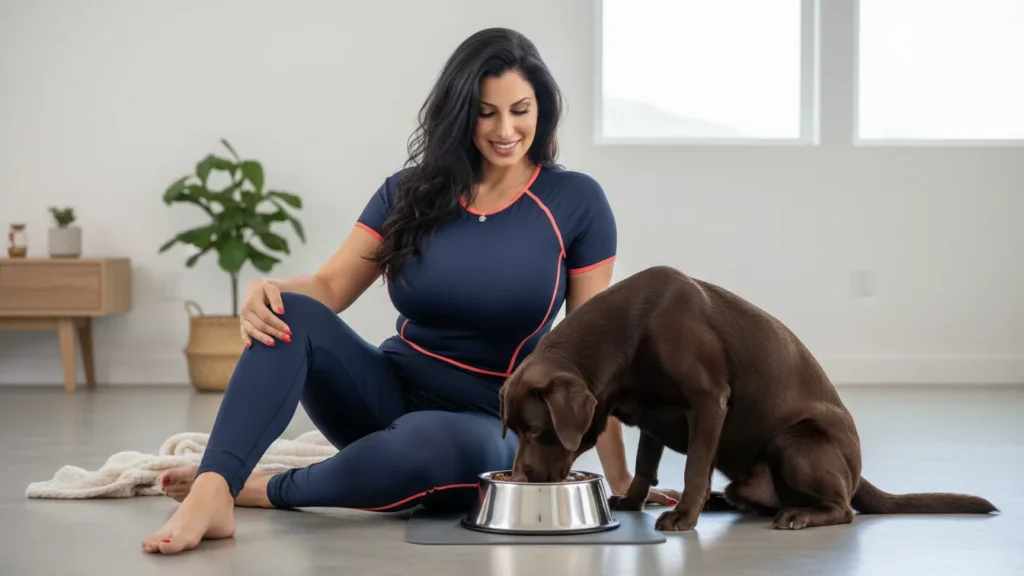
The bowl goes down. Your dog approaches, sniffs, and then… stops. Stands there for a few seconds, sometimes longer, sometimes looking up at you before finally digging in — or, occasionally, walking away entirely without eating a bite.
For a species famous for treating mealtime like the most exciting event of the day, that pause can feel oddly out of character. Is something wrong? Are they not hungry? Is this a sign of a bigger problem?
The honest answer: it depends on the pattern, the context, and what else is going on — because pausing before eating can stem from anything from completely normal instinctive behavior to a meaningful early signal of a medical issue. Here’s how to tell the difference.
Not All Pauses Are Created Equal
The single most useful diagnostic question isn’t “why is my dog pausing” — it’s “is this a new pattern, and is it consistent?” A brief, occasional pause in an otherwise healthy, food-motivated dog usually means something very different from a persistent, worsening pause paired with other symptoms. Context does most of the explanatory work here.
Normal, Non-Concerning Reasons
1. Instinctive Caution Around Food
Wild canids typically approach food cautiously, scanning for threats before committing to eating — a survival behavior that historically protected against ambush while vulnerable and focused. Even generations removed from that context, many domestic dogs retain a residual version of this instinct: a brief scan-and-assess pause before eating, especially in a busy or unfamiliar environment.
2. Scent Investigation
Dogs process food largely through smell before taste, and a brief sniffing pause is often simply thorough olfactory investigation — checking that the food matches expectations before committing, particularly if the food formula, brand, or batch has changed even slightly.
3. Temperature Sensitivity
Freshly prepared or recently refrigerated food that hasn’t fully reached room temperature can prompt a brief hesitation in some dogs, who may wait a moment or investigate before eating food that feels notably colder or warmer than usual.
4. Social Context
Dogs are social eaters by evolutionary history, and some dogs show a brief hesitation when eating alone feels different from usual — for example, if a household routine changes and a dog who typically eats alongside another pet or their owner nearby is suddenly eating in an unfamiliar configuration.
Reasons Worth Paying Closer Attention To
5. Dental Pain
Dental disease is extremely common in dogs, and pain from a fractured tooth, gum inflammation, or an abscess can cause a dog to approach food eagerly but then hesitate or pull back once chewing becomes uncomfortable. This is one of the most frequently overlooked causes of a new eating pause, particularly in dogs who show interest in food but seem reluctant to commit to actually eating it.
6. Nausea or Gastrointestinal Discomfort
Mild nausea, acid reflux, or general gastrointestinal upset can cause a dog to approach food with apparent interest but then hesitate, lick their lips repeatedly, or walk away without eating. This pattern — interest without follow-through — is a commonly recognized behavioral indicator of nausea in veterinary settings, since dogs can’t communicate the sensation directly.
7. Anxiety Around the Feeding Location or Timing
Dogs with general anxiety, or those who’ve experienced resource competition (from other pets, or in some cases from a difficult shelter or previous home history), can develop hesitation specifically tied to the feeding environment — pausing to assess safety before committing to eat, even in an otherwise secure home.
8. Pain Elsewhere in the Body
Discomfort unrelated to the mouth or stomach — joint pain that makes lowering the head into a bowl uncomfortable, or general full-body pain from an underlying condition — can also produce hesitation before eating, since the physical act of eating requires a posture and movement pattern that can become uncomfortable with certain injuries or conditions.
9. Underlying Illness Affecting Appetite
More significant medical conditions — including kidney disease, liver issues, or other systemic illnesses — can affect appetite regulation more broadly, sometimes producing a pattern where a dog approaches food out of habit or routine but doesn’t have genuine hunger driving them to actually eat.
How to Tell the Difference
A few practical questions can help clarify what you’re likely dealing with:
- Is it occasional or consistent? A pause that happens now and then, especially with an otherwise healthy, energetic dog, is far less concerning than a consistent, daily pattern.
- Does the dog eventually eat normally, or refuse entirely? Eventually eating with normal enthusiasm suggests a milder cause; consistent partial eating or outright refusal is more concerning.
- Are there other symptoms? Weight loss, lethargy, vomiting, bad breath, pawing at the mouth, or changes in water intake alongside the eating pause are all signals that warrant a veterinary visit rather than a wait-and-see approach.
- Did anything change recently? A new food, a new feeding location, a household change, or a recent illness can offer helpful clues about likely causes.
- Is the pause getting worse over time? A pattern that’s stable or improving is generally less urgent than one that’s progressively worsening.
When to See a Vet
Veterinary evaluation is generally recommended if:
- The pause is a new, persistent pattern rather than an occasional occurrence
- It’s paired with any other symptom (weight loss, vomiting, lethargy, bad breath, visible mouth discomfort)
- Your dog goes more than 24 hours without eating normally (or less, for puppies, small breeds, or dogs with existing health conditions, where prolonged appetite loss can become a more urgent concern more quickly)
- The behavior is escalating rather than staying consistent or resolving on its own
What Helps
- Rule out dental issues first, since dental pain is one of the most common and most treatable causes of eating hesitation, and a professional dental exam can identify problems that aren’t visible during a casual look in your dog’s mouth.
- Try a consistent, calm feeding routine — same time, same location, minimal surrounding chaos — to reduce any environmental or social hesitation.
- Warm refrigerated food slightly if temperature sensitivity seems to be a factor, since bringing food closer to room temperature often resolves this specific cause quickly.
- Monitor and log the pattern for a few days if the cause isn’t obvious, noting frequency, duration, and any accompanying behavior, since this information is genuinely useful for a veterinary evaluation if one becomes necessary.
- Avoid immediately switching foods repeatedly, since frequent diet changes can sometimes create or worsen hesitation patterns rather than resolve them, unless a specific food sensitivity is suspected and confirmed with your vet.
The Bigger Picture
A brief pause before eating is often nothing more than an old instinct or a moment of sensory investigation — a small, harmless holdover from a wilder ancestral past. But because eating is such a fundamental, consistently reinforced behavior, any real change in that pattern deserves a closer look, since it’s often one of the more sensitive and useful early indicators of both dental and broader physical health.
Trust the pattern, watch the context, and when in doubt, let a veterinary exam settle the question — it’s usually a quick way to either rule out concern entirely or catch something meaningful early.
Sources
- American Kennel Club – Why Is My Dog Not Eating?
- American Veterinary Society of Animal Behavior – Position Statement on Recognizing Illness-Related Behavior Change
- ASPCA – Appetite Changes and When to See a Veterinarian
- Cornell University College of Veterinary Medicine – Canine Dental Health and Appetite Regulation
- Journal of Veterinary Behavior – Behavioral Indicators of Nausea and Gastrointestinal Discomfort in Dogs

Dr. Sofia Romano, DVM, is an experienced veterinarian specializing in small-animal medicine and preventive care. She has treated thousands of cases using evidence-based diagnostics and modern clinical practices. Dr. Romano is dedicated to providing science-backed pet-health guidance that helps owners make informed decisions and improve their pets’ quality of life.





Pingback: Why Dogs Drink Water In Short Bursts — The Quiet Hydration Pattern Most Owners Misread