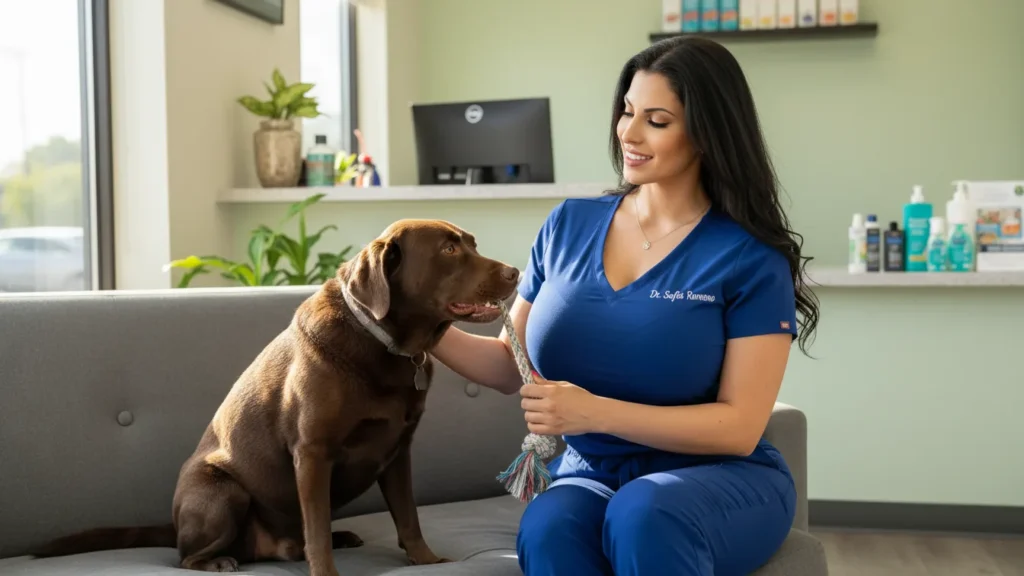
You picked up your dog from the vet, and something’s off. Maybe they won’t make eye contact. Maybe they’re clingier than usual, following you room to room like a shadow. Or maybe it’s the opposite — they’ve curled up in the corner of the couch and want to be left completely alone. Either way, it’s not the dog who left the house that morning.
If you’ve ever driven home wondering “what did they do to my dog in there,” you’re not overreacting. Dogs really do come back different after a vet visit, and the shift isn’t random. It’s a fairly predictable stress response, and once you understand what’s driving it, the behavior stops feeling mysterious — and you stop worrying every single time.
The Vet Visit Is a Bigger Deal to Your Dog Than You Think
From a dog’s perspective, a vet visit stacks up almost every ingredient of a stressful experience at once: an unfamiliar building, strange smells (including the smell of other stressed animals), being restrained by strangers, being lifted onto a cold table, and sometimes an actual needle or uncomfortable procedure. None of that is dangerous, but none of it is explainable to the dog either. They can’t be told “this is for your own good.” All they register is that something unpredictable and slightly threatening just happened to their body.
That’s the lens to view all the post-vet behavior through: not “my dog is broken” or “the vet did something wrong,” but “my dog just went through something confusing and is now decompressing from it.”
The Clingy Dog
This is one of the most common reactions, and it’s rooted in a simple instinct: after something unsettling happens, a dog looks for safety, and you are that safety. A dog who won’t leave your side, paws at you for attention, or seems anxious when you step out of the room isn’t being needy for the sake of it — they’re re-establishing that their world is stable again. This usually fades within a few hours as the stress hormones from the visit clear out of their system.
The Withdrawn Dog
Some dogs go the opposite direction and want space instead of contact. This is often a dog processing the experience the way they process most things — through rest. A vet visit is physically and mentally draining even when nothing painful happened; the constant vigilance of being somewhere unfamiliar is tiring in the same way a long day of travel is tiring for a person. Give a withdrawn dog a quiet spot and let them come back to you on their own schedule rather than pulling them out of their shell.
The Grumpy or Snappy Dog
If your normally easygoing dog seems irritable, quicker to growl, or less tolerant of being touched right after a visit, it’s frequently about lingering physical discomfort or leftover tension in the body rather than a personality change. Being restrained, having a temperature taken, or getting an injection can leave a dog feeling guarded in a way that shows up as short-temperedness for the rest of the day. This almost always settles down as the soreness or nerves fade.
The Dog Who Won’t Go Near the Car (Or the Vet’s Door) Next Time
This is the one that frustrates owners the most, because it shows up weeks or months later. Dogs build strong associations quickly, and if a visit involved anything uncomfortable, the car ride there, the parking lot, or even the vet’s front door can become linked to that discomfort. The dog isn’t being stubborn — they’ve made a completely logical connection between “this place” and “something unpleasant happened,” and now their body is giving them an early warning signal to avoid it.
The Sleepy or Groggy Dog
If your dog had any sedation, vaccines, or a procedure, grogginess afterward is expected and usually resolves within a day. Vaccines in particular can cause mild fatigue or low appetite for 24 to 48 hours simply because the immune system is doing real work in the background. A dog who naps more than usual the evening after a vaccine appointment is behaving completely normally.
The Dog Who Suddenly Wants to Be Fed or Comforted With Treats
Some owners notice their dog becomes food-motivated or almost demanding right after getting home. Part of this is genuine hunger or thirst if the visit involved fasting or a long wait, and part of it is simple stress-seeking comfort in a familiar, reliable ritual. It’s one of the more harmless post-vet behaviors and usually passes once the routine feels normal again.
What Actually Helps a Dog Reset After a Vet Visit
The good news is that none of these reactions require complicated intervention — they mostly need time, low pressure, and a return to routine:
- Let them set the pace. Whether they want closeness or space, following their lead rather than forcing interaction speeds up the return to normal.
- Keep the rest of the day calm and familiar. Skip the dog park, skip new visitors, skip anything else unpredictable on vet-visit days.
- Offer water and a light meal, especially if there was any fasting or if the visit ran long.
- Use positive associations for next time. A treat in the car, a happy tone of voice at the clinic door, and a fun activity right after future visits can gradually undo the “this place is bad” association.
- Watch for anything that doesn’t resolve within a day or two. Occasional off behavior right after a visit is normal; behavior that lingers, worsens, or comes with physical symptoms is worth mentioning to your vet, since it may be about the visit itself rather than lasting emotional fallout.
The Bottom Line
Your dog isn’t holding a grudge, and they’re not “different” in any lasting sense — they’re processing a genuinely confusing, mildly stressful experience the only ways they know how: by clinging, withdrawing, resting, or acting a little on edge. Give it a day, keep things calm and familiar, and the dog who walked in that morning will be back by evening.

Dr. Sofia Romano, DVM, is an experienced veterinarian specializing in small-animal medicine and preventive care. She has treated thousands of cases using evidence-based diagnostics and modern clinical practices. Dr. Romano is dedicated to providing science-backed pet-health guidance that helps owners make informed decisions and improve their pets’ quality of life.


Pingback: Why Dogs Pee When Excited — The Gentle, Proven Ways To Stop It Without Punishment