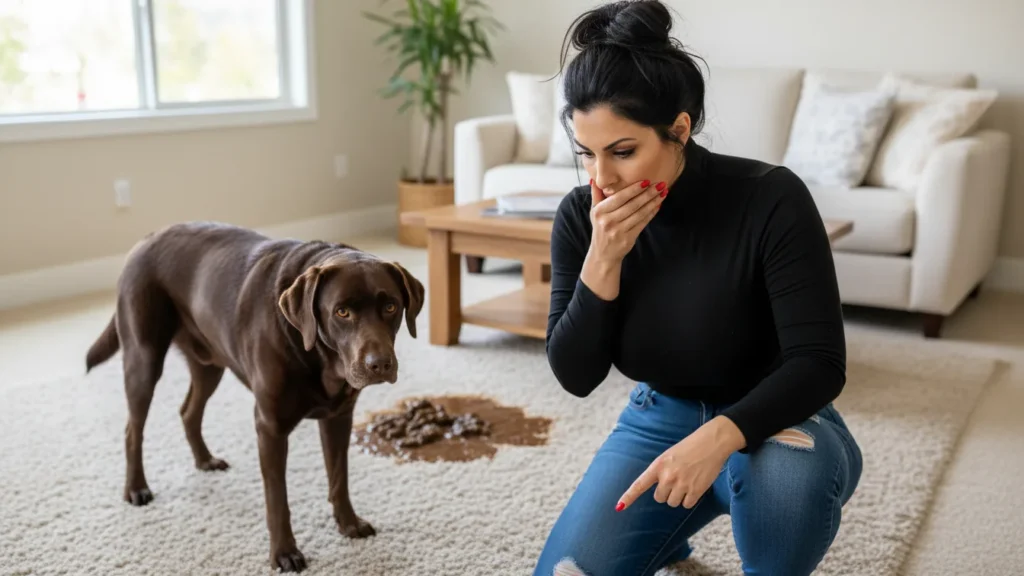
One day your dog is completely normal. The next, you’re on a 6 a.m. emergency trip to the backyard, and you have absolutely no idea why. No new food, no obvious garbage raid, nothing that looks like a smoking gun. Sudden diarrhea in dogs feels random from the owner’s side of things, but it almost never actually is. There’s usually a specific trigger sitting in plain sight — it’s just not the one most owners think to look for.
Once you understand the real range of causes, from the obvious to the sneaky, sudden diarrhea stops feeling like a mystery and starts looking like a pattern you can actually catch and prevent.
It’s a Symptom, Not a Diagnosis
The first thing worth knowing is that diarrhea itself isn’t a disease — it’s the digestive system’s response to something else going on. Loose stool happens when food moves through the gut too quickly for water and nutrients to be properly absorbed, and almost anything that irritates or disrupts the gut can trigger that. That’s exactly why it can seem to come out of nowhere: the actual disruption often happened hours or even a day or two before the diarrhea shows up.
The Obvious Trigger: Dietary Indiscretion
This is the single most common cause, and it covers a lot more than most owners assume. It’s not just “ate the trash” — it includes rich table scraps, an extra handful of fatty treats, something scavenged on a walk, or even a dead animal in the yard. Dogs are opportunistic eaters, and a lot of these small “indiscretions” happen completely out of sight, which is exactly why the resulting diarrhea feels unexplained the next morning.
The Trigger Most Owners Don’t Think About: Diet Changes That Weren’t Sudden At All
Most owners know that abruptly switching dog food can cause diarrhea. What catches people off guard is how small a change can still count. A new bag of the exact same brand with a slightly different formulation, a new batch of treats, a supplement added to the bowl, or even a flavored medication can be enough to shift the gut’s balance in a sensitive dog. Because the change feels minor to the owner, it’s rarely the first suspect — even though it’s one of the most common actual causes.
The Trigger Hiding in Plain Sight: Stress
This is the one that surprises people the most. A dog’s gut is remarkably sensitive to emotional state, and stress-related diarrhea is genuinely common — not a stretch of an explanation, but a well-documented digestive response. Triggers include travel, boarding, a new pet or family member, a recent move, separation anxiety, a change in routine, or even an especially chaotic day. The tricky part is that the dog can seem completely fine — normal appetite, normal energy — while their gut is quietly reacting to something emotional rather than dietary. Owners searching for a food-related explanation often miss this one entirely because there’s no obvious “culprit” to point to.
Parasites and Infections That Don’t Announce Themselves
Intestinal parasites like roundworms, hookworms, whipworms, giardia, and coccidia can trigger diarrhea without any other visible signs at first, especially in dogs that spend time around shared outdoor spaces, other dogs’ waste, or contaminated water. Bacterial and viral infections work the same way — a dog can pick something up during a walk, a dog park visit, or boarding, and not show symptoms until the infection has had time to take hold.
Toxins and Foreign Objects
Anything toxic — chocolate, certain plants, some human medications, spoiled food, or specific essential oils — can cause sudden GI upset, sometimes seriously. Foreign objects are a sneakier version of the same problem: a swallowed toy piece, sock, or rawhide chunk that doesn’t pass properly can partially obstruct the gut, and the resulting diarrhea is often the first visible sign that something is physically stuck, not just dietary.
Underlying Health Conditions
Sometimes sudden diarrhea is the first outward sign of something bigger — an emerging food sensitivity, a chronic digestive condition, organ dysfunction, or a hormonal imbalance. These cases usually stand out because the diarrhea doesn’t resolve within a day or two, or because it starts recurring in a pattern rather than showing up as an isolated one-off event.
Why the Dog Can Seem Totally Fine and Still Have Diarrhea
One of the more confusing parts for owners is that a dog can have a bout of diarrhea and still act completely normal — eating well, playing, full of energy. That’s actually a good sign in the short term, since it usually points to a mild dietary or stress-related trigger rather than something more serious. But normal behavior doesn’t rule out an emerging problem entirely, especially if the loose stool keeps repeating or gets worse instead of better.
What Actually Helps
- Track the last 24–48 hours, not just the last few hours. The real trigger — a treat, a stressful event, a food swap — is often further back than owners assume.
- Withhold food briefly if advised by your vet, giving the gut time to settle before reintroducing a bland, easily digestible meal.
- Keep your dog hydrated, since fluid loss is the main real risk with ordinary diarrhea.
- Introduce any diet changes gradually over five to seven days rather than switching food overnight.
- Reduce predictable stressors where you can — consistent routines, calm transitions, and gradual introductions to new environments all lower the odds of a stress-triggered episode.
- Know when to call the vet: diarrhea lasting more than 24–48 hours, or accompanied by blood, mucus, vomiting, lethargy, or visible pain, needs veterinary attention rather than home management. Puppies, seniors, and dogs with existing health conditions warrant an earlier call even with milder symptoms.
The Bottom Line
Sudden diarrhea rarely comes from nowhere — it usually comes from something small enough to go unnoticed: a scavenged snack, a quiet stressor, a minor diet swap, or an infection that hadn’t shown symptoms yet. Once you start looking a day or two back instead of just at the moment it happened, the “mystery” usually turns out to have a very ordinary explanation.
Sources
- PetMD — Dog Diarrhea: How To Identify, Diagnose, and Treat It
- American Kennel Club — Dog Diarrhea: Signs, Symptoms, and Treatments
- Royal Canin — What Causes Dog Diarrhea
- Chewy — Dog Diarrhea 101: Causes, What To Do, and How It’s Treated
- NCBI/PMC — Acute Diarrhea in Dogs: Current Management and Potential Role of Dietary Polyphenols Supplementation

Dr. Sofia Romano, DVM, is an experienced veterinarian specializing in small-animal medicine and preventive care. She has treated thousands of cases using evidence-based diagnostics and modern clinical practices. Dr. Romano is dedicated to providing science-backed pet-health guidance that helps owners make informed decisions and improve their pets’ quality of life.



Pingback: Why Dogs Get Yeast Infections Repeatedly — The Hidden Triggers Most Owners Never Fix
Pingback: Why Your Dog’s Belly Looks Bloated — What’s Normal, What’s Not, And When To Act
Pingback: Why Dogs Pass Gas More Often Than Usual — What Their Gut Is Trying To Tell You
Pingback: Why Your Dog’s Stool Smells Extremely Strong — The Hidden Gut Clues Most Owners Miss
Pingback: Why Dogs Develop Food Sensitivities Later In Life — The Quiet Immune Shift Most Owners Never Expect
Pingback: Why Dogs Vomit Yellow Foam In The Morning — The Real Reason It Happens (And When To Act)
Pingback: Why Dogs Act Different After Visiting The Vet — What Their Behavior Is Really Telling You