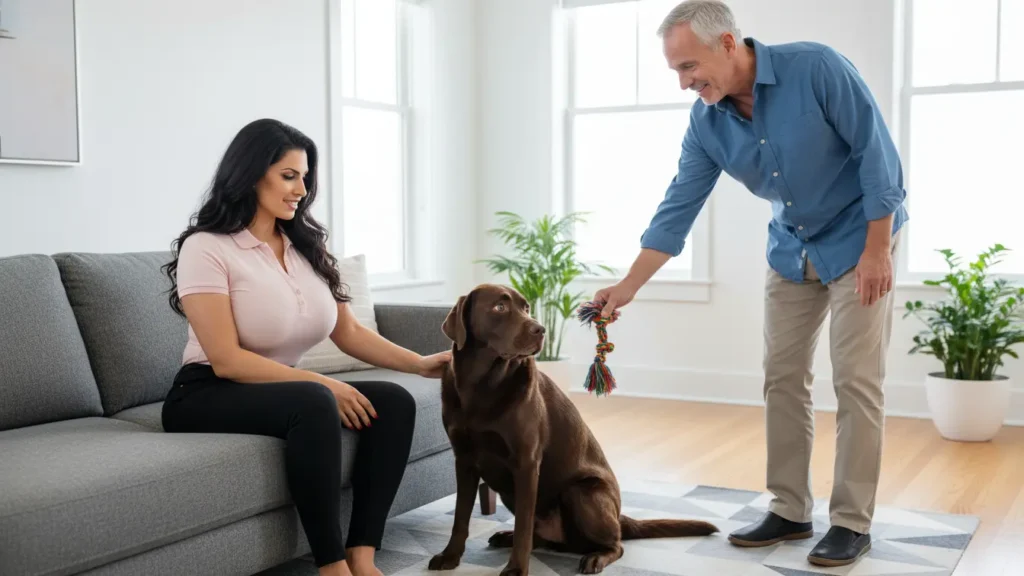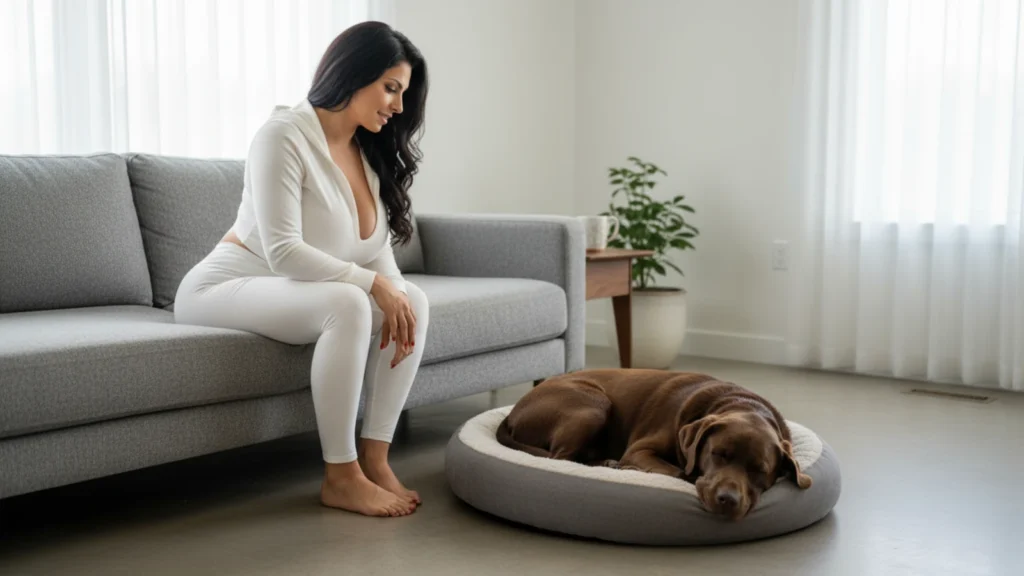
When a dog who has spent years sleeping curled up at the foot of your bed suddenly decides to spend the night alone in the living room, it often feels like a personal rejection. Many pet parents take this behavioral shift to heart, worrying that their bond is fracturing.
In veterinary practice, I have had countless owners bring this up during annual exams. Let me reassure you: this sudden desire for solitude is rarely emotional. Instead, a shift in sleep location is usually an adaptation to a physical, neurological, or environmental change.
Here is what is actually happening when your dog quietly relocates to the floor.
The Orthopedic Reality of Aging Joints
If your dog is over the age of six, the most common culprit for a change in sleeping habits is early-onset osteoarthritis.
Jumping onto a human bed requires significant rear-limb propulsion, and jumping down forces the front limbs to absorb the dog’s entire body weight. Even if your dog isn’t visibly limping during the day, the micro-traumas of leaping off a high mattress can become painful over time. Furthermore, human mattresses are designed for bipedal spinal alignment, not canine anatomy. A plush, sinking mattress offers zero orthopedic support for a dog’s joints, making it difficult for an arthritic dog to comfortably reposition themselves during the night.
When a dog abruptly chooses a firm orthopedic pet bed or the rug, they are actively seeking spinal stability and avoiding the anticipated pain of jumping down in the morning.
Canine Thermoregulation
Dogs run significantly hotter than humans, with a normal baseline body temperature between 101.0°F and 102.5°F.
As dogs age, their ability to efficiently regulate their body heat changes. A bedroom that feels perfectly comfortable to you, complete with blankets and body heat, can quickly become a sauna for your dog. If you notice your dog abandoning the bed to sleep on cool tile, near an HVAC vent, or against a cold exterior wall, they are utilizing conductive cooling.
Thick-coated breeds like Huskies, Golden Retrievers, and Bernese Mountain Dogs are particularly prone to this. As they mature, their tolerance for shared body heat decreases, and they will prioritize thermal comfort over physical closeness.
Sleep Architecture and Sensory Sensitivity
Dogs are polyphasic sleepers, meaning they experience multiple, shorter sleep cycles over a 24-hour period, unlike humans who consolidate sleep into one long monophasic block.
As dogs transition into their senior years, their sleep architecture shifts. They spend less time in deep, restorative REM sleep and wake more easily. Consequently, a human partner who tosses, turns, or snores becomes highly disruptive. If a dog finds that their rest is being constantly interrupted by your movements, their natural instinct is to seek out a quiet, isolated “den” where they can complete a full sleep cycle uninterrupted.
When Solitude Signals a Medical Issue
While seeking out a cooler or quieter spot is normal, sudden isolation can sometimes be an early clinical marker for deeper systemic issues.
| Sleeping Behavior | Likely Cause | Veterinary Action |
| Pacing before settling | Joint pain or neuropathic pain | Evaluate for arthritis management |
| Sleeping in tight corners | Anxiety or noise phobia | Assess environmental stressors |
| Staring at walls at night | Canine Cognitive Dysfunction | Neurological evaluation needed |
| High respiratory rate while resting | Cardiac or pulmonary distress | Requires immediate veterinary attention |
Canine Cognitive Dysfunction (CCD)
If an older dog is not just sleeping away from you, but actively choosing bizarre locations—like facing a corner in a dark closet, or getting “stuck” under a desk—we must consider Canine Cognitive Dysfunction. Similar to Alzheimer’s in humans, CCD alters a dog’s sleep-wake cycle and spatial awareness. They are not choosing to sleep alone; they are often disoriented and simply settle wherever they happen to be when fatigue takes over.
How to Adapt to Their New Needs
If your dog has chosen to relocate, do not force them back into your bed. Instead, support their changing biology.
Provide a high-quality orthopedic bed in the exact location they have chosen to migrate toward. Ensure that this new resting area is free from drafts but remains cool. By understanding that this behavioral shift is a biological necessity rather than a rejection, you can continue providing the exact type of comfort your dog actually needs.
High-Authority Source Links for Further Reading:
- American College of Veterinary Surgeons (ACVS): Osteoarthritis in Dogshttps://www.acvs.org/small-animal/osteoarthritis-in-dogs/
- Cornell University College of Veterinary Medicine: Canine Cognitive Dysfunction Syndromehttps://www.vet.cornell.edu/departments-centers-and-institutes/riney-canine-health-center/canine-health-information/cognitive-dysfunction-syndrome
- American Veterinary Medical Association (AVMA): Senior Pet Care FAQhttps://www.avma.org/resources/pet-owners/petcare/senior-pet-care-faq
- Sleep Foundation: How Much Sleep Do Dogs Need?https://www.sleepfoundation.org/animals-and-sleep/how-much-do-dogs-sleep
- Merck Veterinary Manual: Behavioral Problems Associated with Aging in Dogshttps://www.merckvetmanual.com/behavior/normal-social-behavior-and-behavioral-problems-of-domestic-animals/behavioral-problems-associated-with-aging-in-dogs

Dr. Sofia Romano, DVM, is an experienced veterinarian specializing in small-animal medicine and preventive care. She has treated thousands of cases using evidence-based diagnostics and modern clinical practices. Dr. Romano is dedicated to providing science-backed pet-health guidance that helps owners make informed decisions and improve their pets’ quality of life.