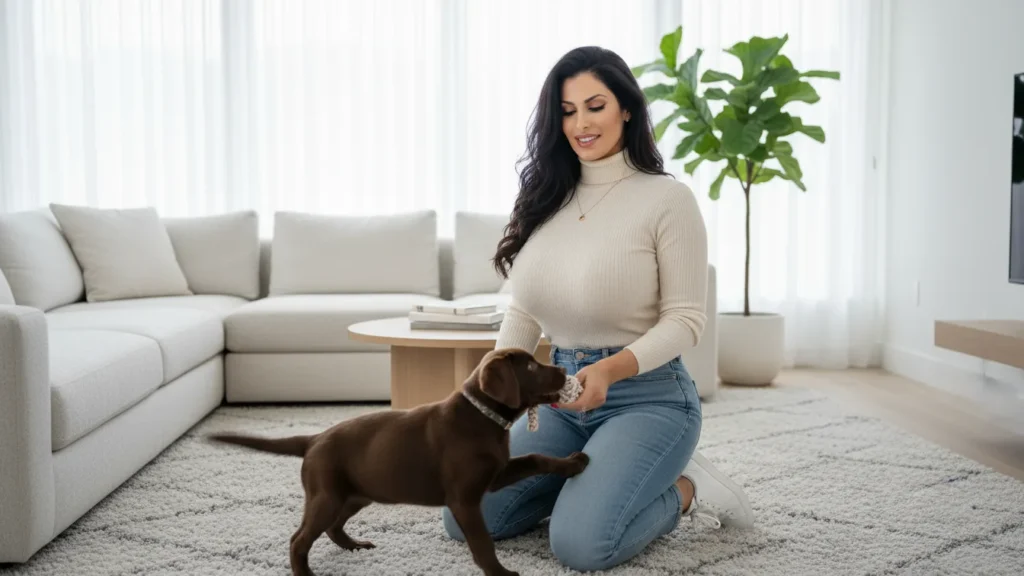
You just brought your new puppy home. You braced yourself for absolute chaos, but surprisingly, they are incredibly quiet. When friends come over to meet them, the puppy sits perfectly still while being held. They don’t jump, they don’t bark, and they just stare blankly when a loud truck drives by.
You might think you hit the jackpot and brought home the “world’s easiest puppy.”
Unfortunately, veterinary behaviorists often view this scenario with deep concern. Puppies are naturally curious, bouncy, and clumsy. When a baby dog is completely motionless and overwhelmingly compliant, they are rarely being “good.” More often than not, they are utterly terrified.
Because we expect anxious dogs to tremble, hide, or bark, the quiet signs of fear slip right under the radar. If left unchecked, a silently stressed puppy quickly grows into a highly reactive, fearful adult dog. Here are the five hidden signs of puppy anxiety you need to watch for, and how to build their confidence right now.
1. The “Sleepy” Yawn (Displacement Behaviors)
You are at the vet’s office, or perhaps you just introduced your puppy to a new dog. Your puppy sits down and lets out a massive, wide-mouthed yawn, followed by repeatedly licking their own lips.
If it isn’t naptime and there is no food around, your puppy is not tired or hungry. They are performing a displacement behavior. Just like a nervous human might bite their fingernails, twirl their hair, or tap their foot when stressed, a puppy will yawn or lip-lick to physically burn off a spike in anxiety. It is their way of saying, “I am really uncomfortable with what is happening right now.”
2. The “Good Puppy” Freeze
When a human leans over to aggressively pet your puppy, does the pup suddenly freeze like a statue?
Many owners misinterpret this freezing as the puppy being polite and accepting the petting. In reality, the puppy’s nervous system has been overloaded. They have bypassed the “fight or flight” response and gone straight into “freeze.” They are holding completely still because they are too terrified to move, hoping the scary interaction will end as quickly as possible.
3. Sudden “Picky” Eating
You are walking down a busy street, and a loud motorcycle revs its engine. You immediately try to distract your puppy by offering them a piece of high-value chicken or cheese, but they completely ignore it, or worse, they gently take it and then spit it out.
When a dog’s brain detects a severe threat, it floods the body with adrenaline and cortisol. This survival mechanism immediately shuts down the digestive system—because you don’t need to digest lunch if you are trying to survive a predator. If a highly food-motivated puppy suddenly refuses a piece of real meat, they are pushed way past their emotional threshold.
4. The “Whale Eye” and Tight Face
Dogs have a vast array of facial expressions, but when a puppy is stressed, their face physically tightens.
Watch their eyes. If a puppy turns their head slightly away from something scary but keeps their eyes locked on it, you will see the whites of their eyes in a half-moon shape. This is known in the veterinary world as a whale eye, and it is a classic indicator of extreme tension. You will also notice their ears get pinned flat against their skull, and the corners of their mouth pull tightly back.
5. Moving in “Slow Motion”
When an environment feels safe, a puppy moves with a bouncy, loose, and slightly uncoordinated gait.
If your puppy suddenly drops their head below their shoulders and starts walking in extreme slow motion, they are feeling incredibly vulnerable. They are creeping carefully because they are assessing the environment for danger. This creeping walk is often accompanied by “pancaking,” where the puppy suddenly drops their belly flat against the ground and refuses to take another step.
How to Fix It Early: The Confidence-Building Protocol
If you are noticing these signs, don’t panic. A puppy’s brain is highly plastic, meaning you have a golden window to rewrite their emotional responses. But you have to change your approach immediately.
Stop Forcing Interactions The biggest mistake owners make is forcing a scared puppy to “face their fears.” If your puppy is hiding behind your legs when a stranger approaches, do not drag them forward by the leash. Pick them up or step in front of them to block the stranger. You must teach your puppy that you are their ultimate protector. When they know you will advocate for them, their confidence naturally skyrockets.
Use the “Three-Second Rule” If you aren’t sure if your puppy is enjoying being petted, use the consent test. Pet them gently on the chest for exactly three seconds, then stop and pull your hands back.
- If the puppy nudges your hand, leans in, or paws at you, they want more.
- If they look away, yawn, lip-lick, or simply sit still, the interaction is over. Respect their boundary.
Reward Neutrality, Not Interaction Socialization isn’t about making your puppy play with every dog and human they meet. True socialization is teaching your puppy that the world is safe and boring. Sit on a park bench with your puppy and just watch the world go by. Every time a person or dog walks past and your puppy simply looks at them without reacting, give them a high-value treat.
By learning to speak your puppy’s silent language, you can step in and rescue them from stressful situations before they escalate. A puppy who feels heard is a puppy who grows up to be a stable, fearless, and incredibly loyal adult dog.
High-Authority Sources & Veterinary References
To ensure you are raising a behaviorally healthy puppy, rely on science-backed veterinary guidance. The insights and protocols in this article are supported by:
- American Veterinary Society of Animal Behavior (AVSAB): The definitive veterinary position statement on Puppy Socialization and Fear Prevention.
- Fear Free Pets (Founded by Dr. Marty Becker): Educational resources on recognizing the subtle signs of Fear, Anxiety, and Stress (FAS) in Dogs.
- American Kennel Club (AKC): A behavioral guide on reading canine body language and Understanding “Whale Eye” in Dogs.
- Veterinary Centers of America (VCA): Clinical guidelines for Recognizing and Treating Anxiety in Puppies.

Dr. Sofia Romano, DVM, is an experienced veterinarian specializing in small-animal medicine and preventive care. She has treated thousands of cases using evidence-based diagnostics and modern clinical practices. Dr. Romano is dedicated to providing science-backed pet-health guidance that helps owners make informed decisions and improve their pets’ quality of life.


Pingback: Why Dogs Hump Even When Neutered — The Real Reasons Vets And Trainers Explain
Pingback: Why Dogs Pee When Excited — The Gentle, Proven Ways To Stop It Without Punishment
Pingback: Why Puppies Become Fearful Overnight — The Sudden Behavior Shift That Alarms Loving Owners (And What It Really Means)
Pingback: Why Dogs Become Fearful Without Trauma — The Quiet Emotional Shift Most Owners Never Notice