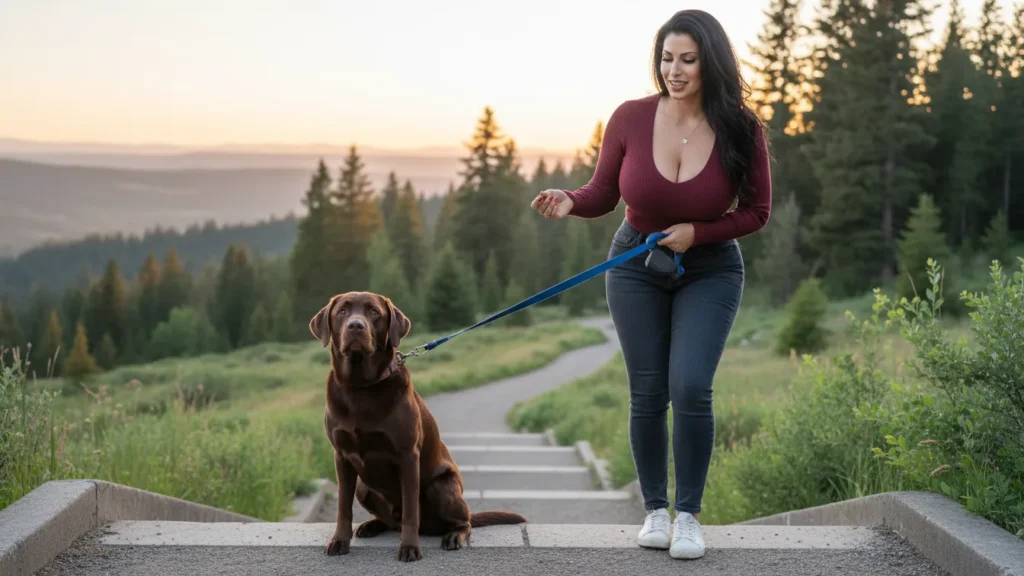
Halfway down the block, your dog just stops. Plants all four feet, drops into a sit, and no amount of gentle tugging or excited “come on, buddy!” gets him moving again. Five minutes ago he was practically dragging you out the door. Now he won’t budge an inch.
It’s easy to read this as stubbornness or a bad mood. Veterinarians who deal with this question constantly say something different: a dog who suddenly refuses to walk is almost always communicating discomfort, fear, or pain — not defiance. As one veterinarian who regularly sees this exact complaint put it, dogs will genuinely sit, refuse to move, or even lie down and play dead when they don’t want to continue. That’s not attitude. That’s a message.
Start With the Paws — It’s Often the Simplest Answer
Before considering anything more complicated, check what’s directly under your dog. A cracked pad, an embedded splinter or thorn, a torn nail, or irritated skin between the toes can turn every single step into something genuinely painful, and dogs are remarkably good at hiding exactly where it hurts. If you’re not sure, a proper veterinary checkup can rule this out quickly.
The Hidden Danger Most Owners Never Check: Pavement Temperature
This is the cause that catches the most owners off guard, because it doesn’t require a heatwave to become dangerous. Dr. Jerry Klein, Chief Veterinarian for the AKC, explains that pavement like asphalt or artificial grass can heat up dramatically and cause real discomfort, blistering, and burned paw pads — and it happens at temperatures most people wouldn’t think twice about. His rule of thumb: once the air temperature hits roughly 85 degrees without the pavement getting a chance to cool, the ground itself may already be too hot for safe walking. At that air temperature, asphalt can reach 135 degrees.
The test vets recommend is simple and takes seconds: place the back of your hand flat on the pavement and hold it there. If you can’t comfortably keep it down for seven to ten seconds, it’s too hot for your dog’s paws too. A dog who suddenly refuses to keep walking, especially one who was moving fine minutes earlier, may be standing on a surface that’s actively burning him with every step.
Watch, too, for broader signs of heat stress alongside the refusal: excessive panting, seeking shade, restlessness, or a dog who suddenly wants to sit or lie down rather than continue. These deserve a move to a cool area and close monitoring, not encouragement to push forward.
Joint Pain and Arthritis
This cause shows up gradually rather than out of nowhere, which is exactly why it’s easy to miss until it becomes obvious. Conditions like arthritis and hip dysplasia cause real, often severe pain, and a dog experiencing it may start favoring one leg while standing still, or yelp or whimper right before coming to a stop mid-walk. This is more common in senior dogs, but isn’t exclusive to them — larger breeds and dogs with a history of joint issues can develop it earlier than owners expect. If this pattern sounds familiar, a veterinary exam and a conversation about pain management is worth having sooner rather than later.
Fear, and Why It’s Not Always Obvious What’s Scaring Them
Dogs can refuse to walk because something in the environment feels genuinely threatening — a loud noise, a fast-moving vehicle, an unfamiliar dog or person, or simply an environment that feels overwhelming and new. Puppies going through a natural “fear period,” and adult dogs walking somewhere unfamiliar, are especially prone to this reaction, particularly if they’re naturally more anxious or have any history of trauma.
The tell here is body language rather than the stopping itself: a tucked tail, crouched posture, pinned-back ears, or heavier-than-normal breathing all point toward fear rather than pain or simple reluctance. If you can identify what triggered it, it’s often worth changing the route rather than pushing through the same spot again.
Leash Inexperience or a Bad Past Association
For dogs newer to leash walking, or those who’ve had one bad experience — a scary noise, an unexpected yank, an uncomfortable harness — the entire concept of the leash can feel overwhelming rather than familiar. Whole Dog Journal’s behavior experts recommend looking at walks from the dog’s actual point of view: is the harness a good fit? Is the pavement itself uncomfortable, whether from heat, prickly grass, or a difficult incline? Sometimes what looks like refusal is a dog who genuinely hasn’t learned yet that a leash means safety, not restriction.
Sometimes It’s Genuinely Just Low Motivation
Not every stop has a hidden crisis behind it. Some dogs, particularly certain lower-energy breeds, are simply satisfied after a shorter distance and a good, thorough sniff. Pushing a naturally low-energy dog to match a high-energy owner’s expectations rarely changes their mind — it just makes walks something to resist rather than enjoy. Building in real sniffing time, rather than treating a walk as pure exercise, often resolves this on its own.
What to Actually Do in the Moment
- Check the paws and legs first, every time, before assuming anything else
- Test the pavement with the back of your hand if it’s warm out, even if it doesn’t feel like a scorching day to you
- Look at body language, not just the stop itself, to distinguish fear from pain
- Don’t force or drag — this can deepen a negative association with walking altogether
- Reward calm forward movement with treats and praise rather than pressure
- Change the route or turn back if a specific spot or trigger seems to be the cause
When It’s a Vet Visit, Not a Training Issue
Call your vet the same day, rather than waiting, if the refusal comes with any of the following:
- Visible injury, blistering, or redness on the paw pads
- Limping, yelping, or clear favoring of one leg
- Signs of heat stress — heavy panting, drooling, restlessness, or reluctance to move at all
- A sudden refusal in a dog who’s never shown this behavior before, especially paired with lethargy or appetite changes
The Bottom Line
A dog planting his feet mid-walk isn’t trying to win an argument with you. He’s telling you, in the only language available to him, that something about this exact moment doesn’t feel right — whether that’s a burning sidewalk, an aching hip, or something in the distance that’s genuinely frightening him. Check the obvious things first, watch the body language, and trust that the stop means something, even when it’s not immediately clear what.
Sources
- American Kennel Club – How to Protect Dog Paws From Hot Pavement, Sidewalks
- Whole Dog Journal – Why Your Dog Doesn’t Want to Walk: Understanding and Solving Leash Refusal
- Kinship – Why Your Dog Suddenly Refuses to Move in the Middle of a Walk
- Laguna Beach Vets – What to Do If Your Dog Doesn’t Want to Walk
- Vets Now – How to Avoid Your Dog Getting Paw Burns on Hot Pavements

Dr. Sofia Romano, DVM, is an experienced veterinarian specializing in small-animal medicine and preventive care. She has treated thousands of cases using evidence-based diagnostics and modern clinical practices. Dr. Romano is dedicated to providing science-backed pet-health guidance that helps owners make informed decisions and improve their pets’ quality of life.





Pingback: How To Socialize A Fearful Dog Without Breaking Their Trust — What Actually Works
Pingback: How To Tell If Your Dog Is Depressed — Subtle Signs Most Owners Overlook
Pingback: Why Your Dog Is Suddenly Afraid Of Going Outside — A Vet Explains The Hidden Triggers
Pingback: 10 Dog Training Myths That Are Completely Wrong — What Science And Trainers Actually Know
Pingback: Why Your Dog Walks In Circles — When It’s Normal And When It’s Not
Pingback: Why Dogs Destroy The House When You Leave — The Real Reasons Vets And Trainers See