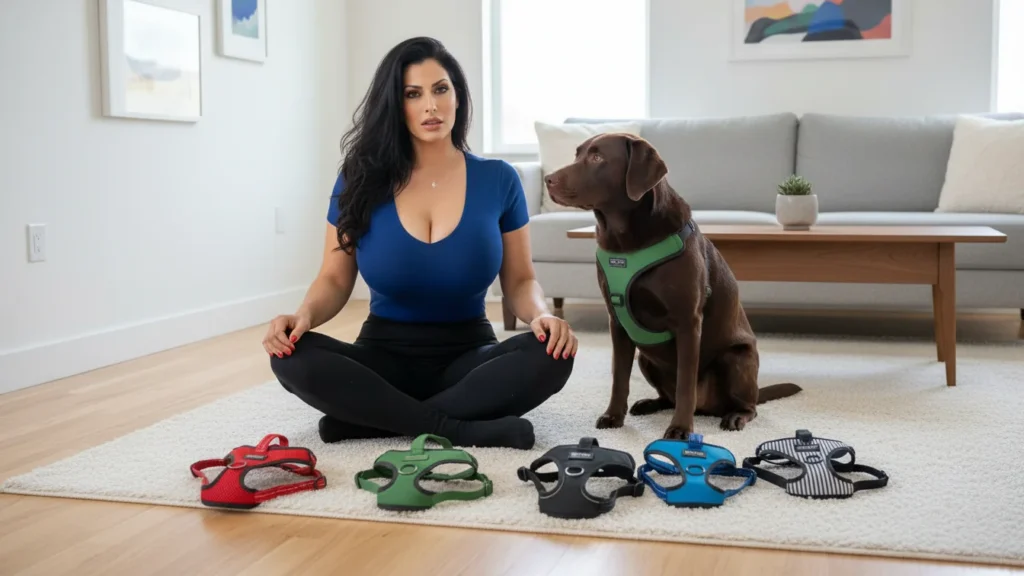
Walk into any pet store and the harness wall alone can be overwhelming — front-clip, back-clip, dual-clip, step-in, vest-style, head halters that aren’t technically harnesses at all. The differences aren’t just cosmetic. The type you choose genuinely changes how your dog’s body absorbs pressure on a walk, how much control you have, and in some cases, whether you’re protecting or straining a sensitive airway. Here’s what actually matters when you’re picking one.
Why a Harness Over a Collar in the First Place
The core safety logic behind choosing a harness comes down to where force lands on your dog’s body. A collar concentrates any leash tension directly on the neck — an area housing the trachea, esophagus, and major blood vessels. A harness distributes that same tension across the chest and shoulders instead, a structurally sturdier area better equipped to handle pressure. This matters most for dogs who pull, dogs with existing neck sensitivity, and brachycephalic breeds (Pugs, French Bulldogs, Boston Terriers) whose airways are already more compromised than average and benefit from keeping leash pressure away from the throat entirely.
The Core Decision: Front-Clip vs. Back-Clip
This is the single biggest functional choice you’ll make, and it genuinely changes your dog’s walking behavior, not just your grip on the leash.
Front-clip harnesses attach the leash at the center of the chest. When a dog pulls forward, the tension redirects them sideways, back toward you, rather than letting them keep moving straight ahead. This interrupts what trainers call the opposition reflex — a dog’s instinctive tendency to pull harder against pressure — making front-clip harnesses genuinely effective for dogs still learning loose-leash walking or dogs who pull with real strength. The tradeoff worth knowing: some trainers and veterinary sources note that relying on a front-clip harness for every single walk over the long term can subtly affect a dog’s natural gait, since the chest attachment interferes somewhat with the shoulder’s normal range of motion during a stride — a reasonable argument for treating it as a training tool rather than a permanent, exclusive setup.
Back-clip harnesses attach between the shoulder blades. They don’t offer the same built-in resistance to pulling, but they’re generally more comfortable for dogs who already walk well on a leash, and they avoid any interference with front-leg movement — a meaningful plus for very active dogs, hikers, and breeds prone to joint issues.
Dual-clip harnesses give you both attachment points, letting you switch between them depending on the situation — front clip for a busy street or a still-in-training walk, back clip for a relaxed outing in a familiar space. For owners who aren’t sure which style their dog needs, or whose dog’s leash manners vary by context, this is the most flexible option to start with.
Getting the Fit Right Actually Matters More Than the Style
A well-chosen harness style still fails if it doesn’t fit properly, and poor fit is where most real-world harness problems come from — chafing, restricted movement, or a dog who manages to back out and escape entirely. The standard fit check trainers and fitters use is the two-finger rule: you should be able to comfortably slide two fingers under any strap, snug enough that it won’t shift or slide, loose enough that it isn’t compressing skin or restricting movement. Check specifically around the armpits and chest — these are the most common chafing points, particularly for dogs with thinner coats or sensitive skin. A properly fitted harness should also sit symmetrically; a harness that rides crooked will pull crooked under tension, which can gradually creep webbing toward the neck even on a harness designed to avoid it.
Measuring your dog’s chest circumference (typically the widest point just behind the front legs) against a specific brand’s sizing chart, rather than relying on generic small/medium/large labels, meaningfully reduces the odds of ending up with a poor fit — sizing varies considerably between manufacturers even within the same labeled size.
Special Situations Worth Planning For
Brachycephalic and tracheal-sensitive dogs benefit most from harness designs that keep the chest strap positioned well away from the throat, distributing pressure broadly rather than concentrating it near the neck at any point during normal movement or pulling.
Broad-chested or barrel-chested breeds often do better with Y-shaped front panels rather than a straight horizontal chest strap, since the Y-shape follows the natural contour of the sternum rather than cutting across it.
Anxious, fearful, or escape-prone dogs are genuinely at higher risk of slipping a poorly fitted harness during a startle response, so a secure, properly adjusted fit with reinforced hardware matters even more for this group than for a calm, confident dog.
Long-haired dogs tend to do better with back-clip or dual-clip styles, since a front chest strap is more prone to tangling in longer fur during movement.
What Actually Signals a Well-Chosen Harness
Beyond the style itself, a few material and construction details are worth checking regardless of which type you land on: breathable materials like mesh or padded nylon reduce chafing risk, especially in warm weather or for dogs with sensitive skin; reinforced D-rings and stitching hold up better to strong pullers or dogs who tend to chew at their gear; and a harness with a top handle offers a genuinely useful extra layer of control in crowded spaces or when helping a dog over uneven terrain.
A harness is a tool, not a fix on its own — even the best-fitted front-clip harness won’t eliminate pulling by itself without some consistent leash training layered on top. But choosing the right type and getting the fit genuinely right removes a real physical stressor from your dog’s daily walks, and for dogs with any airway sensitivity, it’s one of the more meaningful, low-effort safety upgrades you can make.
Sources & Further Reading
- Front Clip vs Back Clip Dog Harness: Which Is Better? — Dog Love
- How a Dog Harness Should Fit: The Ultimate Guide — Neewa Dogs
- The Best Front Clip Dog Harness (For Every Use) — Puppy Growth Calculator
- How to Choose the Right Harness for Your Dog — PetBLVD
- Comprehensive Guide to Front Clip Dog Harnesses — Wildside Dog Gear

Dr. Sofia Romano, DVM, is an experienced veterinarian specializing in small-animal medicine and preventive care. She has treated thousands of cases using evidence-based diagnostics and modern clinical practices. Dr. Romano is dedicated to providing science-backed pet-health guidance that helps owners make informed decisions and improve their pets’ quality of life.