
Your dog used to sleep through the night.
Now they pace.
Whine softly.
Get up, lie down, get up again.
Or stare into the dark while you lie awake, worried.
Many owners assume this is “just aging” or “a phase.”
But veterinarians know something important:
Sudden changes in nighttime sleep are rarely random.
They’re often one of the earliest signs that something has changed—physically, mentally, or emotionally.
This guide explains the most common vet-verified reasons dogs stop sleeping at night, how to tell what’s normal vs concerning, and what you can do to help your dog (and yourself) rest again.
Why Sleep Changes Are a Bigger Warning Than Most Owners Realize
Dogs thrive on routine.
They sleep, wake, eat, and rest on predictable rhythms.
So when a dog who once slept soundly suddenly can’t settle, it’s usually because something is disrupting that rhythm.
Nighttime restlessness often appears before more obvious symptoms like appetite loss, limping, or behavior changes during the day.
That’s why vets take sleep complaints seriously—even when everything else “seems normal.”
Vet Cause #1: Pain That’s Worse at Night
Pain is the number one reason dogs stop sleeping well.
Common pain sources include:
- Arthritis
- Hip or spinal issues
- Dental pain
- Muscle strain
- Old injuries flaring up
At night:
- Distractions are gone
- Movement stiffens joints
- Pain becomes more noticeable
Dogs rarely cry out.
Instead, they pace, shift positions, or repeatedly get up.
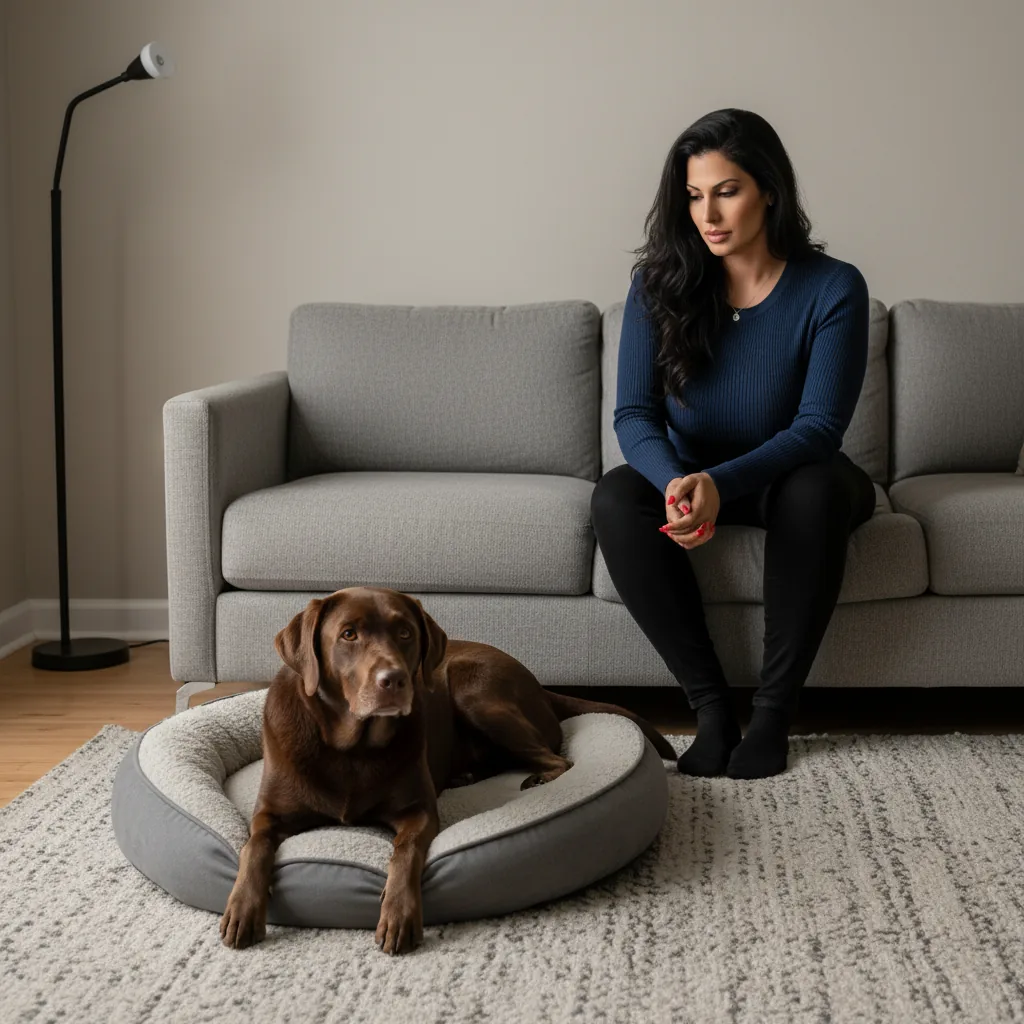
Vet Cause #2: Cognitive Changes (Especially in Senior Dogs)
In older dogs, nighttime wakefulness may be linked to canine cognitive dysfunction (similar to dementia).
Early signs include:
- Restlessness after sunset
- Staring at walls
- Getting “stuck” in corners
- Forgetting routines
- Sleeping more during the day
This is not normal aging—it’s a neurological change that benefits from early support.
Vet Cause #3: Anxiety That Shows Up After Dark
Some dogs develop nighttime anxiety even if they’re calm during the day.
Triggers include:
- Separation anxiety (worse at night)
- Changes in household routine
- New pets or people
- Reduced nighttime vision or hearing
- Previous traumatic experiences
At night, the world feels different to dogs—quieter, darker, more uncertain.
Anxious dogs struggle to settle when stimulation drops.
No. 4: Digestive Discomfort or Hunger
Stomach discomfort often worsens when dogs lie down.
Causes include:
- Acid buildup
- Late feeding schedules
- Food sensitivities
- Mild nausea
You may notice:
- Lip licking
- Swallowing sounds
- Restlessness after bedtime
- Wanting to go outside repeatedly
A small dietary adjustment can sometimes make a big difference.
Vet Cause #5: Increased Need to Urinate
Dogs who wake at night may actually need to go out.
Possible reasons:
- Urinary tract infection
- Kidney disease
- Diabetes
- Hormonal changes
- Age-related bladder control loss
This is especially common in senior dogs and often missed because daytime behavior looks normal.
Vet Cause #6: Environmental or Sensory Changes
Dogs hear and smell things we don’t.
At night, they may react to:
- New noises
- Outdoor animals
- Changes in lighting
- Reflections or shadows
- Neighborhood activity
If your dog suddenly sleeps lightly and startles easily, sensory sensitivity may be involved—especially in older dogs.
Normal Sleep Change vs Concerning Sleep Disruption
| Behavior | Usually Normal | Concerning |
|---|---|---|
| Occasional waking | ✔ | |
| Mild position changes | ✔ | |
| Night pacing | ❌ | |
| Whining or crying | ❌ | |
| Reversed sleep cycle | ❌ | |
| Nighttime accidents | ❌ |
Real-Life Vet Example
A 9-year-old Labrador started pacing every night.
Owner thought it was anxiety.
Exam revealed:
- Early arthritis
- Mild kidney changes
Once pain management and evening routine adjustments were made, the dog slept through the night again.
The sleep change was the first clue.
Common Mistakes Owners Make
Avoid these:
- Ignoring night restlessness
- Assuming it’s “just old age”
- Increasing daytime naps
- Punishing pacing or whining
- Using sedatives without vet advice
Sleep problems are symptoms—not behavior flaws.
Actionable Steps You Can Take Tonight
1. Observe Patterns
- Time of waking
- Pacing vs whining
- Need to urinate
- Appetite changes
2. Improve Sleep Comfort
- Orthopedic bedding
- Warm, quiet sleeping area
- Gentle evening stretch or massage
3. Adjust Evening Routine
- Consistent bedtime
- Calm activities after dinner
- Short potty break before sleep
4. See Your Vet Early
Early evaluation prevents long-term sleep disruption and health decline.
Why This Matters Today
Dogs are living longer than ever.
With longer lives come:
- Joint pain
- Cognitive changes
- Chronic conditions that show up subtly
Sleep disruption is often the earliest signal—and one of the easiest to overlook.
Catching the cause early improves comfort, quality of life, and long-term outcomes.
Key Takeaways
- Sudden nighttime restlessness is never random.
- Pain and cognitive changes are common causes.
- Anxiety and digestion often worsen after dark.
- Early vet evaluation makes treatment simpler.
- Better sleep improves your dog’s overall health.
FAQ: Dogs Not Sleeping at Night
1. Is it normal for older dogs to sleep less at night?
Some change is normal, but persistent restlessness is not.
2. Can pain cause night pacing without limping?
Yes. Many dogs hide pain during the day.
3. Should I give my dog a sleep aid?
Never without veterinary guidance.
4. Can diet affect nighttime sleep?
Yes. Hunger or acid reflux can disrupt sleep.
5. When should I see a vet?
If nighttime restlessness lasts more than a few days or worsens.
Conclusion
When your dog stops sleeping at night, they’re not being difficult.
They’re communicating discomfort in the only way they can.
Listening early—before the problem grows—can restore peaceful nights for both of you.
And often, the solution is simpler than you think.

Dr. Sofia Romano, DVM, is an experienced veterinarian specializing in small-animal medicine and preventive care. She has treated thousands of cases using evidence-based diagnostics and modern clinical practices. Dr. Romano is dedicated to providing science-backed pet-health guidance that helps owners make informed decisions and improve their pets’ quality of life.




Pingback: Why Dogs Bark At Nothing — Vets Explain What They’re Really Reacting To
Pingback: Why Dogs Suddenly Explode With Energy At Night — The Real Science Behind Zoomies (Every Owner Should Know)
Pingback: Why Dogs Suddenly Start Digging Indoors — The Hidden Reasons Most Owners Miss
Pingback: Why Dogs Act Different After Visiting The Vet — What Their Behavior Is Really Telling You
Pingback: Why Dogs Feel Time Differently Than Humans — The Science Behind Their Unique Sense Of Waiting, Absence, And Routine
Pingback: Why Your Dog Breathes Faster At Rest — Hidden Causes Vets Watch For
Pingback: Why Dogs Mirror Human Stress Hormones — The Invisible Biology That Ties You Together
Pingback: Why Dogs Suddenly Sleep Much More Than Usual — What Their Bodies May Be Telling You
Pingback: Why Dogs Hate Their Crate Suddenly — The Hidden Reason This Safe Space Stops Feeling Safe