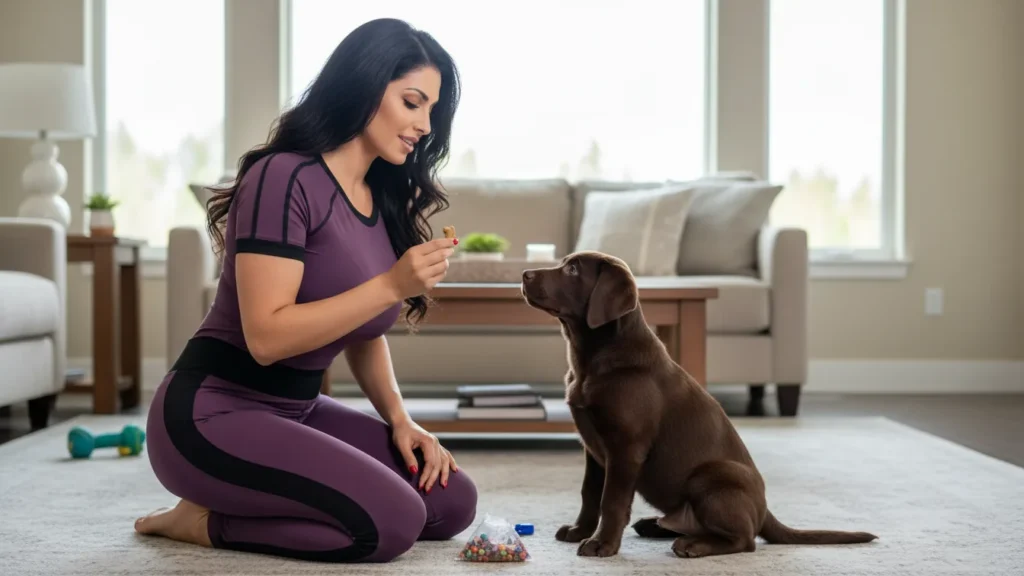
When Training “Works”… Then Suddenly Doesn’t
Yesterday, your puppy sat on cue.
They waited before grabbing food.
They came when called—mostly.
You felt proud. Relieved. Hopeful.
Then today?
They ignore you.
They push past rules.
They act like training never happened.
It’s one of the most discouraging moments in puppy raising.
You might think:
- Did I train wrong?
- Are they being stubborn?
- Is this dominance?
Here’s the truth most owners never hear clearly enough:
👉 Puppies test boundaries after training not because training failed—but because learning has begun.
This phase is expected, neurological, and—when handled well—a sign of healthy development.
Why This Matters More Than You Think
How you respond after training matters more than training itself.
Many adult behavior problems don’t come from:
- Lack of training
- Poor commands
- Inconsistent cues
They come from misinterpreting this boundary-testing phase.
This matters today because:
- Puppies are trained earlier than ever
- Owners expect instant reliability
- Normal learning phases are labeled as “bad behavior”
Understanding what’s happening prevents frustration—and prevents you from accidentally undoing your own progress.
The Core Reason Puppies Test Boundaries After Training
Training doesn’t just teach behavior.
It changes the brain.
Once a puppy learns a rule, their brain starts asking a new question:
“Does this always apply?”
This isn’t defiance.
It’s cognitive exploration.
In canine development research referenced by organizations like the American Kennel Club, learning is followed by a generalization phase—where puppies test whether rules hold across contexts.
In other words:
- Training teaches what to do
- Boundary testing teaches when it matters
This is how real understanding forms.
Learning vs. Compliance: A Crucial Distinction
Many owners expect training to produce instant compliance.
But learning doesn’t work that way—especially in developing brains.
Here’s the difference:
| Compliance Stage | Learning Stage |
|---|---|
| Puppy follows cues | Puppy experiments with choices |
| Behavior looks consistent | Behavior fluctuates |
| Puppy responds quickly | Puppy pauses or ignores |
| Appears “well-trained” | Appears “testing” |
| Fragile learning | Durable learning forming |
Boundary testing is the bridge between these stages.
Why Training Success Often Triggers Boundary Testing
This sounds backward—but it’s true.
Boundary testing often appears right after:
- Successful training sessions
- New rules being introduced
- Increased expectations
Why?
Because the puppy now understands:
- A choice exists
- Outcomes differ
- They have some control
This is cognitive growth, not rebellion.
A puppy who never tests boundaries is usually:
- Too fearful
- Over-controlled
- Shut down
That’s not the goal.
Real-Life Example Every Owner Recognizes
You teach “sit” before meals.
Your puppy performs perfectly for days.
Then one evening:
- They stare at the bowl
- They don’t sit
- They walk away
You repeat the cue.
Nothing.
This isn’t forgetting.
It’s the puppy asking:
“Do I still have to do this if I really want the food?”
How you respond now determines whether the rule becomes stable—or collapses.
The Puppy Brain Behind Boundary Testing
Puppies lack a fully developed prefrontal cortex—the area responsible for:
- Impulse control
- Consistency
- Delayed gratification
When motivation is high (food, play, excitement):
- Impulses override learned rules
- Decision-making becomes emotional
- Training access temporarily drops
This is why boundary testing often appears:
- Around distractions
- During excitement
- When tired or overstimulated
It’s not selective listening.
It’s neurological load.
Why This Phase Is Actually a Good Sign
Boundary testing means:
- Your puppy is thinking
- Learning is active
- Confidence is growing
It shows:
- Curiosity instead of fear
- Engagement instead of shutdown
- A brain trying to understand rules deeply
Handled calmly, this phase produces:
- Stronger reliability
- Better real-world obedience
- A confident, adaptable dog
Handled poorly, it produces confusion—or resistance.
The Biggest Mistakes Owners Make During Boundary Testing
These reactions are common—and counterproductive:
- ❌ Increasing volume or intensity
- ❌ Repeating cues endlessly
- ❌ Punishing “disobedience”
- ❌ Giving up on rules entirely
- ❌ Labeling the puppy “stubborn”
These teach:
- Cues don’t matter
- Humans are unpredictable
- Emotional pressure follows learning
What Actually Works When Puppies Test Limits
The goal is not force.
It’s clarity and consistency.
1. Reduce Repetition, Increase Follow-Through
Say the cue once.
If the puppy doesn’t respond:
- Pause
- Reset the environment
- Lower distraction
Repeated cues dilute meaning.
2. Control the Outcome Calmly
If a rule applies:
- The outcome must match
- Every time
- Without emotion
No reward until the behavior appears.
Calm neutrality is powerful.
3. Lower Criteria When Needed
Boundary testing doesn’t mean failure.
It means:
- Reduce distractions
- Shorten duration
- Increase reinforcement temporarily
Then build back up.
4. Reinforce Good Choices Quietly
When your puppy chooses correctly:
- Mark calmly
- Reward consistently
- Avoid over-excitement
This stabilizes behavior faster.
Hidden Tip: Timing Matters More Than Commands
Many “training failures” are timing failures.
Boundary testing increases when puppies are:
- Overtired
- Overstimulated
- Hungry
- Emotionally overwhelmed
No amount of training overrides a flooded nervous system.
Structure the day—not just the sessions.
Why This Matters for Long-Term Behavior
How you handle boundary testing determines whether your puppy learns:
- Rules are reliable
- Humans are consistent
- Calm behavior works
Or:
- Rules are optional
- Pressure is confusing
- Reactivity gets results
The difference shows up months later—not immediately.
Key Takeaways
- Puppies test boundaries after training as part of learning
- Boundary testing signals cognitive growth, not defiance
- Consistency matters more than intensity
- Calm follow-through builds reliable behavior
- This phase shapes long-term obedience and trust
Frequently Asked Questions
1. How long does boundary testing last?
It comes in waves, often during growth spurts and adolescence, and settles with consistent handling.
2. Does boundary testing mean my puppy is dominant?
No. Dominance myths misinterpret normal learning behavior.
3. Should I retrain everything when this happens?
No. Adjust difficulty and reinforcement instead of starting over.
4. Is ignoring commands a sign of stubbornness?
More often it’s impulse control limits, not attitude.
5. When should I seek professional help?
If behavior escalates into fear, aggression, or distress, professional guidance is helpful.
A Calm, Reassuring Conclusion
Your puppy isn’t challenging your authority.
They’re learning how the world works.
Boundary testing is the moment when training stops being memorized—and starts becoming understood.
When you respond with calm consistency instead of frustration, you don’t just teach rules.
You teach reliability.
And that’s what creates a well-adjusted adult dog.
Disclaimer: This article is for general educational purposes and does not replace individualized advice from a qualified veterinarian or certified dog behavior professional.

Dr. Sofia Romano, DVM, is an experienced veterinarian specializing in small-animal medicine and preventive care. She has treated thousands of cases using evidence-based diagnostics and modern clinical practices. Dr. Romano is dedicated to providing science-backed pet-health guidance that helps owners make informed decisions and improve their pets’ quality of life.