When a Toy Becomes More Than a Toy
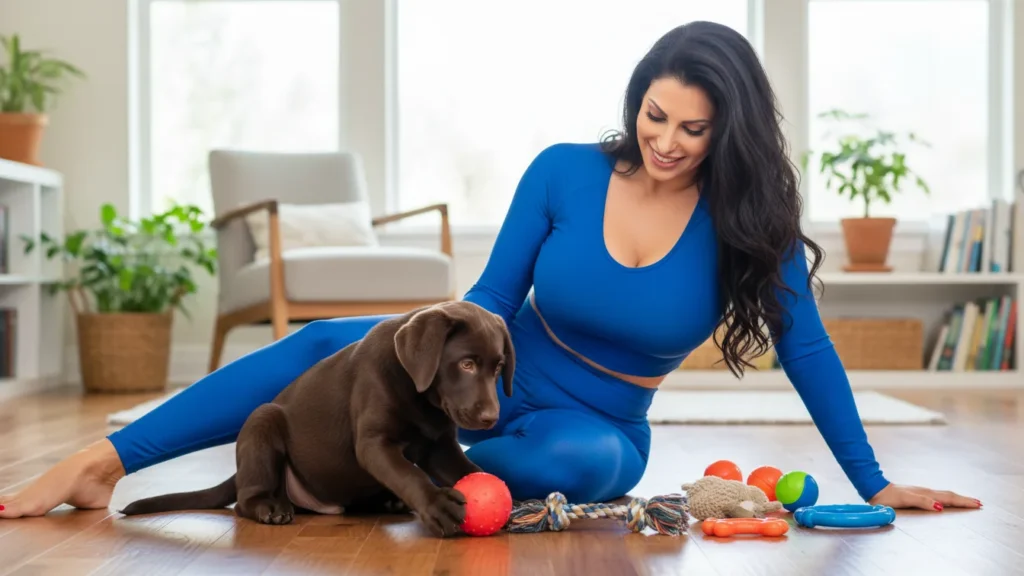
Your puppy has dozens of toys.
Yet somehow, one object becomes special.
They sleep with it.
Carry it from room to room.
Search for it when it’s missing.
It might be:
- A soft toy
- A blanket
- An old shoe
- A towel that smells like you
You might smile—and then worry.
Is this normal?
Is my puppy becoming too dependent?
Should I take it away?
Here’s the reassuring truth most owners never hear clearly:
👉 When puppies attach to objects, they’re not being possessive or “spoiled”—they’re self-regulating emotionally.
This behavior is deeply rooted in healthy brain development.
Why This Behavior Matters More Than It Seems
Object attachment isn’t just cute.
It tells you:
- How your puppy copes with stress
- How they handle separation
- How secure they feel in their environment
This matters today because:
- Puppies are separated from littermates early
- Homes are quieter and less social than natural settings
- Emotional self-soothing skills must develop quickly
Understanding this behavior helps you support independence instead of accidentally creating anxiety.
The Core Reason Puppies Attach to Objects
At its foundation, object attachment is about emotional safety.
In the first weeks of life, puppies rely on:
- Their mother
- Littermates
- Constant physical contact
When they move to a new home, all of that disappears—overnight.
Their brain looks for replacement anchors.
Objects that provide:
- Familiar texture
- Familiar smell
- Predictable presence
become emotional stand-ins.
This is not weakness.
It’s adaptive intelligence.
Comfort Objects and the Developing Puppy Brain
A puppy’s nervous system is immature.
They cannot yet:
- Fully regulate stress
- Predict long absences
- Self-soothe reliably
Comfort objects help bridge that gap.
They:
- Lower cortisol (stress hormone)
- Reduce arousal
- Create predictability
Research and behavioral guidance referenced by groups like the American Kennel Club recognize comfort objects as a normal transitional support, especially in young puppies.
Why Puppies Choose “That One” Object
Not all objects become special.
Puppies usually attach to items that:
- Smell like their owner
- Are soft and mouth-friendly
- Were present during calm or sleep moments
- Were nearby during stressful transitions
That random sock?
It smells like you.
That blanket?
It was there during their first night.
Attachment forms through association, not logic.
Object Attachment vs. Resource Guarding
This distinction is important.
Here’s a simple comparison:
| Comfort Object Attachment | Resource Guarding |
|---|---|
| Object calms the puppy | Object causes tension |
| Puppy seeks it during rest | Puppy defends it aggressively |
| Relaxes when holding it | Stiffens when approached |
| Easily redirected | Escalates when challenged |
| Developmental and normal | Requires behavior support |
Most puppies fall firmly in the comfort attachment category.
A Real-Life Example Many Owners Recognize
Your puppy always sleeps with one toy.
One night, it’s missing.
The puppy:
- Paces
- Whines
- Can’t settle
You find the toy.
Within minutes:
- They lie down
- Breathing slows
- Sleep returns
That object didn’t create dependency.
It enabled regulation.
Why Object Attachment Often Appears During Stress
Puppies lean on objects more during:
- New environments
- Changes in routine
- Nighttime separation
- After busy days
- During fear periods
This is a coping strategy—not a problem.
The object absorbs emotional overflow so the puppy doesn’t have to.
Common Mistakes Owners Make With Comfort Objects
Well-meaning owners sometimes:
- ❌ Remove the object to “prevent dependence”
- ❌ Tease the puppy with it
- ❌ Use it as a training reward inconsistently
- ❌ Take it away during stress moments
These actions can:
- Increase anxiety
- Delay self-regulation development
- Create insecurity
Comfort objects should be stable, not controlled.
When Object Attachment Is Actually Helpful
Healthy attachment can:
- Reduce separation distress
- Improve sleep quality
- Increase independence over time
- Support emotional resilience
Many puppies naturally reduce reliance as:
- Confidence grows
- Brain regulation improves
- Social bonds stabilize
The object fades—not because it was removed, but because it’s no longer needed as much.
How to Support Healthy Object Attachment
The goal isn’t removal.
It’s balance.
1. Allow Safe Comfort Objects
Choose items that are:
- Non-toxic
- Durable
- Appropriate for chewing
Avoid items that could be swallowed or destroyed easily.
2. Keep the Object Predictable
Let it remain:
- In sleeping areas
- During alone time
- During calm moments
Predictability builds security.
3. Don’t Overreact to Attachment
Calm acceptance teaches:
“This is safe. I don’t need to worry.”
Your emotional neutrality matters.
4. Pair Objects With Calm Independence
Encourage:
- Short alone times
- Relaxed exploration
- Gradual independence
The object supports—not replaces—confidence.
Hidden Tip: Attachment Often Peaks Before Growth Spurts
Many owners notice:
- Increased object fixation
- Then sudden independence weeks later
This often coincides with:
- Neurological development
- Improved emotional regulation
The attachment served its purpose.
Why This Matters for Long-Term Emotional Health
Puppies who learn to self-soothe early:
- Handle stress better as adults
- Show less separation anxiety
- Adapt more easily to change
Comfort objects aren’t a crutch.
They’re training wheels for emotional regulation.
Key Takeaways
- Puppies attach to objects for emotional safety, not possession
- Comfort objects help regulate immature nervous systems
- Attachment is normal, temporary, and often beneficial
- Removing comfort objects too early can increase anxiety
- Healthy support leads to natural independence
Frequently Asked Questions
1. Should I take away my puppy’s comfort object?
No, unless it’s unsafe. Most puppies outgrow reliance naturally.
2. Can comfort objects cause separation anxiety?
No. They usually reduce distress, not increase it.
3. Is it bad if my puppy carries a toy everywhere?
Not at all. It’s a common self-soothing behavior.
4. What if my puppy gets upset when the object is missing?
That means it’s helping regulate emotion. Gradual exposure without it can be done later.
5. Do adult dogs keep comfort objects?
Some do—and that’s perfectly normal.
A Gentle Conclusion
Your puppy isn’t “obsessed.”
They’re learning how to feel safe in a world that’s still very new.
That toy, blanket, or sock isn’t just an object—it’s a bridge between dependence and confidence.
When you respect that process instead of rushing it, you give your puppy something far more valuable than obedience:
Emotional security.
And from that, everything else grows.
Disclaimer: This article is for general educational purposes only and does not replace guidance from a qualified veterinarian or certified animal behavior professional.
Dr. Sofia Romano, DVM, is an experienced veterinarian specializing in small-animal medicine and preventive care. She has treated thousands of cases using evidence-based diagnostics and modern clinical practices. Dr. Romano is dedicated to providing science-backed pet-health guidance that helps owners make informed decisions and improve their pets’ quality of life.