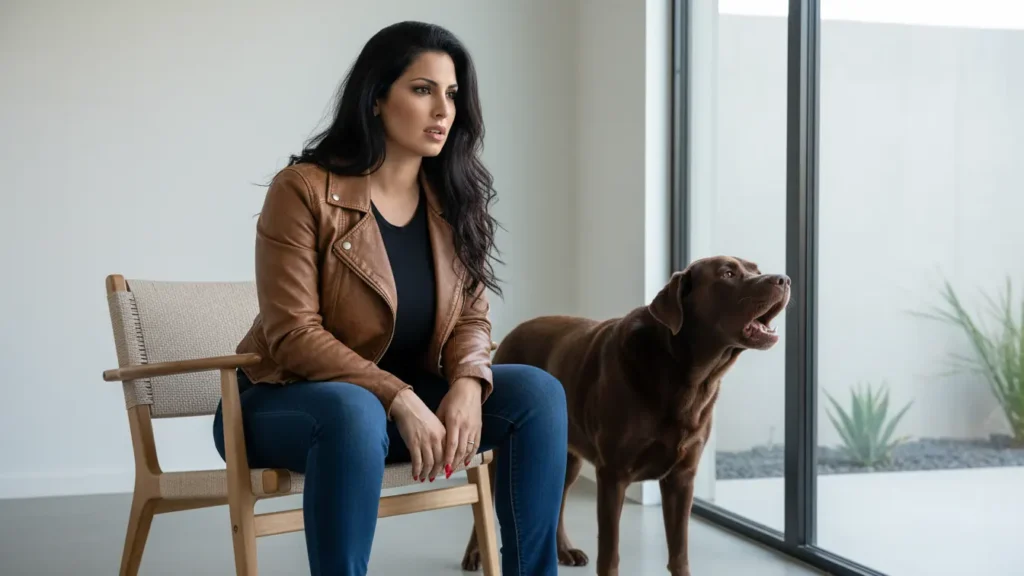
The Quiet Moment Almost Every Dog Owner Has Seen
The house is still.
No footsteps.
No doorbell.
No car outside.
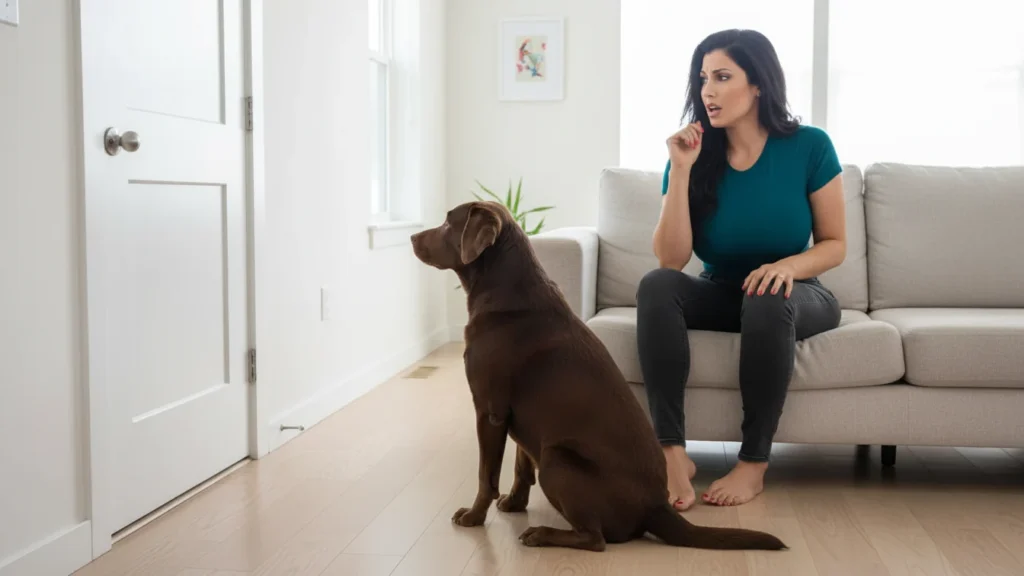
And yet your dog sits there—
eyes fixed on the door.
Minutes pass.
Sometimes longer.
You glance over and think:
“What are they waiting for?”
Most owners laugh it off or assume boredom.
But this behavior isn’t random.
It’s not imagination.
And it’s not always about someone arriving.
It’s a deeply wired behavior tied to how dogs perceive safety, patterns, and the world around them.
Doors Aren’t Just Doors to Dogs
To humans, a door is an object.
To dogs, it’s a boundary of possibility.
Doors represent:
- Entry of people
- Exit of loved ones
- Arrival of sounds, smells, and movement
- Change in the environment
From a dog’s perspective, doors are where the outside world meets their safe space.
Watching the door is a form of environmental monitoring.
Not anxiety.
Not obsession.
But awareness.
The Canine Brain Is Always Predicting What Comes Next
Dogs are predictive thinkers.
They constantly scan their environment to answer one question:
“What’s about to happen?”
Over time, dogs learn patterns:
- A certain sound → someone enters
- A specific time → a person comes home
- A routine → movement through the door
Even when nothing happens, the brain stays alert.
Why?
Because anticipation is safer than surprise.
Why Dogs Watch Doors Even When No One Is Coming
There isn’t one single reason.
There are several overlapping ones.
1. Pattern Memory
Dogs remember what usually happens, not just what is happening now.
If someone often enters through that door:
- At a certain time
- After a familiar sound
- Following a routine
The dog’s brain prepares—even if today is different.
2. Scent Information Humans Can’t Detect
Dogs process smell continuously.
Subtle changes near doors include:
- Air movement
- Lingering scents
- Outdoor particles
Your dog may be responding to information you can’t sense.
Doors as Emotional Anchors
For many dogs, doors are emotionally charged places.
Think about what doors mean in a dog’s life:
- You leave through them
- You return through them
- Excitement often starts there
- Separation often starts there
Over time, doors become linked to attachment and expectation.
Watching the door can be:
- Hope
- Anticipation
- Loyalty
- Vigilance
Not sadness—just readiness.
Is Door-Watching a Sign of Anxiety?
Sometimes.
But often, no.
This is where owners get confused.
Let’s clarify.
Calm Door Watching Looks Like:
- Relaxed body posture
- Lying or sitting comfortably
- Soft gaze
- No vocalization
Stress-Driven Door Fixation Looks Like:
- Pacing
- Whining or barking
- Panting
- Inability to disengage
Context matters more than the behavior itself.
Comparison: Normal Vigilance vs. Stress Behavior
| Feature | Normal Door Watching | Stress-Related Watching |
|---|---|---|
| Body language | Relaxed, loose | Tense, restless |
| Duration | Intermittent | Prolonged, compulsive |
| Response to distraction | Easily shifts | Hard to redirect |
| Emotional tone | Calm alertness | Anxiety or agitation |
| Daily impact | Neutral | Disruptive |
Understanding this difference prevents unnecessary worry.
Why Dogs Watch Doors More as They Get Older
Many owners notice this behavior increase with age.
That’s not accidental.
As dogs mature:
- Sensory awareness increases
- Routine reliance grows
- Environmental monitoring sharpens
Older dogs may:
- Spend more time resting
- Observe rather than explore
- Choose vantage points (like doors)
It’s often a sign of mental engagement, not decline.
The Role of Routine and Time
They understand sequence.
If the brain expects:
- “After this, someone comes home”
- “After quiet time, the door opens”
The dog will wait—even if today breaks the pattern.
This is why dogs often:
- Watch doors at specific times
- Sit up suddenly in the evening
- Become alert during routine windows
Their internal rhythm is speaking.
Common Mistakes Owners Make
Well-meaning owners sometimes misinterpret door watching.
Common mistakes include:
- Assuming it’s always anxiety
- Forcing distraction unnecessarily
- Repeatedly calling the dog away
- Reinforcing stress by overreacting
- Ignoring signs when it is stress-based
Observation matters more than interruption.
Hidden Tip: Door Watching Can Be Mentally Healthy
Surprisingly, this behavior can be mentally enriching.
Why?
- It engages attention
- It exercises memory
- It allows environmental awareness
Dogs don’t need constant stimulation.
Quiet alertness is a natural mental state.
Not every still moment needs fixing.
When Door Watching Does Signal a Deeper Issue
Pay attention if door watching is combined with:
- Separation distress
- Refusal to eat
- Destructive behavior
- Excessive vocalization
- Inability to relax elsewhere
In these cases, the behavior isn’t about the door.
It’s about emotional insecurity.
How to Respond the Right Way (Actionable Steps)
1. Observe Before Acting
Ask:
- Is my dog calm or tense?
- Can they disengage easily?
Calm vigilance needs no correction.
2. Strengthen Predictable Routines
Consistency reduces over-monitoring:
- Regular walk times
- Clear rest periods
- Predictable arrivals
Predictability soothes anticipation.
3. Provide Alternative Observation Spots
Windows, beds, or quiet corners can help distribute focus.
This reduces fixation without suppression.
4. Avoid Reinforcing Anxiety
Don’t repeatedly reassure or distract if the dog is calm.
Overattention can turn neutral behavior into concern.
Real-Life Example: The Evening Door Watcher
A dog begins watching the door every evening around 7 PM.
No distress.
No whining.
Just waiting.
Why?
That’s when the owner usually returns from work.
On days off, the dog still waits.
Not because something is wrong—
but because memory hasn’t updated yet.
Why This Matters Today
Modern homes are quieter, more structured, and more indoor-focused.
Dogs have fewer external cues.
Doors become:
- The main point of change
- The main link to the outside world
- The main source of anticipation
Understanding this behavior:
- Prevents unnecessary worry
- Improves emotional communication
- Strengthens trust
Sometimes, your dog isn’t waiting for someone.
They’re simply being aware.
Key Takeaways
- Door watching is often normal canine vigilance
- Dogs track patterns, not just events
- Calm watching ≠ anxiety
- Doors hold emotional and sensory significance
- Routine and predictability influence the behavior
- Context and body language matter most
Frequently Asked Questions (FAQ)
1. Why does my dog stare at the door at night?
Evening routines and quiet environments heighten anticipation and awareness.
2. Should I distract my dog when they do this?
Only if signs of stress are present. Calm watching is normal.
3. Can door watching mean my dog misses someone?
Sometimes, yes—especially if linked to routine return times.
4. Is this behavior linked to separation anxiety?
Only if paired with distress behaviors like pacing or vocalizing.
5. Can mental stimulation reduce door watching?
Yes, but it doesn’t need to eliminate it—balance is key.
A Simple Conclusion
Dogs don’t watch doors because they’re bored.
They watch because they’re aware.
In a quiet house, the door represents possibility, memory, and connection.
Sometimes, your dog isn’t waiting for someone to arrive.
They’re simply keeping watch over the world they care about.
Disclaimer: This article is for general educational purposes and does not replace personalized veterinary or behavioral advice.

Dr. Sofia Romano, DVM, is an experienced veterinarian specializing in small-animal medicine and preventive care. She has treated thousands of cases using evidence-based diagnostics and modern clinical practices. Dr. Romano is dedicated to providing science-backed pet-health guidance that helps owners make informed decisions and improve their pets’ quality of life.