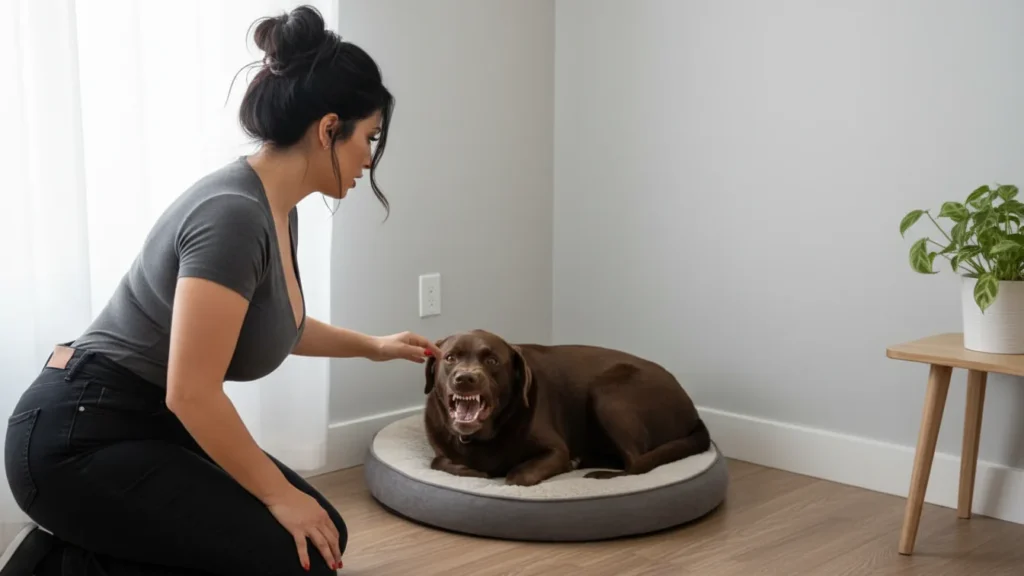
“He’s Never Done This Before…”
It usually starts with disbelief.
A dog who’s always been gentle suddenly growls when touched.
A family dog snaps when approached on the couch.
A pet who once followed you everywhere now guards spaces — or people.
Owners often say the same thing in veterinary clinics:
“He’s never been aggressive before. This came out of nowhere.”
But here’s the truth veterinarians see every day:
Sudden aggression at home is almost never random — and it’s rarely about dominance.
Dogs don’t wake up one day and decide to become aggressive.
They react when something feels wrong, threatening, or unbearable — physically or emotionally.
This article breaks down why dogs suddenly become aggressive at home, what those warning signs really mean, and what responsible owners should do next — before the behavior escalates.
Why Sudden Aggression at Home Is a Serious Signal (Not “Bad Behavior”)
Dogs don’t have words — they have reactions.
When aggression appears suddenly at home, it’s often because:
- A stress threshold has been crossed
- Pain is being ignored
- Fear has been building quietly
- The dog feels trapped or unsafe
Home is where dogs are most vulnerable.
It’s also where their coping mechanisms drop.
That’s why aggression often shows up with family members, not strangers.
This matters today because:
- More dogs are living indoors full-time
- Routines are less predictable
- Anxiety and overstimulation are increasingly common
Understanding the why is the only way to fix the what.
Hidden Medical Causes: Pain Is the #1 Trigger Vets See
One of the most overlooked causes of sudden aggression is pain.
Dogs instinctively hide discomfort.
By the time aggression appears, the pain is often significant.
Common medical triggers include:
- Arthritis or joint inflammation
- Dental pain or gum infections
- Ear infections (especially chronic ones)
- Spinal issues or slipped discs
- Undiagnosed injuries
- Skin infections causing constant irritation
What this looks like at home:
- Growling when touched or picked up
- Snapping during grooming
- Aggression when approached while resting
- Sudden intolerance to children
Important:
A dog in pain may react aggressively before limping or whining appears.
Neurological & Hormonal Changes That Alter Behavior
Not all aggression starts in the muscles or joints.
Sometimes, the brain itself is involved.
Conditions veterinarians consider include:
- Cognitive dysfunction (dog dementia)
- Brain inflammation or tumors
- Seizure-related aggression
- Thyroid imbalance (especially hypothyroidism)
These issues can:
- Reduce impulse control
- Lower frustration tolerance
- Change how a dog perceives threats
Owners often describe it as:
“It’s like he’s not himself anymore.”
That observation is often accurate.
Fear-Based Aggression: When Safety Feels Unpredictable
Fear doesn’t always look like shaking.
In dogs, fear often looks like:
- Growling
- Snapping
- Blocking access
- Lunging
Fear-based aggression commonly develops when:
- A dog has been startled repeatedly
- Punishment-based training was used
- A traumatic event occurred at home
- The dog feels cornered or restrained
Subtle triggers owners miss:
- Sudden loud noises
- Being woken abruptly
- Inconsistent handling
- Forced affection
Fear builds quietly — until the reaction seems “sudden.”
Resource Guarding That Starts Inside the Home
Resource guarding isn’t about dominance.
It’s about perceived loss.
Dogs may guard:
- Food bowls
- Sleeping areas
- Toys
- Owners themselves
This behavior can emerge suddenly when:
- A new pet or baby enters the home
- Routines change
- Attention feels threatened
Early warning signs:
- Stiff body posture
- Freezing
- Whale eye (showing whites of eyes)
- Low growling before snapping
Ignoring these signs often leads to escalation.
Anxiety-Induced Aggression: Stress That Finally Boils Over
Chronic stress changes behavior.
Dogs under constant stress may appear:
- Restless
- Clingy
- Irritable
- Hyper-alert
Common anxiety triggers at home:
- Long hours alone
- Unpredictable schedules
- Lack of mental stimulation
- Excessive confinement
When anxiety peaks, aggression becomes a defensive outlet.
Learned Aggression: When Past Responses Are Reinforced
Dogs learn quickly.
If aggression once:
- Stopped an uncomfortable interaction
- Made a person back away
- Ended a stressful situation
…the dog may repeat it.
This doesn’t mean the dog is “bad.”
It means the behavior worked.
🆚 Sudden Aggression vs. Gradual Aggression
| Feature | Sudden Aggression | Gradual Aggression |
|---|---|---|
| Onset | Appears quickly | Builds over time |
| Common Cause | Pain, fear, medical issue | Training gaps, anxiety |
| Owner Awareness | Often shocked | Often normalized |
| Risk Level | High if ignored | Moderate but growing |
| Solution | Medical + behavioral | Behavioral intervention |
Mistakes Owners Make That Worsen Aggression
Many well-meaning owners accidentally escalate the problem.
Common mistakes:
- Punishing growling
- Forcing interactions
- Ignoring early warning signs
- Assuming “he’ll grow out of it”
- Delaying veterinary evaluation
Punishing aggression suppresses warnings — not the cause.
What You Should Do Immediately (Vet-Approved Steps)
If your dog shows sudden aggression at home:
- Stop forcing interactions
- Schedule a veterinary exam
- Note triggers and timing
- Ensure predictable routines
- Create safe, quiet spaces
Avoid:
- Alpha-based methods
- Physical corrections
- Confrontation
Safety always comes first.
When Behavior Training Is Necessary (And When It’s Not Enough)
Training helps after medical issues are ruled out.
A qualified behavior professional can:
- Identify triggers
- Rebuild trust
- Teach coping strategies
- Reduce fear responses
But training alone cannot fix pain or neurological issues.
Key Takeaways
- Sudden aggression is a signal, not a personality change
- Pain is the most common hidden cause
- Fear and anxiety often build quietly
- Punishment makes aggression worse
- Early intervention prevents escalation
Aggression doesn’t mean your dog is broken.
It means something is wrong — and fixable.
Frequently Asked Questions
1. Can a dog suddenly become aggressive for no reason?
No. There is always an underlying trigger — medical, emotional, or environmental.
2. Should I rehome a dog that becomes aggressive at home?
Not without proper evaluation. Many cases are treatable when addressed early.
3. Is sudden aggression a sign of rabies?
Rabies is extremely rare in vaccinated dogs. Other causes are far more likely.
4. Can neutering or spaying reduce aggression?
It may help in hormone-driven cases but won’t resolve pain or fear-based aggression alone.
5. Should I wait and see if the behavior stops?
No. Waiting often allows the behavior to intensify and become harder to reverse.
Conclusion: Aggression Is a Message — Not a Verdict
Dogs don’t become aggressive without reason.
When aggression appears suddenly at home, it’s your dog’s way of saying:
“Something isn’t right, and I don’t feel safe.”
Listening early can prevent injury, rebuild trust, and restore harmony.
With the right veterinary insight and compassionate handling, most dogs can return to being the companions you know and love.
Disclaimer: This article is for general informational purposes and does not replace professional veterinary or behavioral consultation. If aggression is sudden or severe, seek expert help promptly.

Dr. Sofia Romano, DVM, is an experienced veterinarian specializing in small-animal medicine and preventive care. She has treated thousands of cases using evidence-based diagnostics and modern clinical practices. Dr. Romano is dedicated to providing science-backed pet-health guidance that helps owners make informed decisions and improve their pets’ quality of life.





Pingback: Why Dogs Bark At Their Own Reflection — The Confusing Instinct Most Owners Don’t Expect
Pingback: Why Puppies Bite More When Overtired — The Hidden Reason Behind Evening Nipping (And How To Stop It Gently)