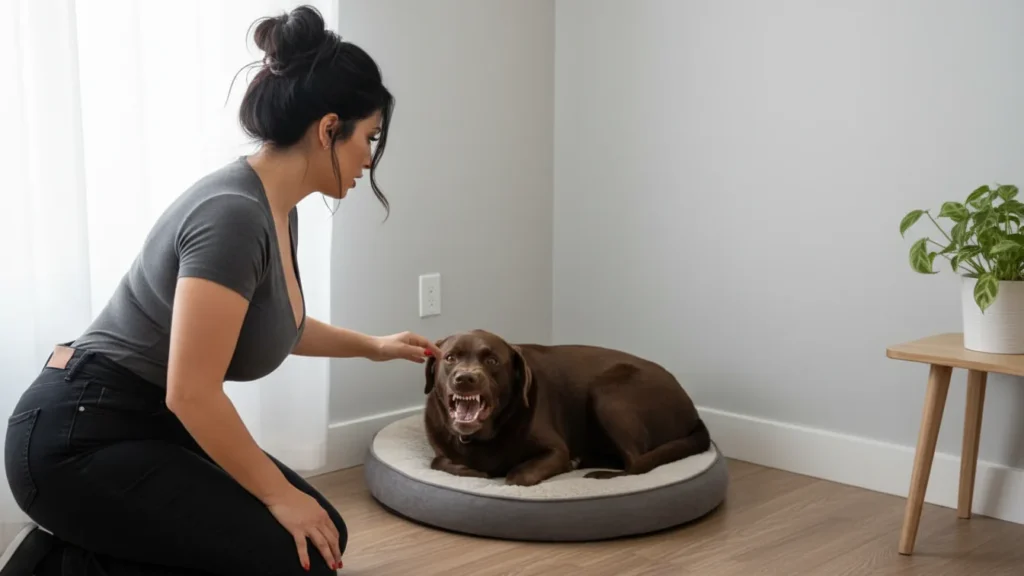
It usually happens in a split second. You reach down to pet your dog while they are resting on their favorite rug, and instead of a tail wag, you are met with a stiff body, a curled lip, and a terrifying, low-pitched growl. Or worse—a sudden snap.
When a previously gentle, loving family dog suddenly exhibits aggression at home, it is a deeply traumatic experience for the owner. The immediate reaction is often a mix of betrayal, fear, and confusion. Did I do something wrong? Is my dog turning dangerous?
Before you panic, take a step back. In veterinary medicine and canine behavior, aggression is almost never viewed as a personality trait. Instead, it is treated as a symptom. When a dog who has been peaceful for years suddenly uses their teeth, they aren’t being malicious. They are desperately trying to protect themselves.
Here is what is actually happening behind your dog’s sudden shift in temperament, and the hidden triggers you might be missing.
The Defense Reflex: Masking Severe Pain
If there is a golden rule in veterinary diagnostics, it is this: Sudden aggression equals pain until proven otherwise.
Dogs are evolutionary masters at hiding physical weakness. They will rarely whine or limp until a condition becomes unbearable. However, if they are nursing a silent injury, their tolerance for physical contact drops to zero. If you unknowingly press on a sore spot, the dog’s brain bypasses conscious thought and instantly triggers a defensive snap to protect the injury.
The most common hidden culprits include:
- Deep Ear Infections: A dog’s ear canal is L-shaped, meaning a severe, throbbing infection can brew deep near the eardrum without any visible redness on the outside.
- Spinal or Joint Pain: Early-stage osteoarthritis or a slipped disc can send shooting nerve pain through the body when the dog shifts positions or is touched.
- Dental Abscesses: A fractured tooth with an exposed nerve can cause a dog to snap violently if you reach anywhere near their face or try to take a toy from their mouth.
The Overflowing “Stress Bucket” (Trigger Stacking)
Sometimes, the aggression seems entirely unprovoked. Your dog snapped when you asked them to get off the couch—something they’ve done a thousand times before without issue.
Behaviorists call this trigger stacking. Imagine your dog has a “stress bucket” in their brain. Every stressful event adds water to the bucket.
- In the morning, a loud garbage truck wakes them up (water added).
- At noon, a stray cat walks across the fence, frustrating them (water added).
- In the afternoon, they have an itchy allergy flare-up (water added).
- By evening, the bucket is filled to the absolute brim.
When you casually reach out to move them off the couch, that minor interaction is the final drop that causes the bucket to overflow. The dog snaps. They aren’t actually reacting to you; they are reacting to the cumulative stress of the entire day.
The Aging Brain: Cognitive and Sensory Decline
If your senior dog suddenly starts growling at family members or snapping when woken up, their brain and senses are likely changing.
- Sleep Startle: As dogs lose their hearing and vision, they rely heavily on touch. If a deaf dog is sleeping deeply and you touch their back to wake them, they wake up in a pure panic, disoriented and defensive.
- Canine Cognitive Dysfunction (CCD): Dog dementia alters a dog’s memory and perception of reality. A dog with CCD may suddenly fail to recognize a family member in dim lighting, perceiving them as an intruder and acting aggressively out of sheer confusion.
Chemical Misfires: Undiagnosed Medical Conditions
Aggression is heavily regulated by hormones and neurology. A sudden behavioral shift warrants a comprehensive blood panel to check for internal imbalances.
Hypothyroidism (an underactive thyroid), for instance, doesn’t just cause weight gain and hair loss; it can cause profound mood swings and uncharacteristic irritability. Similarly, neurological issues—such as focal seizures or brain tumors—can literally short-circuit the brain’s emotional regulation centers, causing a docile dog to become unpredictably violent.
What You Must Do Immediately (And What to Avoid)
If your dog growls or snaps at you, your safety and their health must become your immediate priorities.
Never Punish the Growl: Human instinct is to yell or scold a dog for growling. Do not do this. A growl is a dog’s early warning system; it is their way of saying, “I am overwhelmed, please back away.” If you punish a dog for growling, they will learn to suppress the warning. The next time they are in pain or stressed, they will skip the growl and go straight to a silent, unpredictable bite.
Manage the Environment: Immediately remove the pressure. If they are guarding a space, let them have it for now. Separate them from children or other pets using baby gates or a quiet room to de-escalate the tension.
Schedule a Comprehensive Vet Exam: Do not call a trainer yet. Call your veterinarian. Request a full physical exam, orthopedic manipulation, and a blood panel. You cannot train a dog out of a painful slipped disc or an active thyroid condition.
Your dog hasn’t stopped loving you, and they haven’t “turned bad.” They are communicating a crisis the only way a canine knows how. By treating their aggression as a cry for medical help, you can uncover the hidden cause and bring your sweet companion back.
High-Authority Sources & Expert References
To ensure the safety of your family and the health of your pet, the insights in this article are rooted in established veterinary medicine and behavioral science. For deeper reading, consult these trusted resources:
- American College of Veterinary Behaviorists (ACVB): Understanding the clinical mechanisms of Canine Aggression and Behavioral Medicine.
- American Veterinary Medical Association (AVMA): Comprehensive guide on preventing bites and understanding Why Dogs Bite.
- Cornell University College of Veterinary Medicine: Recognizing the hidden signs of chronic pain and Osteoarthritis in Dogs.
- PetMD (Veterinary Authored): Diagnostic overview of medical conditions that cause behavioral shifts, including Hypothyroidism in Dogs.

Dr. Sofia Romano, DVM, is an experienced veterinarian specializing in small-animal medicine and preventive care. She has treated thousands of cases using evidence-based diagnostics and modern clinical practices. Dr. Romano is dedicated to providing science-backed pet-health guidance that helps owners make informed decisions and improve their pets’ quality of life.





Pingback: Why Dogs Bark At Their Own Reflection — The Confusing Instinct Most Owners Don’t Expect
Pingback: Why Puppies Bite More When Overtired — The Hidden Reason Behind Evening Nipping (And How To Stop It Gently)