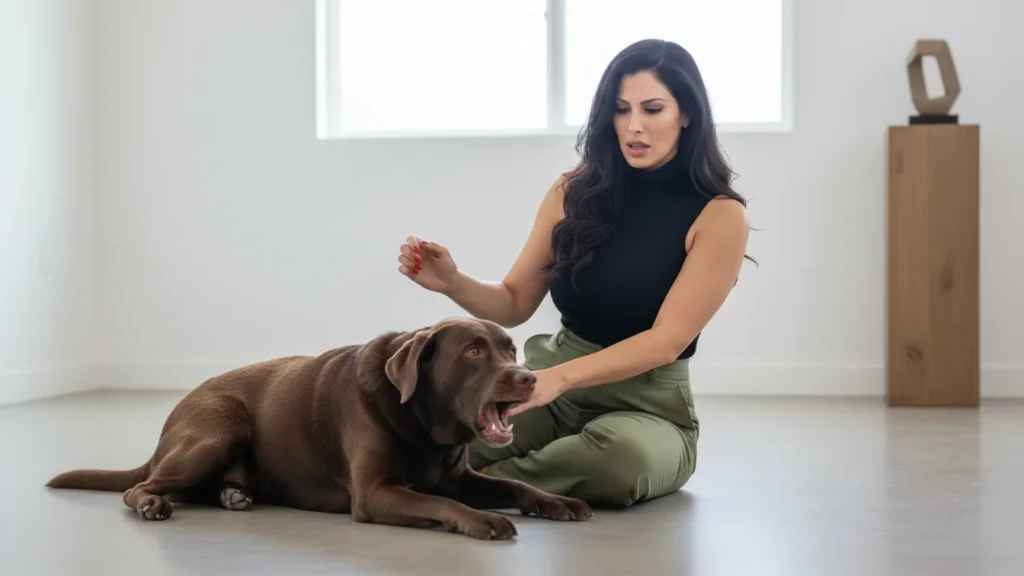
“He’s Friendly—Until You Touch Him There”
Your dog is calm.
Relaxed.
Even affectionate.
Then you reach to pet a certain spot.
And suddenly—
- They flinch
- Growl
- Or snap without warning
You pull your hand back, stunned.
“Why would my dog react like that?”
Here’s what most owners don’t realize until something goes wrong:
Dogs don’t snap randomly.
When a dog reacts to touch, they’re communicating discomfort the only way they can.
This article explains why dogs snap when touched in specific areas, what those reactions actually mean, and how to protect both your dog and yourself by responding the right way.
First, Let’s Clear a Dangerous Myth
A snapping dog is not automatically aggressive.
In fact, most dogs snap because:
- They’re in pain
- They’re scared
- They’ve learned that subtle signals are ignored
Snapping is often a last-resort communication, not the first.
Understanding that difference can prevent injuries and preserve trust.
Why This Matters Today
More dogs now:
- Live longer
- Have chronic pain conditions
- Are handled frequently by multiple people
At the same time, many early warning signs are misunderstood or missed.
As a result, dogs are often punished for snapping—when they were actually trying to protect themselves.
Learning the “why” behind touch sensitivity is essential for safety, compassion, and long-term behavior stability.
The Most Common Reason: Pain Beneath the Surface
The number one reason dogs snap when touched is pain.
And not always obvious pain.
Dogs instinctively hide discomfort.
They don’t limp.
They don’t cry.
Instead, they avoid contact—or react when it happens.
Common Pain-Related Triggers
- Arthritis or joint inflammation
- Muscle strains
- Spinal or neck pain
- Dental or ear pain
- Skin infections or hot spots
A dog may tolerate touch most of the time—but snap when pressure hits a sore area.
Areas Most Commonly Associated With Pain Reactions
Dogs often react strongly when touched:
- Around hips or lower back
- Near the neck or shoulders
- On paws or nails
- Around ears or face
- Near the belly
If snapping is location-specific, pain should be your first consideration.
Fear and Learned Defensive Responses
Not all touch sensitivity is physical.
Some dogs snap because of fear.
This often stems from:
- Past trauma
- Rough handling
- Being punished for growling
- Medical procedures that caused stress
If a dog learned that touch predicts discomfort, they may react defensively—even when no pain is present.
Fear-based snapping often:
- Happens quickly
- Is paired with stiff body language
- Occurs during surprise contact
This is self-protection, not defiance.
Why Dogs “Snap Without Warning” (But Actually Didn’t)
Many owners say:
“He snapped out of nowhere.”
In reality, dogs usually give warnings that go unnoticed.
Common early warning signals include:
- Freezing
- Lip licking
- Yawning
- Turning the head away
- Whale eye (showing whites of eyes)
- Tense body posture
When these are ignored repeatedly, dogs may skip them and go straight to snapping.
The warning system hasn’t failed—it’s been overridden.
Sensitivity Due to Skin or Coat Issues
Dogs may snap when touched due to surface-level discomfort.
Common causes include:
- Allergies
- Fleas or mites
- Skin infections
- Matted fur pulling on skin
In these cases, touch feels irritating or painful rather than comforting.
Dogs with chronic skin problems often develop anticipatory defensiveness, reacting before pain even occurs.
Neurological and Sensory Causes
Less common—but important—are neurological causes.
These include:
- Nerve pain
- Disc disease
- Sensory processing issues
- Cognitive changes in older dogs
Dogs with nerve-related pain may react strongly to even light touch.
The response can seem extreme—but it’s proportional to what they’re feeling internally.
Comparison Table: Pain-Based vs Fear-Based Snapping
| Feature | Pain-Related | Fear-Related |
|---|---|---|
| Trigger | Specific touch area | Sudden or unexpected contact |
| Consistency | Same spot every time | Context-dependent |
| Body language | Flinch, yelp, stiffness | Freezing, avoidance, wide eyes |
| Improves with treatment | Yes | Gradual with behavior work |
| Emotional tone | Defensive | Anxious |
Why Punishing Snapping Makes Things Worse
One of the biggest mistakes owners make is punishment.
Punishment:
- Increases fear
- Suppresses warning signals
- Raises bite risk
A dog punished for snapping may stop warning altogether—and bite next time instead.
The goal is not to stop communication.
It’s to understand and resolve the cause.
Real-Life Example: “He Only Snaps at Night”
A dog snapped when touched during evening cuddles—but not during the day.
The cause?
- Early spinal arthritis
- Worse pain after daily activity
Once pain management was adjusted, the snapping stopped.
Behavior changed when discomfort was addressed.
What You Should Do If Your Dog Snaps When Touched
Step-by-Step Safe Response
- Stop touching the area immediately
Respect the signal. - Observe patterns
- Which body part?
- What time of day?
- Any recent changes?
- Avoid forcing handling
This increases fear and risk. - Seek professional evaluation
Pain should always be ruled out first. - Use consent-based handling
Let the dog choose interaction.
Early action prevents escalation.
Hidden Tip: Why Children Are Most at Risk
Children often:
- Touch sensitive areas
- Move unpredictably
- Miss warning signs
Dogs that snap at touch are at higher risk of biting children, not because they’re dangerous—but because communication fails.
Supervision and education are critical.
When Snapping Becomes a Serious Red Flag
Seek immediate professional guidance if:
- Snapping escalates
- Bite attempts increase
- Pain treatment doesn’t help
- Behavior changes rapidly
Sudden aggression can indicate serious medical or neurological issues.
Common Mistakes Owners Make
Avoid these well-meaning but harmful actions:
- ❌ Forcing affection
- ❌ Ignoring early signals
- ❌ Labeling the dog “aggressive”
- ❌ Using punishment or dominance tactics
- ❌ Assuming it’s a personality flaw
Most touch-related snapping is situational, not character-based.
Frequently Asked Questions
1. Is snapping always caused by pain?
No, but pain is the most common cause and should be ruled out first.
2. Can anxiety alone cause snapping?
Yes. Fear-based defensiveness is common, especially in sensitive dogs.
3. Should I stop petting my dog altogether?
No. Adjust how and where you touch, and respect consent.
4. Can this behavior be reversed?
Often yes—when the underlying cause is identified and addressed.
5. Does snapping mean my dog will bite?
Not necessarily. Snapping is often an attempt to avoid biting.
Key Takeaways
- Dogs snap to communicate discomfort or fear
- Pain is the most common hidden cause
- Snapping is often a last warning
- Punishment increases risk
- Early understanding prevents bites
Conclusion: Listen Before It Escalates
When a dog snaps at touch, they’re not being difficult.
They’re saying:
“Something hurts.”
“Something scares me.”
“Please stop.”
The dogs that bite are often the ones who weren’t listened to earlier.
By respecting boundaries, investigating causes, and responding with empathy, you protect everyone involved—and strengthen your bond instead of breaking it.
Disclaimer: This article is for general educational purposes only and does not replace personalized advice from a qualified veterinary or animal behavior professional.

Dr. Sofia Romano, DVM, is an experienced veterinarian specializing in small-animal medicine and preventive care. She has treated thousands of cases using evidence-based diagnostics and modern clinical practices. Dr. Romano is dedicated to providing science-backed pet-health guidance that helps owners make informed decisions and improve their pets’ quality of life.



Pingback: Why Your Dog Suddenly Refuses Walks — Hidden Reasons Most Owners Miss
Pingback: How To Socialize A Fearful Dog Without Breaking Their Trust — What Actually Works
Pingback: How To Tell If Your Dog Is Depressed — Subtle Signs Most Owners Overlook
Pingback: Why Dogs Destroy The House When You Leave — The Real Reasons Vets And Trainers See
Pingback: The Real Reason Your Dog Won’t Listen To You — It’s Not Stubbornness
Pingback: Why Your Dog Suddenly Becomes Clingy — A Vet Explains The Triggers Most Owners Miss
Pingback: 10 Dog Training Myths That Are Completely Wrong — What Science And Trainers Actually Know
Pingback: Why Dogs Become Fearful Without A Bad Experience — The Hidden Reasons Anxiety Can Appear Out Of Nowhere
Pingback: Why Dogs Avoid Stairs All Of A Sudden — The Quiet Warning Most Owners Miss