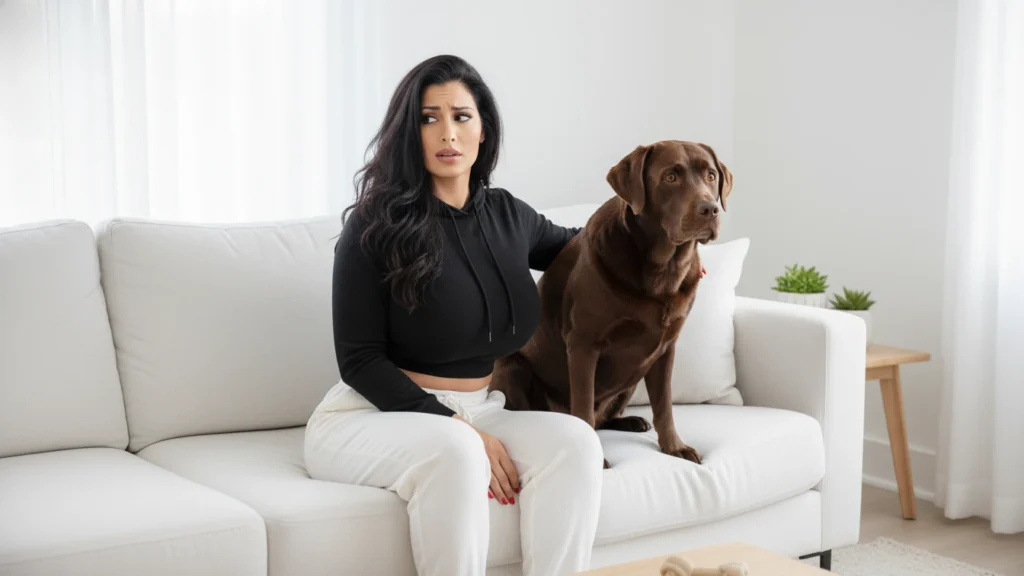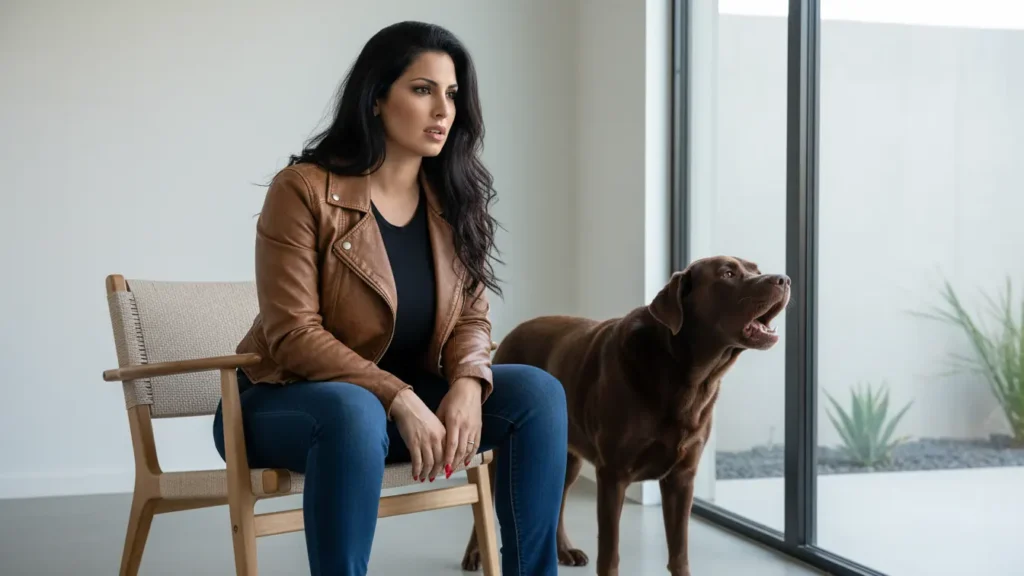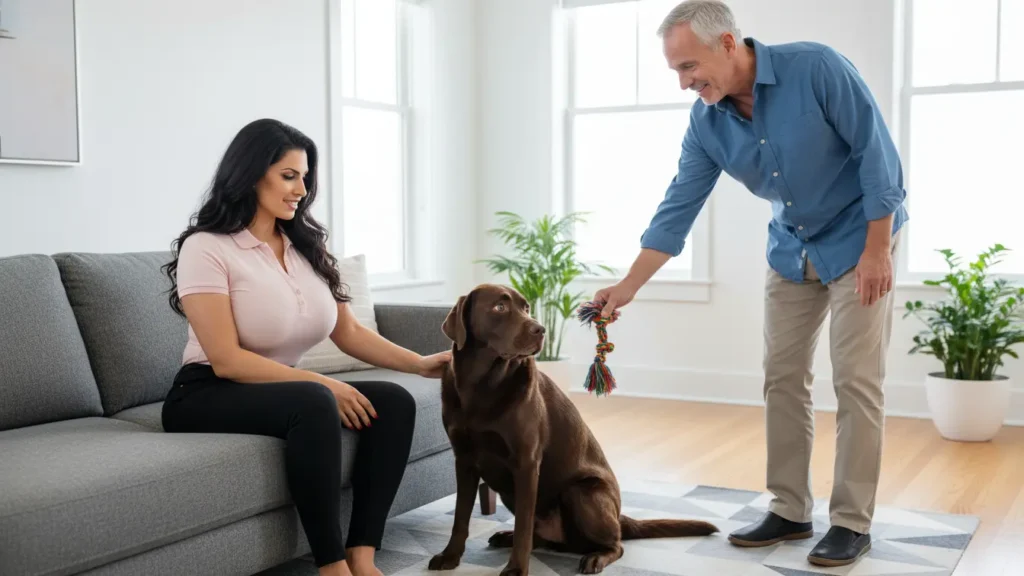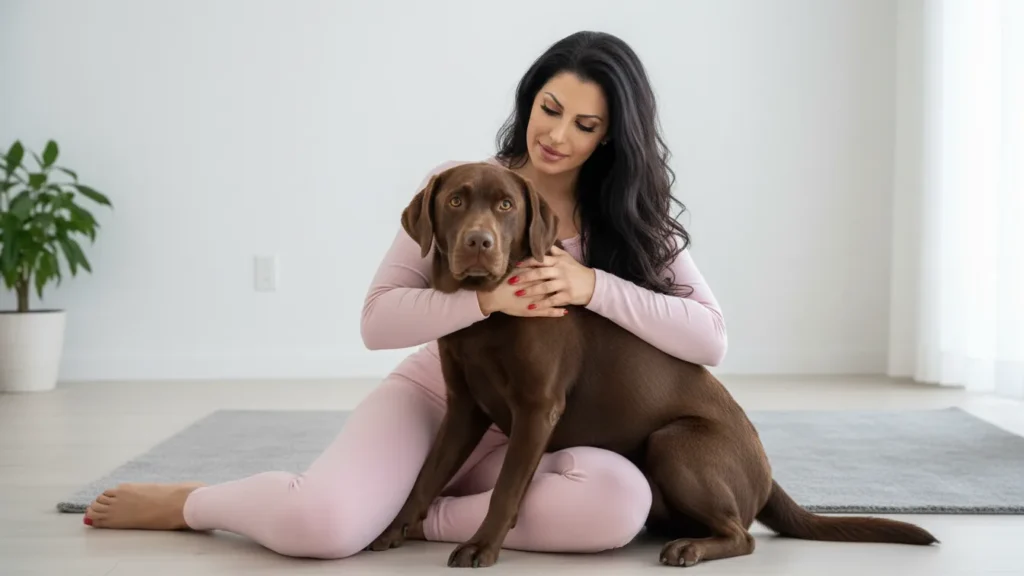
You leave the room for two minutes to grab your phone charger, and your dog acts like you’ve vanished into another dimension. He follows you to the bathroom door. He watches you pick up your keys like it’s a five-alarm emergency. It’s easy to read this as love — and it partly is. But sometimes, what looks like devotion is actually something more fragile: a bond that has tipped from healthy attachment into genuine anxiety.
Understanding where that line sits can help you keep your dog’s love for you exactly what it should be — comforting, not consuming.
Why Dogs Pick a Favorite Person in the First Place
Dogs don’t randomly assign loyalty. Certain patterns predict who becomes “their person” — usually whoever provides the most consistent positive interaction: feeding, training, calm affection, and quiet time together. This is part of the same bonding chemistry that makes dogs such deeply attached companions to begin with, something explored further in why dogs choose one person as their human.
Breed history plays a role too. Working and guardian breeds were often selectively bred for single-handler loyalty, which can make one-person attachment more likely from the start — a tendency rooted in the same domestication process that reshaped how dogs relate to humans generally.
When Attachment Crosses Into Anxiety
Here’s the important distinction: a strong bond is not the same thing as an anxious one. Research following owners and their dogs found that hyperattachment to a single person is significantly linked to separation anxiety — dogs with separation anxiety were roughly three times more likely to follow their owner excessively around the house, and nearly four times more likely to display prolonged, over-the-top greeting behavior lasting several minutes. The same research found that dogs living in single-adult households were about two-and-a-half times more likely to develop separation anxiety than dogs in multi-person homes, since a dog’s entire social world can end up resting on one person (source).
That’s the pattern worth watching for: not affection, but fragility. Destructive behavior when the favorite person leaves — even if someone else is home — refusing meals during their absence, or spiraling the moment departure cues like keys or shoes appear, are signals that the bond has become a source of distress rather than comfort.
The Science Is More Nuanced Than “Too Attached”
Interestingly, formal research complicates the simple idea that separation anxiety is just “too much love.” One well-known study tested dogs with and without separation anxiety using a structured attachment assessment, then measured how much time each dog spent near the owner. The surprising result: dogs with separation anxiety spent no more time in proximity to their owners than dogs without it. The researchers concluded that separation anxiety may not be driven by hyperattachment itself, but by a different attachment style altogether (source).
This matters because it reframes the problem. A clingy, velcro-like dog isn’t automatically an anxious one — and a dog that seems more independent during the day can still fall apart when left alone. What seems to matter most isn’t how close the bond looks from the outside, but how well the dog has learned to self-soothe and stay regulated when that person isn’t there. Broader reviews of separation-related problems describe this as a spectrum: some dogs never quite develop independence from a primary attachment figure, others transfer their dependence onto specific routines or objects, and others learn to draw emotional stability from a wider range of sources without over-relying on any single one (source).
This is part of why some dogs become noticeably clingier after a specific life change — a house move, a new baby, a period of illness — even without a single dramatic trigger; the shift often reflects a change in how the dog is regulating stress, not just a change in who they love most (a pattern examined in why dogs become over-attached after illness and why your dog suddenly becomes clingy).
The Bonding Chemistry Behind It
Part of what makes this bond so intense biologically is oxytocin — the same hormone responsible for parent-infant attachment in humans. Mutual gaze, calm physical contact, and quiet shared time between a dog and their person appear to trigger this hormone in both directions, reinforcing the relationship at a chemical level every time it happens. It’s a beautiful system — but it also explains why the bond can become so hard for a dog to regulate around when the “source” of that comfort disappears out the front door (source).
This same chemistry helps explain why some dogs seem to trust one particular person almost instantly and completely, even compared to other equally kind people in the household — a phenomenon covered in more depth in why dogs trust humans so deeply.
What Unhealthy Attachment Actually Looks Like
A few concrete warning signs are worth taking seriously rather than dismissing as “just loyalty”:
- Panic, not preference, when the person leaves — pacing, drooling, destructive chewing, or vocalizing that starts the moment they’re gone, not just mild disappointment.
- Refusal to eat, drink, or rest without that person present, even for short periods.
- Aggression or intense guarding directed at other people or animals who get close to their preferred person.
- Complete inability to be handled by anyone else — for grooming, vet visits, or basic care — which can become a real logistical problem in emergencies.
- Escalating distress at departure cues — picking up keys, putting on shoes, grabbing a bag — well before the person has actually left.
If several of these show up together, it’s less “my dog loves me” and more “my dog cannot cope without me,” which is worth addressing early rather than waiting for it to intensify — the same pattern often underlies dogs who become destructive specifically when left alone (explored in why dogs destroy the house when you leave).
What Actually Helps
The goal isn’t to make your dog love you less — it’s to help them feel secure even when you’re not physically there. A few approaches trainers and behaviorists consistently recommend:
- Widen the circle of trusted people. Let other family members or regular caregivers handle feeding, walks, and calm affection so the dog’s sense of safety isn’t tied to one single source.
- Make departures boring, not dramatic. Long, emotional goodbyes actually reinforce the idea that your leaving is a big event. A calm, low-key exit helps the dog learn there’s nothing to panic about.
- Practice short, low-stress separations before they’re necessary. Gradually building comfort with brief absences — starting in seconds, not hours — helps a dog generalize that being alone is safe.
- Reward calm behavior at the door, not just excited greetings when you return, so the dog isn’t only getting attention during high-arousal moments.
- Start early with puppies. Encouraging comfortable independence and multiple positive relationships during the early socialization window can meaningfully reduce the odds of hyper-attachment developing later (see the silent signs of anxiety in puppies).
For dogs already showing significant separation-related distress, a certified trainer or veterinary behaviorist can help build a structured plan — sometimes alongside veterinary support — tailored to the individual dog rather than a one-size-fits-all approach (source).
The Bottom Line
Being your dog’s favorite person is one of the most rewarding parts of the relationship — but it works best when your dog can also feel okay without you in the room. The goal isn’t a smaller bond. It’s a sturdier one: love that doesn’t collapse into panic the moment you step outside.
Sources referenced:
- ScienceInsights — Why Do Dogs Attach to One Person? What Science Says
- ScienceDirect — Relationship Between Attachment to Owners and Separation Anxiety in Pet Dogs
- ScienceDirect — Separation Anxiety in Dogs: What Progress Has Been Made
- Amazing Animal Minds — Explained: How Dogs Emotionally Attach to Their Owners
- Khris Erickson Dog Training — Hyper-Attachment and Separation Anxiety

Dr. Sofia Romano, DVM, is an experienced veterinarian specializing in small-animal medicine and preventive care. She has treated thousands of cases using evidence-based diagnostics and modern clinical practices. Dr. Romano is dedicated to providing science-backed pet-health guidance that helps owners make informed decisions and improve their pets’ quality of life.