
When Your Home Feels Heavy—and Your Dog Changes Too
Nothing dramatic happens.
No shouting.
No slammed doors.
Just quiet tension in the air.
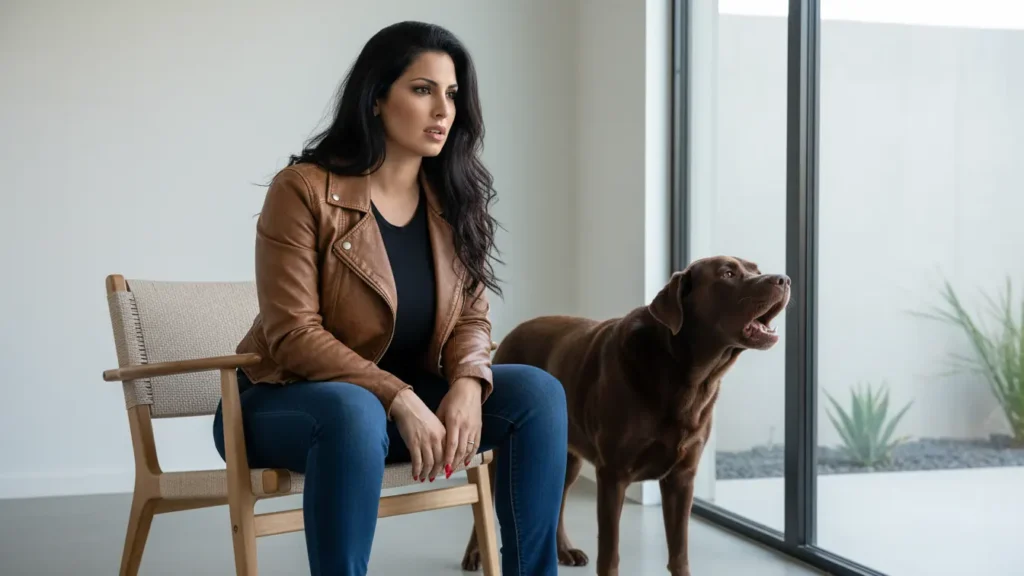
And yet your dog starts acting different.
They pace.
They hide.
They cling—or withdraw.
Many families notice this pattern but dismiss it as coincidence.
It isn’t.
Dogs don’t need words to sense emotional shifts.
They feel them long before humans acknowledge them.
Why This Matters More Than Most People Think
Household tension doesn’t stay between people.
Dogs living in that environment experience it daily—and physically.
Unaddressed emotional stress in dogs can lead to:
- Chronic anxiety
- Behavioral regression
- Sleep disruption
- Digestive issues
- Reduced trust and confidence
Understanding why dogs mirror tension allows families to protect their dog’s emotional health without blame or guilt.
Dogs Are Emotional Readers, Not Emotional Thinkers
Dogs don’t analyze conflict.
They interpret emotional signals.
Their brains evolved to:
- Monitor tone of voice
- Read posture and movement
- Detect changes in routine
- Sense emotional energy shifts
In social species like dogs, emotional awareness equals survival.
Ignoring emotional cues would be dangerous in the wild.
The Biology Behind Emotional Mirroring
Dogs don’t just observe stress—they absorb it.
Research shows dogs respond physiologically to human emotional states.
Common responses include:
- Elevated cortisol (stress hormone)
- Increased heart rate
- Heightened alertness
- Reduced relaxation ability
In simple terms:
When your nervous system is tense, your dog’s nervous system often follows.
Why Dogs Mirror Tension More Than Other Pets
Dogs evolved alongside humans.
For thousands of years, survival depended on:
- Reading human intention
- Responding to subtle cues
- Anticipating emotional shifts
This co-evolution made dogs exceptionally tuned to human emotional patterns.
They don’t just live with us.
They live through us.
What Household Tension Looks Like to a Dog
Even silent tension sends signals.
Dogs notice:
- Shortened tones
- Faster movements
- Avoidance between people
- Changes in routine
- Inconsistent attention
To a dog, these cues suggest:
Something is unstable.
And instability triggers vigilance.
Common Ways Dogs React to Household Stress
Dogs don’t all respond the same way.
Some become:
- Clingy and hyper-attached
- Watchful and restless
- Withdrawn and quiet
- Vocal or reactive
These reactions aren’t personality flaws.
They’re coping strategies.
Emotional Mirroring vs Behavioral Problems
| Emotional Mirroring | Behavioral Disorder |
|---|---|
| Appears during stress periods | Occurs consistently |
| Improves when environment calms | Persists regardless |
| Linked to human emotions | Independent of household |
| Flexible over time | Escalates or rigid |
Understanding this difference prevents unnecessary correction or punishment.
A Real-Life Scenario Many Families Recognize
Two adults in the home are under ongoing stress.
Work pressure.
Unspoken conflict.
Emotional distance.
The dog starts:
- Following one person constantly
- Avoiding certain rooms
- Whining without clear reason
Nothing is “wrong” with the dog.
They’re responding to emotional unpredictability.
The Biggest Mistake Owners Make
The most common mistake is assuming:
“My dog doesn’t understand—this doesn’t affect them.”
Dogs don’t need to understand conflict to feel it.
Ignoring their response often deepens anxiety.
Another Common Mistake: Correcting Stress Responses
Scolding a dog for:
- Pacing
- Hiding
- Clinginess
only adds confusion.
To the dog, it confirms:
The environment is unsafe.
Why Dogs Sometimes Choose Sides
Dogs may attach more strongly to one person during tension.
This happens because:
- That person feels calmer
- Their energy is more predictable
- The dog perceives emotional safety
This isn’t favoritism.
It’s self-regulation.
How Dogs Try to “Fix” Tension
Some dogs attempt emotional mediation.
They may:
- Insert themselves between people
- Offer toys
- Demand attention
- Increase affection
These behaviors aren’t manipulation.
They’re attempts to restore calm.
How to Protect Your Dog During Stressful Periods
Step 1: Stabilize Routine
Consistency creates emotional safety.
- Same walk times
- Same feeding cues
- Same sleep locations
Routine anchors dogs when emotions fluctuate.
Step 2: Create a Calm Refuge
Designate a quiet, predictable space.
This gives your dog:
- Control
- Emotional distance
- Recovery time
Step 3: Regulate Your Own Energy
Dogs respond more to how you feel than what you say.
Slow movements.
Calm tones.
Predictable responses.
These cues reassure the nervous system.
Step 4: Reward Calm, Independent Behavior
Quiet settling should be noticed and reinforced.
This teaches dogs:
Calm is safe.
A Hidden Tip Most People Miss
Dogs often release stress through sleep—but only if they feel safe.
Disrupted rest is an early sign of emotional overload.
Protect sleep, and emotional regulation improves faster.
Why This Matters Today
Modern households are emotionally complex.
Work stress.
Financial pressure.
Constant stimulation.
Dogs absorb all of it.
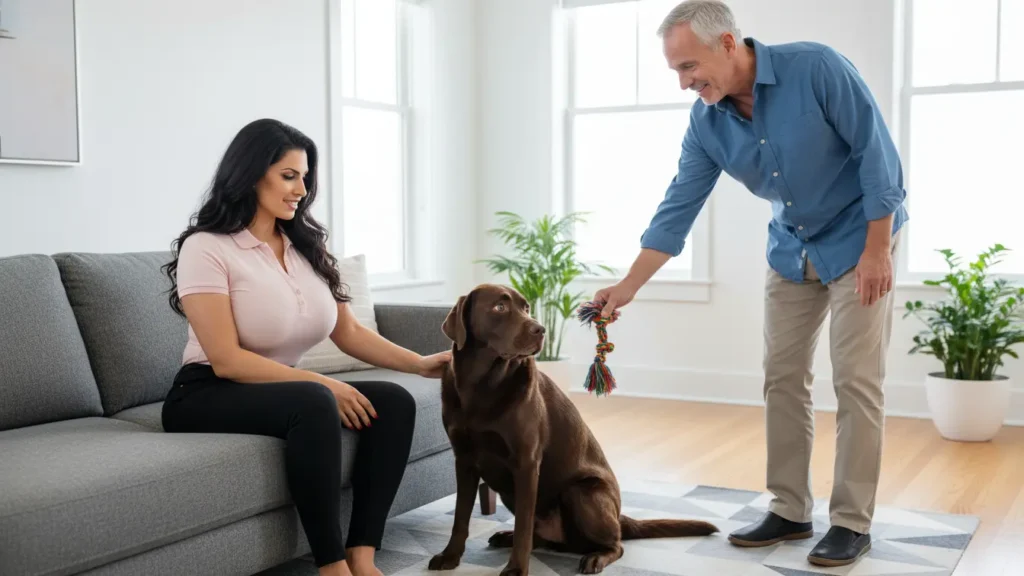
Understanding emotional mirroring helps:
- Prevent anxiety disorders
- Improve behavior naturally
- Strengthen human–dog trust
- Create calmer homes
When Household Tension Becomes Harmful
If stress is chronic and unresolved, dogs may develop:
- Persistent anxiety
- Fear-based behaviors
- Digestive upset
- Social withdrawal
In such cases, professional guidance—for humans or dogs—is supportive, not a failure.
Frequently Asked Questions
1. Can dogs really sense emotional tension?
Yes. Dogs are highly sensitive to emotional and physiological cues.
2. Why does my dog act anxious during arguments?
Arguments change tone, posture, and energy—signals dogs interpret as instability.
3. Can my stress make my dog sick?
Chronic stress can impact sleep, digestion, and immunity indirectly.
4. Should I comfort my dog during tension?
Calm presence helps—overreacting can reinforce anxiety.
5. Will my dog go back to normal?
In most cases, yes—once emotional stability returns.
Key Takeaways
- Dogs mirror emotional environments instinctively
- Household tension affects dogs even without conflict
- Emotional mirroring is biological, not behavioral
- Calm routines and predictable energy restore balance
- Supporting your dog starts with regulating the environment
A Quiet, Honest Ending
Your dog isn’t overreacting.
They’re responding to what they feel, not what they hear.
When a home becomes calmer, dogs don’t need training to relax.
They simply exhale—and follow.
Disclaimer: This article is for general educational purposes and does not replace personalized veterinary or behavioral guidance.

Dr. Sofia Romano, DVM, is an experienced veterinarian specializing in small-animal medicine and preventive care. She has treated thousands of cases using evidence-based diagnostics and modern clinical practices. Dr. Romano is dedicated to providing science-backed pet-health guidance that helps owners make informed decisions and improve their pets’ quality of life.




Pingback: Why Dogs React To Human Tears — The Quiet Emotional Intelligence That Explains Their Response