“When the Crate Stops Working Overnight”
Yesterday, your dog walked into the crate without hesitation.
Today, they freeze at the entrance.
They turn away.
Whine.
Paw at the floor.
Or bolt the moment you reach for the door.
You’re left wondering:
Did I do something wrong?
Is my dog being stubborn?
Should I force it?
Here’s the truth most owners don’t hear early enough:
👉 Dogs don’t suddenly “hate” their crate without a reason.
When crate behavior changes abruptly, something about that space no longer feels safe.
A Crate Is Only Safe as the Last Memory Inside It
Dogs associate places with feelings, not rules.
A crate isn’t good or bad by design.
It becomes safe through repeated calm experiences.
And it becomes threatening through just one negative association.
Examples include:
- Being crated while anxious or unwell
- A loud noise occurring while inside
- Being left alone longer than usual
- Pain or discomfort while resting there
- Feeling trapped during stress
Dogs don’t rationalize these moments.
They remember how it felt.
The Most Common Reason: Stress Happened in the Crate
Crate refusal often starts after an emotional event.
Common triggers:
- A thunderstorm while crated
- Fireworks or loud construction
- A vacuum or alarm
- A visitor causing excitement
- Owner leaving unexpectedly
To your dog’s brain, the crate becomes linked with helplessness.
Not punishment — loss of control.
Physical Discomfort Can Change Everything
Dogs don’t always show pain clearly.
If lying in the crate caused discomfort even once, avoidance can follow.
Possible sources:
- Joint pain
- Muscle soreness
- Digestive discomfort
- Pressure points from bedding
- A crate that suddenly feels too small
Dogs avoid what hurts — quietly.
Age and Developmental Shifts Matter
Puppies often experience crate regression during growth phases.
Adult dogs can change too.
Triggers include:
- Adolescence (increased independence)
- Aging (reduced tolerance for confinement)
- Hormonal shifts
- Changes in sleep patterns
What once felt cozy may now feel restrictive.
Separation Stress Is Often Misidentified as Crate Hate
Sometimes the crate isn’t the problem.
If the crate is only used when:
- Owners leave
- The house goes quiet
- The routine changes
The dog may associate the crate with emotional loss — not rest.
This leads to resistance that looks like crate aversion.
Why Forcing the Crate Backfires
This is a critical point.
Forcing a dog into the crate:
- Confirms their fear
- Removes choice
- Deepens mistrust
- Increases anxiety
Dogs don’t “learn” safety through force.
They learn safety through predictability and control.
Sudden Crate Aversion vs. Training Failure
| Sign | Sudden Aversion | Poor Training |
|---|---|---|
| Timeline | Abrupt | Gradual |
| Previous comfort | Yes | No |
| Trigger event | Often present | Often absent |
| Emotional response | Avoidance, stress | Confusion |
| Fix approach | Rebuild trust | Teach basics |
The solution depends on the cause.
Real-Life Example: The Storm Night Shift
A dog sleeps comfortably in their crate for months.
One night:
- A thunderstorm hits
- The dog is crated
- Owner isn’t home
No injury.
No visible trauma.
But from that day on, the crate is avoided.
The dog learned:
“I was trapped when I needed safety.”
Subtle Environmental Changes That Matter
Small changes can have big effects.
Examples:
- Crate moved to a noisier area
- New smells or cleaners nearby
- Changes in lighting
- Increased foot traffic
- A new pet nearby
Dogs notice what humans dismiss.
Common Owner Mistakes That Make It Worse
Avoid these reactions:
- Dragging the dog into the crate
- Closing the door “just to test”
- Scolding refusal
- Using the crate only for confinement
- Ignoring early hesitation signs
Each mistake reinforces avoidance.
How to Rebuild Crate Trust — Step by Step
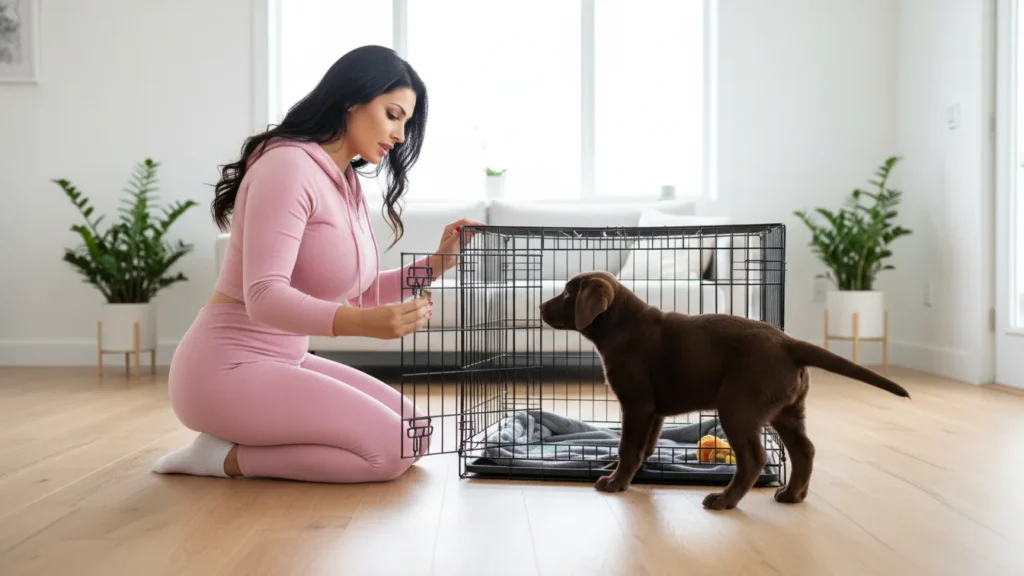
1. Remove All Pressure
Leave the crate door open.
No commands.
No expectations.
2. Make the Crate Optional
Let your dog choose proximity again.
3. Reset the Crate’s Meaning
Feed treats near — not inside — at first.
4. Improve Comfort
Check size, bedding, temperature, and airflow.
5. Short, Positive Entries
Seconds, not minutes.
Exit before stress appears.
Progress happens faster when the dog controls it.
Hidden Tip Most Owners Miss
Dogs often reject crates that feel isolating, not small.
Placing the crate where:
- The dog can see you
- Household sounds are gentle
- Movement feels predictable
can restore comfort dramatically.
Why This Matters Today
Modern dogs:
- Spend more time indoors
- Experience irregular schedules
- Feel owner stress more acutely
- Face higher sensory load
Crates can still be safe spaces — but only when emotional needs are respected.
Misinterpreting crate refusal leads to:
- Escalated anxiety
- Damaged trust
- Long-term confinement fear
Understanding prevents that spiral.
When Crate Aversion Signals a Bigger Issue
Consider extra support if:
- Panic escalates rapidly
- Self-injury attempts occur
- Vocalization is extreme
- Appetite or sleep changes
- Fear spreads to other spaces
Early intervention protects emotional well-being.
Key Takeaways
- Sudden crate hatred always has a cause
- Stress or discomfort often triggers avoidance
- One negative experience can change behavior
- Force deepens fear
- Choice rebuilds trust
- Calm consistency restores safety
Frequently Asked Questions
1. Should I stop using the crate entirely?
Not necessarily. Pause, reassess, and rebuild calmly.
2. Can dogs outgrow crate comfort?
Yes. Needs change with age and experience.
3. Is crate refusal stubbornness?
No. It’s communication.
4. How long does retraining take?
It varies — days to weeks depending on the cause.
5. Can I move the crate?
Yes. Location changes often help.
A Calm Final Thought
Your dog didn’t change their mind overnight.
They changed how they feel.
When you respond with patience instead of pressure, most dogs don’t just return to the crate — they relearn that it’s safe to rest there again.
That trust is worth rebuilding slowly.
Disclaimer: This article is for general educational purposes only and does not replace personalized advice from a veterinary or animal behavior professional.

Dr. Sofia Romano, DVM, is an experienced veterinarian specializing in small-animal medicine and preventive care. She has treated thousands of cases using evidence-based diagnostics and modern clinical practices. Dr. Romano is dedicated to providing science-backed pet-health guidance that helps owners make informed decisions and improve their pets’ quality of life.