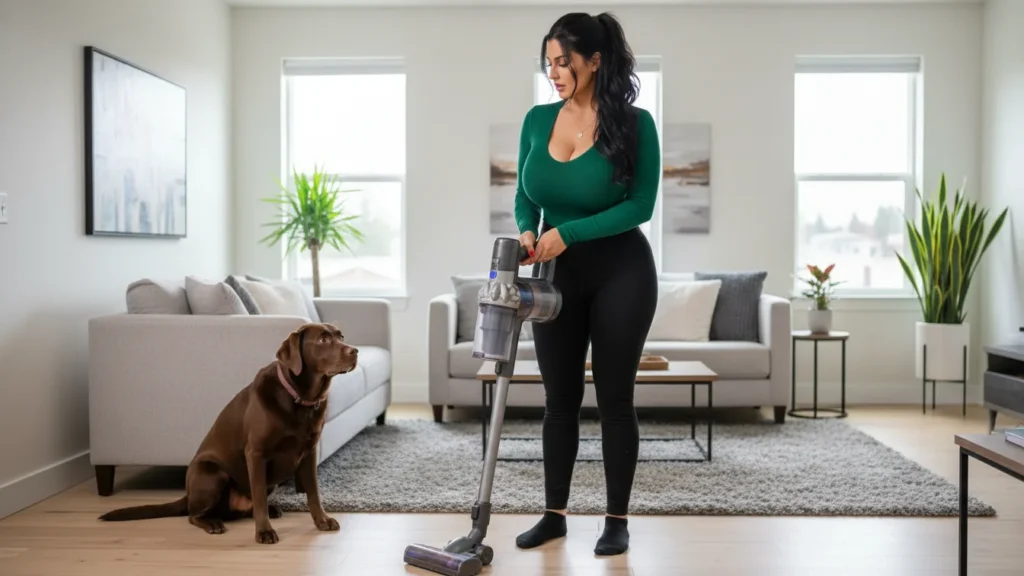
“The Moment the Vacuum Comes Out”
You haven’t even turned it on yet.
Your dog freezes.
Ears flatten.
Eyes widen.
The vacuum moves an inch — and suddenly your calm home becomes chaos.
Barking.
Running.
Hiding.
Sometimes shaking.
Many owners assume dogs fear vacuums because they’re “too loud.”
But that’s only part of the story.
👉 To a dog’s brain, a vacuum cleaner behaves like a moving predator inside their territory.
Dogs Experience the World Very Differently Than Humans
Humans understand appliances through logic.
Dogs don’t.
Dogs interpret the world through:
- Sound frequency
- Sudden movement
- Vibration
- Unpredictability
- Past associations
A vacuum cleaner hits all five threat triggers at once.
It’s not just noise — it’s sensory overload.
The Noise Isn’t Just Loud — It’s Physically Uncomfortable
Vacuum cleaners emit low-frequency sounds humans mostly ignore.
Dogs can’t.
Their hearing is far more sensitive, especially to:
- High-pitched whines
- Low-frequency hums
- Sudden volume changes
To your dog, the vacuum:
- Hurts their ears
- Feels invasive
- Signals danger
What you hear as “annoying,” they experience as alarming.
Movement + Noise = Predator Response
Noise alone might cause discomfort.
Movement alone might cause curiosity.
Together?
They trigger instinct.
The vacuum:
- Moves unpredictably
- Changes direction suddenly
- Invades personal space
- Chases dust across the floor
In canine logic, that resembles a threat that won’t retreat.
So the brain activates the survival system.
Why Some Dogs Bark While Others Hide
Dogs respond to fear differently.
Common reactions include:
- Barking or lunging (defensive strategy)
- Hiding under furniture (avoidance strategy)
- Freezing in place (conflict response)
- Shaking or panting (stress response)
None of these mean your dog is “bad” or disobedient.
They mean your dog is overwhelmed.
Past Experiences Shape the Fear
Many dogs aren’t afraid the first time they see a vacuum.
Fear develops when:
- The vacuum suddenly turned on near them
- They were cornered during cleaning
- The noise startled them unexpectedly
- Owners laughed or reacted strongly
One intense experience is enough for the brain to remember:
“This thing is dangerous.”
Why Puppies Often Fear Vacuums More
Puppies have:
- Developing nervous systems
- Limited life experience
- Lower stress tolerance
If their first vacuum exposure is sudden and loud, fear can lock in early.
That’s why how a puppy meets a vacuum matters more than whether they meet one.
Adult Dogs Can Develop Vacuum Fear Too
This fear isn’t limited to young dogs.
Adult dogs may develop vacuum fear due to:
- Increased sensitivity with age
- Hearing changes
- Stress accumulation
- Environmental changes
- Previous trauma
Even a dog that once ignored the vacuum can suddenly react.
Is Vacuum Fear the Same as Noise Phobia?
Not exactly.
| Reaction | Vacuum Fear | Noise Phobia |
|---|---|---|
| Trigger | Specific object | Many sounds |
| Response | Object-focused | Environment-wide |
| Duration | During exposure | Prolonged |
| Generalization | Limited | Broad |
| Recovery | Faster | Slower |
Vacuum fear is often situational, not generalized anxiety.
Real-Life Example: The “Vacuum Defender”
Some dogs don’t hide — they attack.
They bark, lunge, and try to bite the vacuum.
This isn’t dominance.
It’s:
- Fear mixed with frustration
- An attempt to drive the threat away
- A last-resort survival behavior
Once the vacuum stops, the dog often calms immediately.
Threat gone.
System reset.
Common Owner Mistakes That Make It Worse
Good intentions can unintentionally reinforce fear.
Avoid:
- Laughing at the reaction
- Forcing the dog to “face it”
- Chasing the dog with the vacuum
- Holding the dog near the machine
- Scolding fearful behavior
Fear doesn’t resolve through force.
It deepens.
What Actually Helps Dogs Fear Vacuums Less
1. Separate Cleaning From the Dog
Give your dog a safe space in another room.
2. Stay Emotionally Neutral
No excitement.
No pity.
No frustration.
Your energy matters.
3. Introduce the Vacuum When It’s Off
Let your dog see it as a neutral object first.
4. Pair Distance With Calm Rewards
From far away, reward calm behavior.
5. Respect Their Threshold
Progress happens gradually — not in one session.
Hidden Tip Most Owners Miss
Dogs fear movement more than sound with vacuums.
Letting the vacuum stay still while turned on at a distance can reduce fear faster than moving it silently.
Motion control matters.
Why This Matters Today
Modern homes are full of:
- Loud appliances
- Hard floors that amplify sound
- Confined spaces
- Busy schedules
Dogs face more sensory stress indoors than ever before.
Understanding vacuum fear prevents:
- Chronic anxiety
- Escalated reactivity
- Owner frustration
- Damaged trust
Empathy protects the relationship.
When Vacuum Fear Signals a Bigger Issue
Consider extra help if:
- Fear spreads to other appliances
- Panic continues long after cleaning ends
- The dog refuses to enter rooms
- Appetite or sleep changes
- Aggression escalates
Early support prevents long-term anxiety patterns.
Key Takeaways
- Vacuum fear is instinctive, not stubbornness
- Noise, motion, and unpredictability trigger fear
- Barking and hiding are survival strategies
- Punishment worsens fear
- Calm, gradual exposure helps
- Understanding reduces stress for both dog and owner
Frequently Asked Questions
1. Will my dog ever stop fearing the vacuum?
Many dogs improve with calm, gradual exposure and consistent routines.
2. Should I train my dog to tolerate the vacuum?
Yes — but gently, without force or punishment.
3. Why does my dog bark aggressively at the vacuum?
Fear can trigger defensive behavior when escape feels impossible.
4. Can vacuum fear appear suddenly?
Yes. Stress, age, or a single bad experience can trigger it.
5. Is vacuum fear harmful?
The fear itself isn’t harmful — unmanaged stress can be.
A Calm Final Thought
Your dog isn’t afraid of cleaning.
They’re reacting to a strange, loud, unpredictable object invading their space — something their instincts were never designed to understand.
When you respond with patience instead of pressure, most dogs don’t just cope better.
They trust you more.
Disclaimer: This article is for general educational purposes only and does not replace personalized advice from a veterinary or animal behavior professional.

Dr. Sofia Romano, DVM, is an experienced veterinarian specializing in small-animal medicine and preventive care. She has treated thousands of cases using evidence-based diagnostics and modern clinical practices. Dr. Romano is dedicated to providing science-backed pet-health guidance that helps owners make informed decisions and improve their pets’ quality of life.





Pingback: Why Dogs Hate Their Crate Suddenly — The Hidden Reason This Safe Space Stops Feeling Safe
Pingback: Why Dogs React Strongly To Certain Sounds — The Science Your Dog’s Brain Can’t Ignore