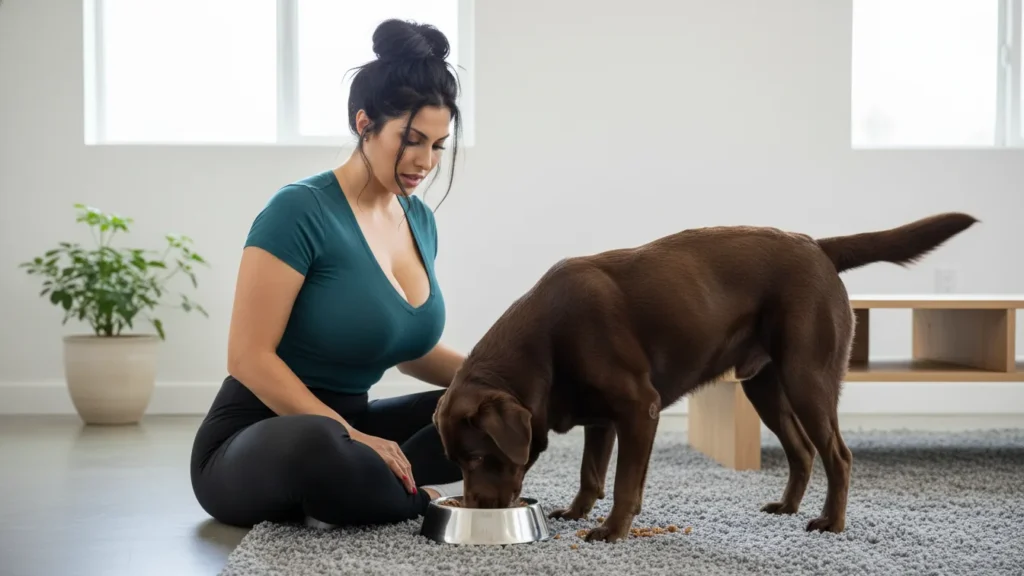
“When Mealtime Looks Like a Race Against Time”
The bowl hits the floor.
And in seconds — it’s empty.
No chewing.
No pauses.
Just rapid gulping, loud swallowing, and frantic speed.
Many dog owners laugh it off.
“He just loves food.”
“She’s always been like this.”
But here’s the uncomfortable truth veterinarians see often:
👉 Eating too fast isn’t just a quirky habit — it can be a genuine health risk.
And in some dogs, it’s connected to a dangerous condition most owners don’t recognize until it’s too late.
Why Dogs Eating Too Fast Shouldn’t Be Ignored
Dogs are designed to eat efficiently — but not recklessly.
When a dog eats too fast:
- Air is swallowed along with food
- Food isn’t chewed properly
- The stomach fills rapidly
- Digestion becomes strained
Over time, this pattern can trigger digestive distress, choking episodes, and in severe cases, life-threatening emergencies.
Fast eating isn’t about greed.
It’s about instinct, emotion, and biology colliding.
The Evolutionary Reason Dogs Gulp Their Food
Dogs didn’t evolve with full bowls waiting calmly twice a day.
In the wild:
- Food was unpredictable
- Competition was intense
- Eating fast meant survival
That instinct still lives in modern dogs — even those who have never missed a meal.
So when a dog eats quickly, they’re often acting on ancient wiring, not poor training.
The Most Dangerous Risk: Gastric Dilatation (Bloat)
One of the most serious risks linked to rapid eating is gastric dilatation, commonly called bloat.
Here’s what happens:
- Food and air enter the stomach too quickly
- The stomach expands abnormally
- Pressure builds
- Blood flow can be compromised
In some cases, the stomach can twist, cutting off circulation — a medical emergency.
Dogs that eat fast are significantly more likely to swallow excess air, increasing this risk.
Dogs Most at Risk of Eating Too Fast
Some dogs are more vulnerable than others.
Higher-risk groups include:
- Large and deep-chested breeds
- Dogs fed once daily
- Dogs competing with other pets
- Dogs with past food insecurity
- Highly anxious or excitable dogs
But even small dogs aren’t immune to choking and digestive issues from rapid eating.
The Psychological Triggers Behind Fast Eating
Fast eating isn’t always about hunger.
Common emotional triggers include:
- Anxiety around food access
- Past neglect or shelter history
- Competition with other pets
- Owner hovering or rushing meals
- Inconsistent feeding times
To the dog’s brain, eating fast feels protective.
It says: “Eat now before it’s gone.”
Early Warning Signs That Eating Too Fast Is Causing Harm
Many problems start quietly.
Watch for:
- Gagging or coughing during meals
- Vomiting right after eating
- Excessive gas or bloating
- Restlessness after meals
- Hard, swollen abdomen
- Lethargy post-feeding
These are signals — not coincidences.
Fast Eating vs. Healthy Appetite: How to Tell the Difference
| Behavior | Normal Eating | Dangerous Fast Eating |
|---|---|---|
| Chewing | Visible | Minimal or none |
| Breathing | Normal | Rapid, labored |
| Post-meal behavior | Relaxed | Restless, bloated |
| Vomiting | Rare | Frequent |
| Bowl time | Minutes | Seconds |
Speed alone isn’t the issue — impact is.
Real-Life Example: Same Food, Different Outcomes
Dog A:
- Eats calmly
- Chews well
- Rests after meals
Dog B:
- Gulp-swallow-repeat
- Pants while eating
- Vomits occasionally
Same diet.
Same portions.
Different risk levels.
Why Eating Too Fast Affects Digestion
Digestion starts in the mouth.
When dogs don’t chew:
- Enzymes don’t mix properly
- The stomach works harder
- Nutrient absorption drops
- Gas builds faster
Over time, this can lead to:
- Chronic stomach upset
- Poor nutrient use
- Increased food sensitivity
Fast eating doesn’t just affect today’s meal — it affects long-term gut health.
Common Owner Mistakes That Make It Worse
Well-meaning habits often increase the problem.
Avoid:
- Feeding once daily large meals
- Free-feeding anxious dogs
- Standing nearby while they eat
- Removing bowls mid-meal
- Ignoring repeated vomiting
These actions increase urgency — not calm.
Vet-Approved Ways to Slow Your Dog Down
1. Use a Slow Feeder Bowl
Designed to:
- Create obstacles
- Encourage chewing
- Reduce air intake
2. Split Meals Into Portions
Two or three smaller meals reduce urgency and stomach overload.
3. Hand-Feed Occasionally
Builds trust and reduces competition mindset.
4. Feed Separately in Multi-Dog Homes
Privacy reduces speed dramatically.
5. Create a Calm Feeding Routine
Same place.
Same time.
No rushing.
Predictability relaxes the nervous system.
Hidden Tip Most Owners Don’t Know
Scatter-feeding (spreading kibble on a mat or floor):
- Engages natural foraging
- Slows eating naturally
- Reduces anxiety
- Improves mental stimulation
It turns eating into an activity — not a race.
Why This Matters Today
Modern dogs:
- Eat processed food
- Live with constant stimulation
- Experience irregular routines
- Are often overfed or rushed
Fast eating combined with modern diets increases digestive stress more than ever before.
Prevention is far easier than emergency care.
When Fast Eating Needs Immediate Attention
Seek professional advice if your dog:
- Has a visibly swollen abdomen
- Tries to vomit but can’t
- Shows sudden weakness
- Whines in pain after eating
- Collapses or becomes lethargic
These signs should never be ignored.
Key Takeaways
- Eating too fast is instinctive but risky
- Swallowing air increases bloat risk
- Emotional factors play a major role
- Small changes dramatically reduce danger
- Calm routines protect long-term health
- Prevention is safer than correction
Frequently Asked Questions
1. Is eating too fast normal for dogs?
Common, yes. Harmless, not always.
2. Can slow feeder bowls really help?
Yes. They significantly reduce gulping and air intake.
3. Should I raise my dog’s food bowl?
Only with guidance. Raised bowls can increase bloat risk in some dogs.
4. Why does my dog eat fast even when alone?
Past experiences and instinct can override current safety.
5. Can fast eating cause long-term problems?
Yes, including digestive stress and increased emergency risk.
A Calm Final Thought
Your dog isn’t trying to worry you.
They’re following instincts that once kept them alive — but don’t always serve them well today.
With small, thoughtful changes, you can turn mealtime from a risky rush into a safe, calm routine your dog’s body can handle.
Disclaimer: This article is for general educational purposes and does not replace individualized guidance from a veterinary or animal care professional.

Dr. Sofia Romano, DVM, is an experienced veterinarian specializing in small-animal medicine and preventive care. She has treated thousands of cases using evidence-based diagnostics and modern clinical practices. Dr. Romano is dedicated to providing science-backed pet-health guidance that helps owners make informed decisions and improve their pets’ quality of life.


Pingback: Why Dogs Pass Gas More Often Than Usual — What Their Gut Is Trying To Tell You
Pingback: Why Dogs Pause Before Eating — The Quiet Behaviour That Tells You More Than You Think