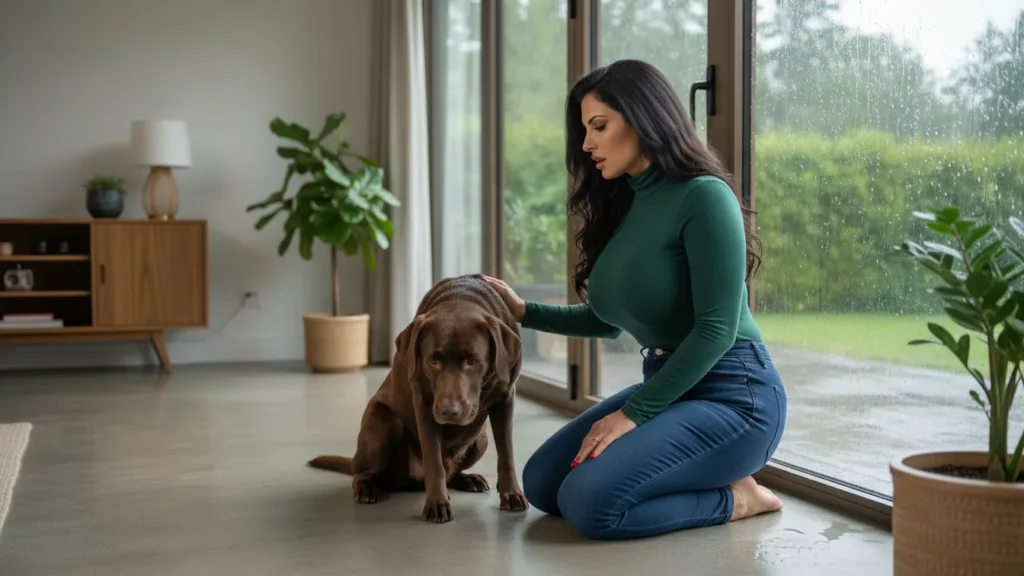
“When Your Dog Starts Acting “Off” for No Clear Reason”
It often starts subtly.
Your dog paces instead of resting.
Clings closer than usual.
Refuses food.
Hides under furniture.
Barks at nothing.
You check the house.
Everything looks normal.
Then hours later — rain falls.
Or the wind shifts.
Or a storm rolls in.
This isn’t coincidence.
👉 Dogs often react to weather changes long before humans notice anything different.
What looks like strange behavior is usually your dog responding to physical signals their body detects — signals we can’t feel.
Dogs Experience the World Through Their Bodies First
Humans rely heavily on sight and logic.
Dogs rely on:
- Sensation
- Pressure
- Sound
- Smell
- Vibration
Their nervous system is tuned for environmental awareness.
Weather changes don’t just alter the sky — they alter the physical environment, and dogs feel those shifts internally.
This is why behavior changes often appear before visible weather changes.
Barometric Pressure: The Invisible Trigger
One of the biggest factors behind weather-related behavior changes is barometric pressure.
As storms approach, air pressure drops.
Dogs can sense this because:
- Pressure affects inner ear balance
- Joint tissues subtly expand
- Sinuses experience mild discomfort
- Nerve endings respond to atmospheric shifts
To a dog, this feels unfamiliar — sometimes uncomfortable.
So their behavior changes.
Why Some Dogs Become Anxious Before Storms
For certain dogs, pressure changes trigger unease.
Common reactions include:
- Pacing
- Panting
- Whining
- Seeking constant contact
- Hiding in small spaces
This isn’t disobedience or neediness.
It’s a biological stress response to something their body senses but can’t explain.
Dogs don’t know why they feel different — only that something is “off.”
The Role of Sound Humans Can’t Hear
Long before thunder is audible to us, dogs can hear:
- Distant low-frequency rumbles
- Wind changes miles away
- Subtle environmental vibrations
These sounds register as warnings.
To a dog’s brain, unfamiliar low-frequency noise equals potential danger.
So their body prepares.
Static Electricity and Storm Discomfort
Before storms, static electricity builds in the air.
Dogs with fur are especially sensitive to this.
Static can cause:
- Tingling sensations
- Mild shocks
- Coat discomfort
- Increased irritability
This explains why some dogs shake, scratch, or seem suddenly uncomfortable during weather shifts.
Temperature Changes Affect Dogs Faster Than Humans
Dogs regulate body temperature differently.
Sudden changes in:
- Humidity
- Heat
- Cold
- Wind chill
can cause physical discomfort before humans notice anything.
This may lead to:
- Lethargy
- Restlessness
- Changes in appetite
- Seeking cooler or warmer surfaces
Behavior follows comfort.
Why Senior Dogs React More Strongly
Older dogs often show more pronounced weather-related behavior.
That’s because:
- Arthritic joints respond to pressure changes
- Nerve sensitivity increases with age
- Pain thresholds decrease
- Adaptation takes longer
What looks like moodiness is often physical awareness.
Weather shifts don’t create pain — they reveal it.
Puppies and Weather Sensitivity
Puppies may also act strangely during weather changes.
Common signs include:
- Zoomies
- Sudden fearfulness
- Clinginess
- Restlessness
Their nervous systems are still developing, making them more reactive to environmental changes.
This usually improves with age and gentle exposure.
Weather-Related Behavior vs. True Behavioral Problems
| Behavior | Weather-Related | Behavioral Issue |
|---|---|---|
| Timing | Matches weather shifts | Random or constant |
| Duration | Temporary | Persistent |
| Recovery | Improves once weather settles | Continues |
| Triggers | Storms, pressure, temperature | Specific situations |
| Response to comfort | Improves | Often unchanged |
Understanding the pattern matters more than the behavior itself.
Real-Life Example: The “Clingy Before Rain” Dog
A normally independent dog suddenly:
- Follows their owner room to room
- Refuses to go outside
- Sleeps closer than usual
Six hours later, heavy rain begins.
Nothing was “wrong.”
The dog simply felt environmental change before humans did.
Common Mistakes Owners Make During Weather Changes
These well-intended actions can worsen anxiety:
- Dismissing behavior as “attention-seeking”
- Scolding nervous behavior
- Overreacting with panic
- Forcing exposure during storms
- Ignoring subtle early signs
Dogs look to humans for emotional cues.
Calm responses help regulate their stress.
How to Help Your Dog During Weather Changes
1. Create a Safe Space
A quiet, familiar area helps dogs self-soothe.
2. Maintain Normal Routines
Predictability reduces anxiety.
3. Use Calm Energy
Soft voices and relaxed movements matter.
4. Provide Gentle Distractions
Puzzle toys or chew items redirect focus.
5. Keep Doors and Windows Closed During Storms
Reduces noise and pressure changes indoors.
Hidden Tip Most Owners Miss
Physical contact can help — but only if the dog seeks it.
Forcing cuddles can increase stress.
Let your dog choose closeness.
Choice restores control.
Why This Matters Today
Modern dogs:
- Live indoors more
- Experience amplified sounds
- Have less exposure to natural environments
- Are surrounded by human stress
Weather sensitivity isn’t increasing — awareness is.
Understanding normal responses prevents:
- Mislabeling dogs as “anxious”
- Unnecessary training corrections
- Increased household stress
- Broken trust
When Weather-Related Behavior Needs Attention
Occasionally, behavior may signal more than sensitivity if it:
- Escalates with every weather change
- Leads to self-injury
- Includes prolonged appetite loss
- Doesn’t improve after conditions stabilize
In these cases, observation and guidance help clarify next steps.
Key Takeaways
- Dogs sense weather changes before humans
- Barometric pressure plays a major role
- Sound, static, and temperature shifts matter
- Most behavior changes are temporary
- Calm responses reduce stress
- Understanding replaces worry
Frequently Asked Questions
1. Can dogs really predict weather changes?
They don’t predict — they sense physical environmental shifts.
2. Why does my dog act strange hours before a storm?
Pressure and sound changes occur long before visible weather.
3. Are some breeds more sensitive?
Yes. Dogs with anxiety, joint issues, or heightened sensory awareness may react more.
4. Should I comfort my dog during storms?
If they seek comfort, yes. Let them guide the interaction.
5. Will this behavior go away over time?
Many dogs adapt, especially with calm, consistent support.
A Calm Final Thought
Your dog isn’t acting strange.
They’re responding honestly to a world their body understands differently than yours.
When you recognize weather-related behavior for what it is — awareness, not misbehavior — you strengthen trust and help your dog feel safe, no matter what the sky is doing.
Disclaimer: This article is for general educational purposes only and does not replace personalized advice from a veterinary or animal behavior professional.

Dr. Sofia Romano, DVM, is an experienced veterinarian specializing in small-animal medicine and preventive care. She has treated thousands of cases using evidence-based diagnostics and modern clinical practices. Dr. Romano is dedicated to providing science-backed pet-health guidance that helps owners make informed decisions and improve their pets’ quality of life.





Pingback: Why Dogs Get Diarrhea Out Of Nowhere — The Hidden Triggers Most Owners Never Notice