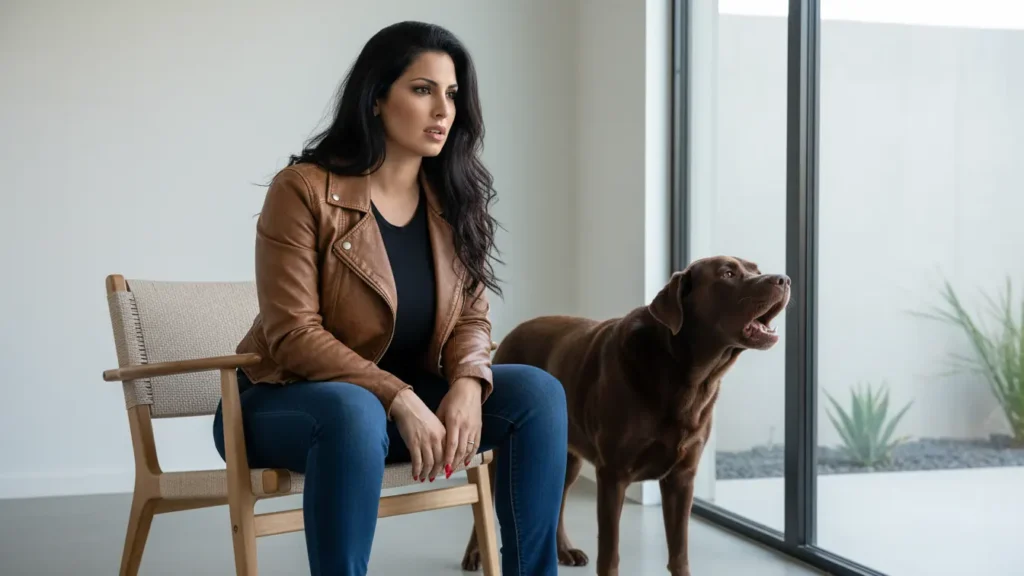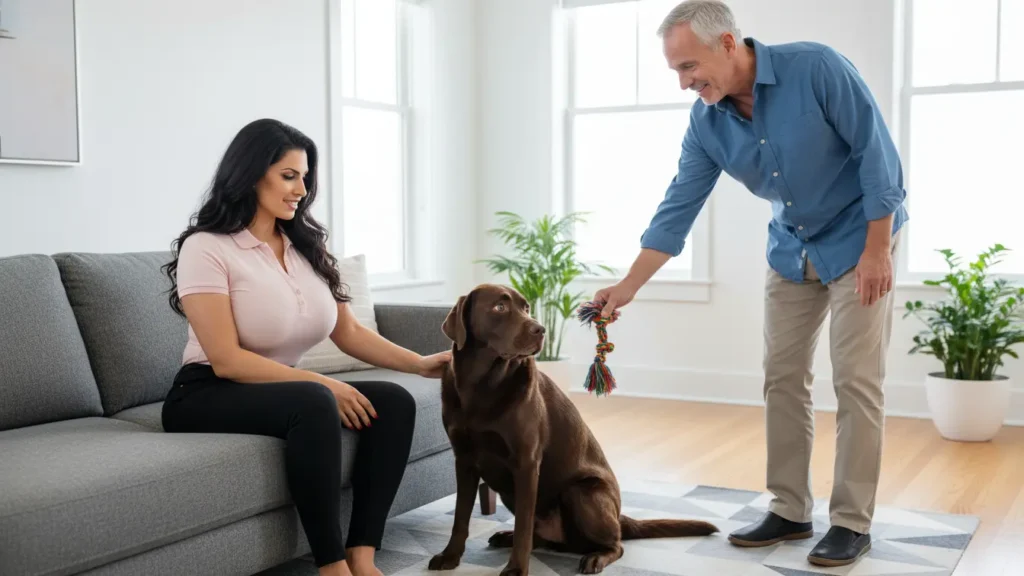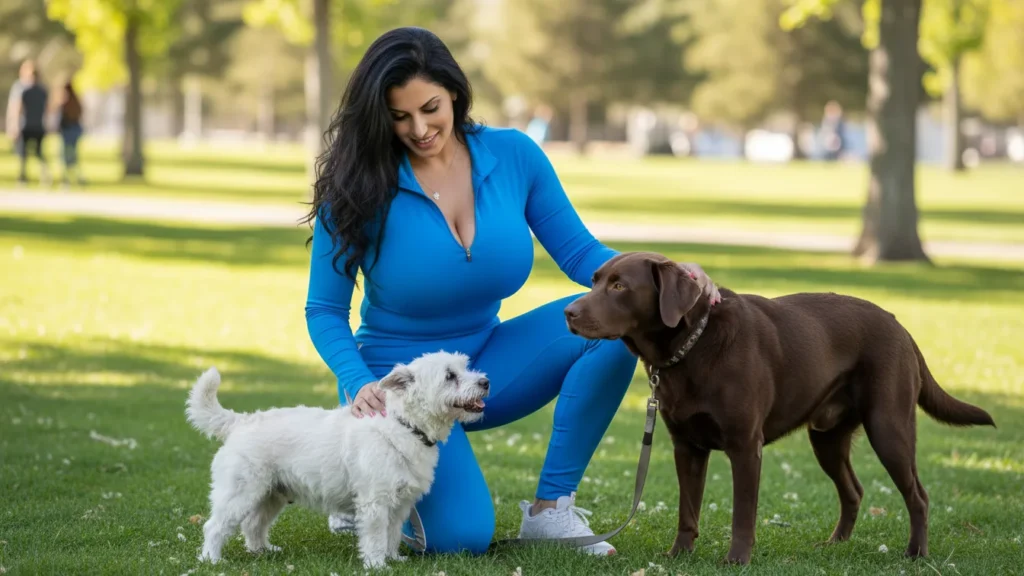
You’re on the couch, one hand scratching your dog’s favorite spot behind the ears — and the moment you reach out to pet a second dog, or lean in to cuddle a new partner or baby, your dog wedges a shoulder between you and whoever just showed up. Maybe there’s a huff, a paw on your knee, a sudden urgent need to perform every trick they know. Owners usually call this “jealousy,” then half-apologize for anthropomorphizing their dog.
It turns out that instinct might be closer to the truth than most people assume — though the science on it is more complicated, and more interesting, than a simple yes or no.
The Study That Took Dog “Jealousy” Seriously
For years, jealousy was treated as an emotion too cognitively complex for anything but humans. That changed in 2014, when psychologists Christine Harris and Caroline Prouvost at UC San Diego designed an experiment adapted from studies originally used to test jealousy in human infants. Owners were asked to ignore their dog and instead direct warm attention — talking, petting, cooing — toward one of three things: a children’s book, a plastic jack-o’-lantern bucket, and a realistic stuffed dog that barked, whined, and wagged its tail.
The dogs reacted very differently depending on what their owner was fawning over. When the attention went to the animated stuffed dog, the real dogs pushed at their owner, tried to get between the owner and the toy, and snapped at the toy far more often than when the same affection was aimed at the book or bucket. A large majority of the dogs — 86%, according to the researchers — sniffed the stuffed dog’s rear end during or after the experiment, the same way dogs investigate an actual unfamiliar dog. That detail mattered to the researchers, because it suggested the dogs weren’t just reacting to a strange object; they seemed to genuinely register the toy as a social rival.
Why Scientists Think This Isn’t Just Attention-Seeking
The researchers’ interpretation wasn’t that dogs feel the exact same complicated, self-conscious jealousy adult humans do. It was something more basic: an emotional response that evolved specifically to protect an important social bond from an outside threat. That kind of “primordial” jealousy shows up early in human development too — researchers have documented jealousy-type behavior in infants as young as six months old, long before children have the cognitive sophistication for complex social reasoning. If jealousy can exist in a six-month-old, the argument goes, there’s no obvious reason it couldn’t exist in a highly social, bonded species like the domestic dog.
The Science Is Still Genuinely Divided
Here’s the part that rarely makes it into the viral dog-jealousy videos: later attempts to replicate this finding didn’t all line up neatly. A 2018 study published in PLOS ONE by a separate research team re-ran a similar setup with a stuffed dog, a puppet, and an unfamiliar person, and found a murkier picture — the dogs were curious about the fake dog, but many of the classic “jealousy” behaviors (protesting, visible stress, trying to actively break up the interaction) showed up rarely or not at all, and the dogs didn’t clearly treat the fake dog as a real rival the way the original study suggested.
Since then, other researchers have kept pushing on the question from different angles. A 2021 study in the journal Psychological Science found that dogs do appear to mentally represent and anticipate jealousy-provoking situations, even without a live rival physically present, lending some support back to the original idea. The honest state of the science right now is that dogs very likely experience something in this family of emotions — a drive to protect a valued social bond — but researchers are still working out exactly how developed, consistent, or human-like that response really is.
What This Actually Looks Like at Home
Regardless of how the academic debate eventually settles, the behaviors owners report are remarkably consistent, and they typically show up as a cluster rather than one single sign:
- Wedging between you and the “rival” — a partner, a new baby, or another pet — during cuddling or conversation.
- Sudden, unprompted performance of tricks, sits, or spins to redirect your attention back to them.
- Resource guarding that’s really about you — stiffening, growling, or positioning themselves defensively when someone else gets close to you specifically, rather than to food or a toy.
- Behavior regressions like house-training accidents, destructive chewing, or excessive vocalizing that tend to appear right after attention has visibly gone elsewhere.
- Withdrawal in some dogs instead of protest — leaving the room or avoiding the new person or baby altogether.
How to Respond Without Reinforcing It
The goal isn’t to punish the behavior, since a dog acting from insecurity rarely responds well to being scolded for it. Instead:
- Keep giving them individual, predictable time — attention doesn’t need to be constant, but it should be reliable, so the dog isn’t left guessing whether their share is gone for good.
- Reward calm behavior near the “rival,” rather than attention right after pushing in or acting out, so you’re not accidentally training the exact behavior you’d like to reduce.
- Include the dog in new routines gradually — supervised time near a new baby or partner, paired with something the dog enjoys, rather than sudden displacement.
- Watch for escalation into true resource guarding — stiff body language, growling, or snapping when someone approaches you specifically is a sign worth addressing early, and the AKC’s guidance on resource guarding is a solid starting point before it becomes a bigger training issue.
- Bring in a certified behaviorist if the reaction includes aggression toward a person, a baby, or another pet, since that’s a safety issue that benefits from professional support rather than trial and error.
Whether or not it meets the strict scientific definition of “jealousy,” what your dog is expressing is real: a strong attachment to you, and a very old instinct to make sure that bond doesn’t quietly slip away.
Sources
- PLOS ONE — Harris, C.R. & Prouvost, C. (2014), “Jealousy in Dogs”
- UC San Diego Today — “Dog Jealousy: Study Suggests Primordial Origins for the ‘Green-Eyed Monster'”
- Scientific American — “Dogs Experience Jealousy”
- PLOS ONE — Prato-Previde et al. (2018), “Pet Dogs’ Behavior When the Owner and an Unfamiliar Person Attend to a Faux Rival”
- American Kennel Club — “Resource Guarding in Dogs”

Dr. Sofia Romano, DVM, is an experienced veterinarian specializing in small-animal medicine and preventive care. She has treated thousands of cases using evidence-based diagnostics and modern clinical practices. Dr. Romano is dedicated to providing science-backed pet-health guidance that helps owners make informed decisions and improve their pets’ quality of life.