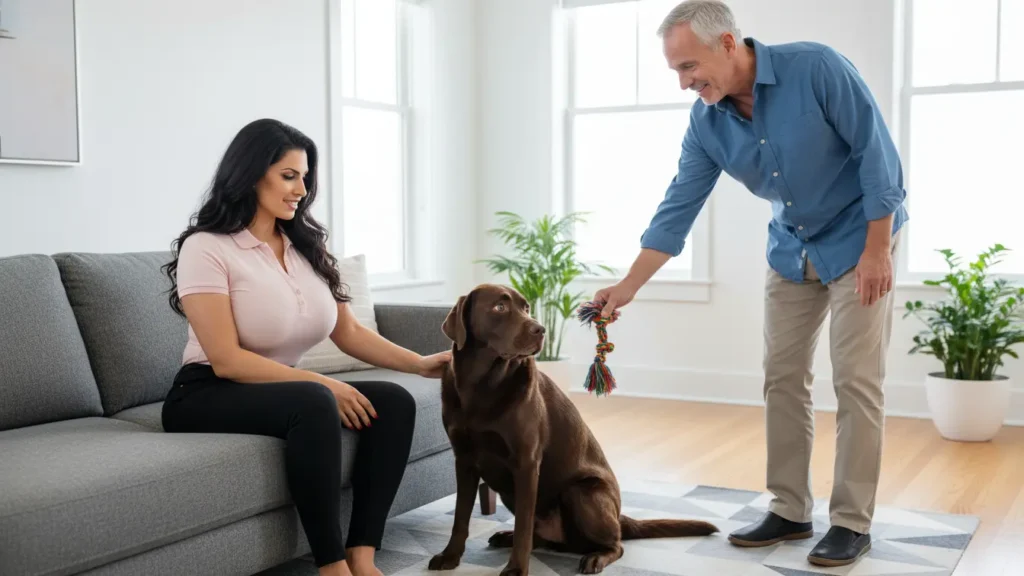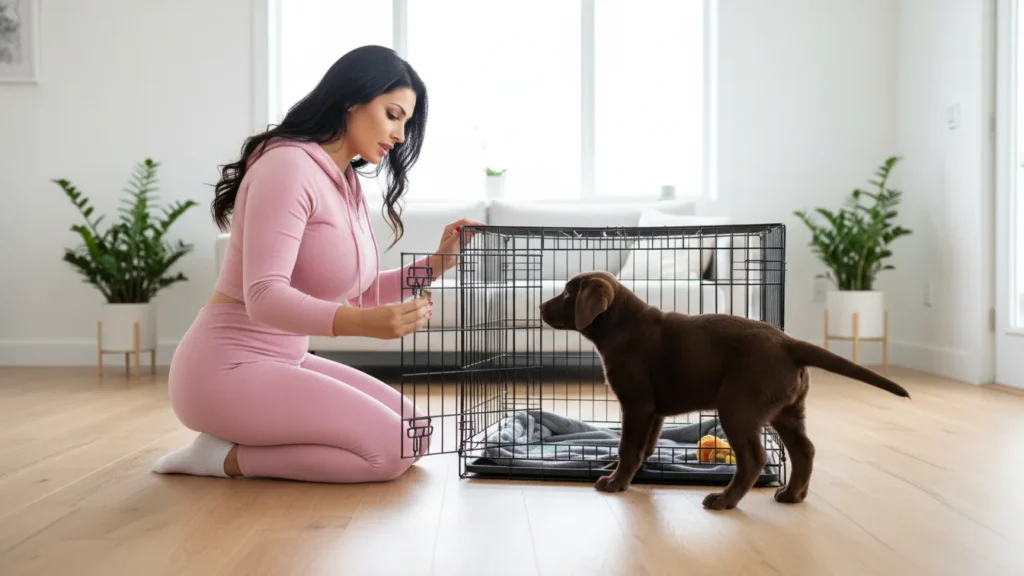
For months, the crate was a non-issue. Maybe even a favorite spot — your dog wandered in on their own, napped in there during the day, settled in without a fuss at bedtime. Then, seemingly overnight, that same crate becomes a battleground. Paws dug into the floor. Whining the second the door starts to close. A dog who used to walk in willingly now needs to be coaxed, lifted, or bribed just to get near it.
It’s easy to assume the dog is “just being difficult,” but a sudden reversal like this almost always has a real cause behind it. Dogs don’t randomly decide to hate a space that used to feel safe — something about that space, or about them, actually changed. Finding that change is the whole key to fixing it.
Rule Out Physical Discomfort First
Before anything behavioral, this is the first thing worth checking, because it’s the most commonly missed. A dog that’s developing joint pain, arthritis, an injury, or a digestive issue may suddenly find a confined space genuinely uncomfortable in a way they didn’t a few months ago. Aging dogs in particular can go from “comfortable in the crate” to “reluctant” as physical stiffness makes lying in one position, or getting up and down through a low crate door, more painful than it used to be. If the resistance came on gradually alongside less energy, less jumping, or a change in appetite, a vet visit to rule out a physical cause should come before any training fix.
Gastrointestinal discomfort deserves the same attention. A dog that’s had an upset stomach, especially one who’s had an accident in the crate before you noticed, can start associating that space with a genuinely unpleasant physical memory — nausea, cramping, or the humiliation of being stuck in soiled bedding.
The Negative Experience You Might Not Have Seen
This is one of the most common hidden reasons, and it’s sneaky precisely because you often weren’t in the room when it happened. If something startling occurred while your dog was crated — a loud noise like thunder, a delivery truck backfiring, a smoke alarm going off, another pet getting into a scuffle nearby, or even the dog getting a paw or collar briefly stuck — the crate itself can become linked to that fear in the dog’s mind. From the outside, nothing about the crate changed. From the dog’s perspective, the crate is now the place where something scary happened, and that association can form after a single incident.
A Change in the Environment Around the Crate
Sometimes the crate is fine — it’s everything around it that shifted. New furniture nearby that changed airflow or blocked a window view, a new pet in the house that creates tension near the crate’s location, a change in room temperature, or even new sounds like a different HVAC system or a neighbor’s construction can make a previously calm spot feel unsettled. Dogs are highly attuned to small environmental shifts that owners don’t consciously register, and a crate that’s suddenly too hot, too cold, or newly exposed to a startling sound is a very ordinary explanation for a very confusing behavior change.
Separation Anxiety Taking a New Shape
If the crate has become linked in your dog’s mind with being left alone, a change in your schedule can flip the switch on a previously tolerated routine. Longer hours away, a new job, a change in who’s normally home during the day, or even a shift in your morning routine can intensify separation anxiety that was mild before. In these cases, the resistance usually isn’t really about the crate itself — it’s about what the crate now predicts: that you’re about to leave for longer than the dog is used to.
Boundary-Testing and Learned Attention
Not every sudden crate refusal has a fear-based root. Some dogs test whether a new reaction gets them out of the crate or gets them extra attention, the same way a dog might suddenly “forget” how to walk on a leash or refuse food they normally love. If a whining or resistant episode was met with rushing over, extended coaxing, or letting the dog out immediately, some dogs learn that resisting the crate is an effective way to get engagement — and repeat it, not out of fear, but because it worked once.
The “Honeymoon Period” Ending
For newly adopted dogs, this one is easy to miss. Many dogs are unusually compliant during their first few weeks in a new home simply because they’re still unsure of their surroundings and on their best behavior. Once they settle in and start feeling secure enough to express real preferences, a crate that was tolerated quietly during that adjustment period can suddenly get a much more honest reaction — which isn’t regression so much as the dog finally showing you how they actually feel.
What Actually Helps
- Rule out pain or illness first. A sudden behavior change is one of the more reliable signals that something physical is going on, and it’s the fastest thing to check.
- Think back to the last time the crate felt fine, and consider what happened in the day or two around the shift — a loud noise, a schedule change, a new pet, anything unusual.
- Rebuild positive association slowly. Feeding meals in the crate, tossing in a favorite toy, and never using it as a punishment helps repair the space’s reputation over time.
- Avoid forcing or dragging your dog in. This tends to deepen the negative association rather than resolve it, even when it seems like the fastest fix in the moment.
- Don’t over-reward the resistance. If whining or refusal is met with a calm, low-key response rather than a big rush of attention, dogs are less likely to repeat it purely for engagement.
- Give it time if it’s a new adoption. What looks like sudden crate hatred may just be a dog who’s finally comfortable enough to show their real opinion.
- Bring in a professional if it persists. If physical causes are ruled out and the resistance continues despite consistent, patient retraining, a certified trainer or veterinary behaviorist can address anxiety that’s beyond a simple routine fix.
The Bottom Line
A dog doesn’t wake up one day and arbitrarily decide the crate is the enemy. Something shifted — in their body, in a startling moment they experienced alone, in the environment around the crate, or in the routine that crate now predicts. Once you find that thread and address it patiently, most dogs can rebuild trust in a space that used to feel completely safe, because in almost every case, it’s not really about the crate at all.
Sources
- LoveToKnow Pets — 5 Reasons Your Dog Suddenly Hates Their Crate (& How to Fix It)
- Waggle — 5 Reasons Your Dog Hates the Crate
- Rock Creek Crates — Why Dogs Regress in Crate Training
- Adopt a Pet — Dog Suddenly Hates Crate at Night? Causes and Solutions
- Diggs — My Dog Hates Crate: How To Get Them To Love It

Dr. Sofia Romano, DVM, is an experienced veterinarian specializing in small-animal medicine and preventive care. She has treated thousands of cases using evidence-based diagnostics and modern clinical practices. Dr. Romano is dedicated to providing science-backed pet-health guidance that helps owners make informed decisions and improve their pets’ quality of life.