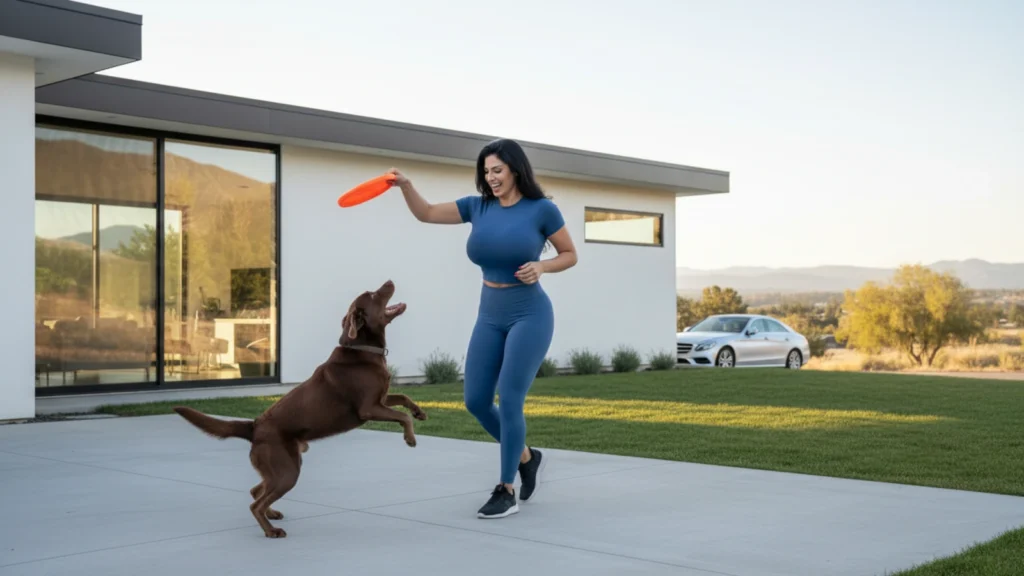
You have likely experienced this frustrating scenario: you bring home a high-tech, expensive interactive puzzle toy, and your dog ignores it entirely to go cuddle up with a ragged, half-destroyed stuffed squirrel they’ve had for three years.
As a veterinarian observing canine behavior in and out of the exam room, I frequently field questions from perplexed pet parents about toy preferences. The truth is, your dog’s fixation on that one specific toy isn’t random. It is a complex interplay of evolutionary biology, breed genetics, and sensory psychology.
Here is the science behind why your dog plays favorites.
The Canine Predatory Sequence
To understand your dog’s play style, we have to look back at their wolf ancestors. Play in domestic dogs is largely a harmless manifestation of the canine predatory sequence. This sequence consists of distinct behaviors: Eye, Stalk, Chase, Grab-Bite, Kill-Bite, Dissect, and Consume.
Over centuries of selective breeding, humans have amplified certain parts of this sequence in specific breeds while suppressing others. Your dog’s favorite toy usually directly correlates to the part of the sequence their brain is hardwired to find most rewarding.
- Retrievers and Spaniels: These breeds were developed to carefully carry birds back to hunters. Their brains reward the “Grab-Bite” phase. They often prefer soft plush toys that they can carry around gently in their mouths for hours without destroying them.
- Terriers: Bred to hunt rats and burrowing pests, terriers are highly motivated by the “Kill-Bite” and “Dissect” phases. If your dog systematically seeks out the squeaker to destroy it and pulls all the stuffing out of a toy within ten minutes, you are witnessing this genetic drive in action.
- Herding Breeds: Collies and Shepherds excel at the “Eye” and “Stalk” phases. They are visually stimulated by movement, making them highly responsive to balls, frisbees, or toys that bounce erratically.
The Sensory Psychology of Toys
Beyond genetics, a toy must provide the right sensory feedback to capture a dog’s attention. Dogs experience the world primarily through smell, hearing, and taste/mouth-feel.
The Acoustic Trigger
Squeakers are not just amusing noisemakers; they hit a very specific evolutionary frequency. The high-pitched squeak mimics the sound of distressed prey. When a dog bites down and hears that sound, it triggers a massive dopamine release in their brain. Crinkly toys serve a similar purpose, mimicking the sound of small animals rustling through dry leaves.
Texture and “Mouth Feel”
A dog’s mouth acts like our hands—it is packed with sensory receptors. The texture of a toy dictates how satisfying it is to chew. Hard rubber toys satisfy the jaw muscles’ need for heavy compression, which is highly stress-relieving for aggressive chewers. Conversely, soft fleece toys provide a soothing, pacifying sensation.
Dental health also plays a massive, often overlooked role here. If a dog suddenly abandons hard chew toys in favor of soft plushies, I immediately check their teeth. Hidden dental pain, fractured teeth, or early periodontal disease will cause a dog to unconsciously shift their texture preferences to avoid discomfort.
Scent Marking and The Comfort Factor
Have you ever noticed your dog bringing their favorite toy to bed, or resting their chin on it while they sleep? This behavior moves away from predatory drive and into emotional security.
Dogs have specialized scent glands in their cheeks and the roof of their mouths. When a dog consistently chews and carries a specific toy, they are actively scent-marking it with their own saliva. To a dog, a toy that smells heavily of themselves—and of the ambient scent of your home—acts as a powerful security blanket. Washing that favorite toy might make it smell fresh to you, but it temporarily strips the toy of its psychological value to your dog until they can “re-scent” it.
The Novelty Effect vs. The Loyal Favorite
While dogs form deep attachments to specific textures and scents, they are also prone to neophilia—a preference for new things. This creates a fascinating paradox where a dog will enthusiastically play with a new toy for 48 hours, only to drop it and return to their old favorite.
To maximize engagement and prevent boredom, I always advise pet parents to implement a toy rotation strategy. Keep the ultimate “favorite” out for comfort, but rotate the other toys in and out of a closet every few weeks. This tricks the canine brain into perceiving the rotated toys as novel items, satisfying both their need for security and their craving for new stimulation.
High-Authority Source Links for Further Reading:
- American Veterinary Medical Association (AVMA): Selecting Safe Toys for Your Dog https://www.avma.org/resources/pet-owners/petcare/selecting-safe-toys-your-dog
- Applied Animal Behaviour Science Journal: Habituation and dishabituation during object play in kennel-housed dogs https://www.sciencedirect.com/science/article/abs/pii/S016815911200323X
- American Kennel Club (AKC): The Science Behind Why Dogs Love Squeaky Toys https://www.akc.org/expert-advice/lifestyle/why-do-dogs-like-squeaky-toys/
- Veterinary Centers of America (VCA Hospitals): Play Behavior and Toys for Dogs https://vcahospitals.com/know-your-pet/play-and-investigative-behaviors-of-dogs
- Tufts University Cummings School of Veterinary Medicine: Understanding Canine Play and Predatory Behavior https://vet.tufts.edu/news-events/news/understanding-canine-behavior

Dr. Sofia Romano, DVM, is an experienced veterinarian specializing in small-animal medicine and preventive care. She has treated thousands of cases using evidence-based diagnostics and modern clinical practices. Dr. Romano is dedicated to providing science-backed pet-health guidance that helps owners make informed decisions and improve their pets’ quality of life.


Pingback: Why Dogs Roll In Garbage Or Dead Animals — The Instinct Owners Don’t Expect
Pingback: Why Adult Dogs Still Chew Everything — The Hidden Reasons Owners Overlook
Pingback: Why Dogs Hump Even When Neutered — The Real Reasons Vets And Trainers Explain
Pingback: Why Dogs Prefer Cold Floors Over Beds — What Their Body Is Really Telling You
Pingback: Best Dog Treats For Puppies That Trainers & Vets Swear By (Safe, Tasty, Proven)