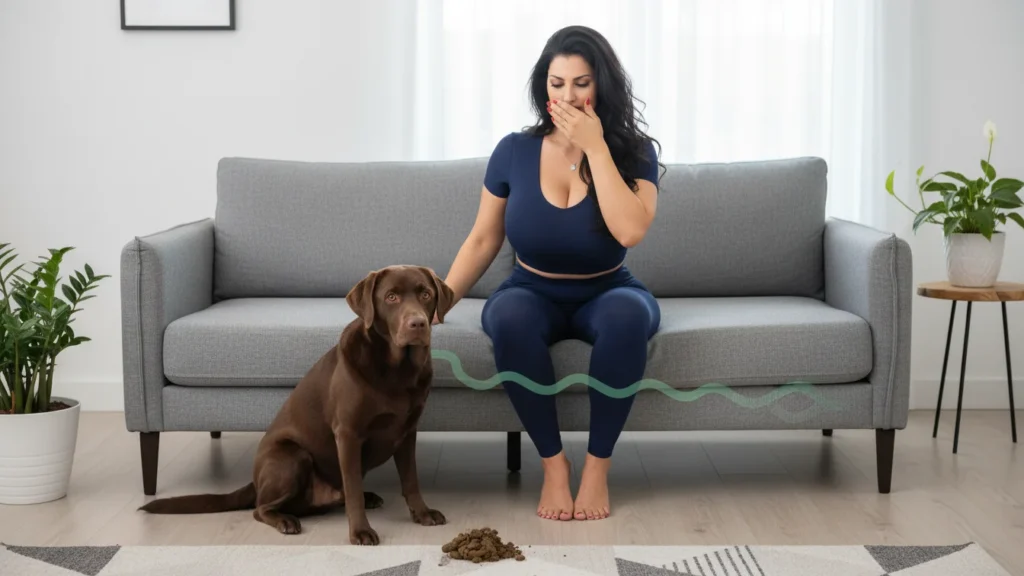
The Moment Every Dog Owner Knows Too Well
You bend down on a walk.
Bag in hand.
And suddenly… that smell hits you harder than expected.
This isn’t “normal dog poop smell.”
It’s eye-watering, lingering, and suspiciously intense.
Most owners shrug it off as “dogs just eat weird things.”
But here’s the truth:
👉 Exceptionally strong stool odor is often a message from your dog’s digestive system.
Sometimes it’s harmless.
Sometimes it’s a quiet warning.
Understanding the difference can protect your dog’s health—and save you from bigger problems later.
What “Normal” Dog Poop Smell Actually Is
All dog stool smells. That’s normal.
Healthy dog poop usually has:
- A mild to moderate odor
- Firm but not hard consistency
- Brown color
- No lingering stench long after pickup
Strong odor becomes concerning when it is:
- Sharp, sulfur-like, or rotten
- Much stronger than usual
- Persistent over days
- Paired with gas, loose stools, or behavior changes
💡 Smell intensity often reflects what’s happening inside the gut—especially digestion efficiency.
Why Dog Stool Smells Extremely Strong (The Real Reasons)
1. Poor Digestion (The Most Common Cause)
When food isn’t properly digested:
- Undigested proteins ferment in the gut
- Gas-producing bacteria multiply
- Sulfur compounds increase
This creates foul, penetrating stool odor.
Common triggers:
- Low-quality protein
- Highly processed dog food
- Sudden diet changes
- Overfeeding
🧠 Think of it like food rotting inside the intestines instead of being absorbed.
2. High-Protein or Poor-Quality Protein Diets
Protein itself isn’t bad.
But cheap protein sources (by-products, unnamed meat meals) are harder to digest.
Result:
- Excess protein reaches the colon
- Gut bacteria break it down into sulfur gases
- Stool smells far worse than normal
🔎 If the ingredient list starts with vague terms like “meat derivatives”, odor issues are common.
3. Gut Microbiome Imbalance
Your dog’s gut contains trillions of bacteria that help digestion.
When the balance shifts:
- Harmful bacteria dominate
- Gas and toxins increase
- Stool odor intensifies
Causes include:
- Antibiotic use
- Stress
- Dietary intolerance
- Illness
Research supported by organizations like American Kennel Club shows gut health plays a central role in stool quality and smell.
4. Food Intolerances (Not Always Allergies)
Some dogs struggle to digest:
- Dairy
- Chicken
- Beef
- Wheat or soy
Unlike allergies, intolerances often show up subtly:
- Extra smelly poop
- Soft stools
- Gas
- Occasional mucus
⚠️ Owners often miss this because the dog otherwise “seems fine.”
5. Intestinal Parasites
Certain parasites are notorious for foul stool odor, including:
- Giardia
- Hookworms
- Whipworms
These organisms:
- Interfere with nutrient absorption
- Damage the intestinal lining
- Produce strong-smelling waste
The Centers for Disease Control and Prevention notes Giardia commonly causes greasy, extremely foul-smelling stool in dogs.
6. Pancreatic Enzyme Deficiency
In conditions like Exocrine Pancreatic Insufficiency (EPI):
- Digestive enzymes are insufficient
- Food passes through undigested
- Stool smells unusually strong and rancid
This is more common in:
- German Shepherds
- Rough Collies
- Senior dogs
Smell Can Reveal More Than You Think
| Stool Smell Type | Likely Cause | Action Needed |
|---|---|---|
| Rotten egg / sulfur | Protein fermentation | Diet review |
| Sour / acidic | Carbohydrate malabsorption | Gradual diet change |
| Greasy & rancid | Fat malabsorption | Vet check |
| Extremely foul + diarrhea | Parasites or infection | Stool test |
| Metallic or unusual | GI irritation | Monitor closely |
Why This Matters Today (Not Just for Clean-Up)
Strong-smelling stool isn’t just unpleasant.
It may signal:
- Chronic inflammation
- Nutrient deficiencies
- Poor immune health
- Long-term gut damage
Dogs with unresolved digestive issues often develop:
- Skin problems
- Weak immunity
- Behavioral changes
- Weight fluctuations
Early attention prevents small gut issues from becoming lifelong problems.
What You Can Do Right Now (Actionable Steps)
Step 1: Review the Food Label
Look for:
- Named proteins (e.g., “chicken,” not “meat meal”)
- Limited fillers
- Moderate protein levels
Step 2: Avoid Sudden Diet Changes
Always transition food over 7–10 days to protect gut bacteria.
Step 3: Consider Probiotics
Vet-approved probiotics can:
- Restore healthy gut flora
- Reduce odor
- Improve stool consistency
Step 4: Monitor Patterns
Track:
- Smell intensity
- Frequency
- Stool consistency
- Any vomiting or lethargy
Patterns tell more than single incidents.
Common Mistakes Owners Make
- ❌ Blaming smell solely on “normal dog behavior”
- ❌ Switching foods too often
- ❌ Overfeeding treats
- ❌ Ignoring mild but persistent changes
- ❌ Self-medicating without diagnosis
FAQ: Strong-Smelling Dog Stool
1. Is extremely smelly dog poop ever normal?
Occasionally—after scavenging or dietary changes. Persistent odor is not normal.
2. Can dog treats cause strong stool smell?
Yes. High-fat or low-quality treats often worsen odor.
3. Does strong stool smell mean infection?
Not always, but parasites or bacterial imbalance are common causes.
4. How long should I wait before seeing a vet?
If odor lasts more than 3–5 days, or comes with diarrhea or lethargy, consult your vet.
5. Can probiotics alone fix stool odor?
They help many dogs—but underlying causes must be addressed.
Key Takeaways
- Strong stool odor reflects digestive efficiency
- Diet quality matters more than most owners realize
- Gut health affects far more than poop
- Persistent odor deserves attention
- Early action prevents chronic problems
Final Thoughts
Your dog can’t tell you when something feels off inside.
But their stool can.
Paying attention to smell isn’t overreacting—it’s responsible care.
A healthier gut means:
- Better digestion
- Stronger immunity
- Happier days (and less nose-wrinkling walks)
Disclaimer: This article is for general educational purposes only and does not replace professional veterinary advice. Always consult your veterinarian for personalized guidance.

Dr. Sofia Romano, DVM, is an experienced veterinarian specializing in small-animal medicine and preventive care. She has treated thousands of cases using evidence-based diagnostics and modern clinical practices. Dr. Romano is dedicated to providing science-backed pet-health guidance that helps owners make informed decisions and improve their pets’ quality of life.