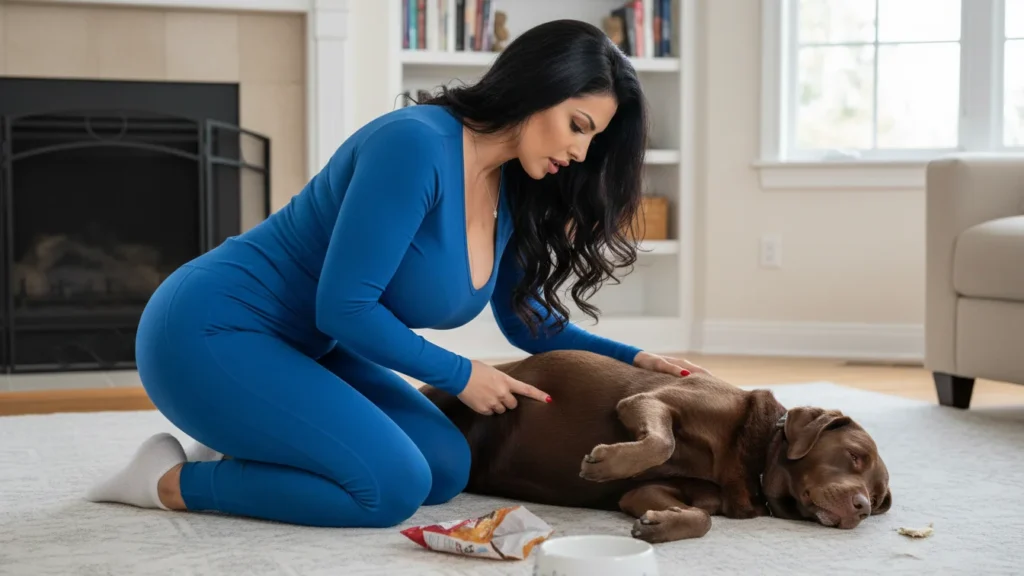
A Quiet Moment That Makes You Look Twice
Your dog stands up after a nap.
You notice their belly looks rounder than usual.
Not painful. Not dramatic. Just… off.
You touch their side. They don’t react.
They eat, walk, and wag like normal.
So why does their belly look bloated?
This is one of the most common — and confusing — things dog owners notice.
Sometimes it’s harmless. Sometimes it’s an early signal worth paying attention to.
Understanding the difference is what keeps dogs safe.
First, What Does “Bloated” Really Mean in Dogs?
A bloated belly isn’t a diagnosis.
It’s a visual change — the abdomen looks larger, rounder, or tighter than usual.
That change can come from:
- Food or gas
- Body shape and posture
- Growth (especially in puppies)
- Fluid, fat, or internal pressure
The reason behind the swelling matters more than the size itself.
Common, Harmless Reasons Your Dog’s Belly Looks Bloated
In many dogs, belly bloating is temporary and normal.
1. A Full Stomach After Eating
Dogs don’t snack politely — they eat fast and in volume.
After a big meal, the stomach expands.
For slim or short-haired dogs, this is especially noticeable.
Clue it’s normal:
- Swelling reduces within 1–3 hours
- Dog is relaxed, playful, and comfortable
2. Gas Build-up From Digestion
Some foods ferment more during digestion.
This creates gas — just like in humans.
Common triggers include:
- Sudden diet changes
- Table scraps
- Dairy
- Very fatty treats
Gas-related bloating often:
- Comes and goes
- Feels soft
- Improves after movement or passing gas
3. Puppy “Pot Belly” (Often Normal)
Young puppies often look round-bellied, especially after meals.
This can be due to:
- Weak abdominal muscles
- Frequent feeding
- Rapid growth
If the puppy is:
- Active
- Gaining weight steadily
- Eating well
…it’s often a normal growth phase.
4. Body Position and Posture
When dogs:
- Stretch
- Lie on their side
- Arch their back
…the abdomen can look temporarily larger.
Lighting, angle, and fur length can exaggerate this.
When a Bloated Belly Deserves Attention
Some belly swelling isn’t harmless — it’s informational.
Your dog’s body may be quietly signaling discomfort or imbalance.
Warning signs that change the picture:
- Belly looks tight or drum-like
- Dog seems restless or uncomfortable
- Reduced appetite
- Lethargy or withdrawal
- Repeated looking at the belly
The belly isn’t just bigger — the dog feels different.
The Serious Causes Owners Often Miss
These don’t always appear suddenly.
They often build quietly.
1. Fluid Accumulation (Ascites)
Fluid can collect inside the abdomen due to:
- Heart-related issues
- Liver strain
- Protein imbalance
Signs often include:
- Gradual belly enlargement
- Weight gain without muscle growth
- Tiring easily
The belly may feel heavy, not gassy.
2. Intestinal Blockage or Constipation
If digestion slows or stops, pressure builds.
Possible triggers:
- Swallowed objects
- Bones
- Severe constipation
You may notice:
- Straining without result
- Vomiting
- Discomfort when the belly is touched
3. Hormonal or Metabolic Changes
Conditions affecting metabolism can change fat distribution and muscle tone.
This can create:
- A hanging or rounded belly
- Muscle loss elsewhere
- Increased thirst or appetite
These changes are usually slow, not sudden.
4. Gastric Dilatation (Emergency Scenario)
In rare but serious cases, the stomach fills rapidly with gas and twists.
This looks like:
- Sudden, severe swelling
- Restlessness
- Non-productive retching
- Rapid breathing
This is not subtle and needs immediate care.
Normal Bloating vs Concerning Swelling — A Quick Comparison
| Feature | Usually Normal | Needs Attention |
|---|---|---|
| Onset | After meals | Sudden or progressive |
| Texture | Soft, flexible | Tight or hard |
| Behavior | Comfortable | Restless or withdrawn |
| Duration | Short-lived | Persistent or worsening |
| Appetite | Normal | Reduced or absent |
Why This Matters More Than You Think
Dogs don’t complain early.
They adapt. They tolerate. They mask discomfort.
A changing belly is often one of the first visible clues something inside is shifting.
Catching patterns early:
- Prevents emergencies
- Reduces treatment intensity
- Improves long-term outcomes
Observation is a form of care.
Hidden Tips Most Owners Don’t Use
- Check the belly at the same time daily (lighting matters)
- Feel, don’t just look — texture tells a story
- Note timing (after meals vs all day)
- Compare sides — asymmetry matters
Photos taken weekly can reveal changes you miss day to day.
Common Mistakes to Avoid
- Assuming bloating is always “just gas”
- Changing food repeatedly without guidance
- Ignoring gradual swelling because the dog seems “fine”
- Waiting for pain before acting
Quiet signs are still signs.
What You Can Do Right Now
- Observe over 24–48 hours
- Note appetite, energy, and bowel movements
- Avoid rich treats or sudden diet changes
- Encourage gentle movement
- Seek professional advice if swelling persists or behavior changes
Key Takeaways
- A bloated belly is a sign, not a diagnosis
- Many causes are harmless and temporary
- Pattern + behavior matter more than size
- Gradual or persistent swelling deserves attention
- Early awareness protects your dog’s comfort and health
FAQs
1. Can dogs look bloated just from eating too fast?
Yes. Fast eating can cause temporary stomach expansion and gas.
2. Is a soft bloated belly less serious than a hard one?
Generally, yes — softness often suggests gas or food rather than pressure.
3. Should puppies always have round bellies?
Mild roundness can be normal, but extreme or persistent swelling should be checked.
4. Can stress cause belly bloating in dogs?
Stress can affect digestion and gas production in sensitive dogs.
5. How long should I wait before worrying?
If swelling lasts more than a day or comes with behavior changes, get advice.
A Calm, Clear Ending
Not every bloated belly is a problem.
But every change is information.
When you learn to read your dog’s quiet signals,
you don’t just prevent issues — you build trust, comfort, and long-term health.
Disclaimer: This article is for general awareness and observation support only and does not replace personalized veterinary guidance.

Dr. Sofia Romano, DVM, is an experienced veterinarian specializing in small-animal medicine and preventive care. She has treated thousands of cases using evidence-based diagnostics and modern clinical practices. Dr. Romano is dedicated to providing science-backed pet-health guidance that helps owners make informed decisions and improve their pets’ quality of life.


Pingback: Why Dogs Stretch Repeatedly — What Their Body Language Is Really Telling You