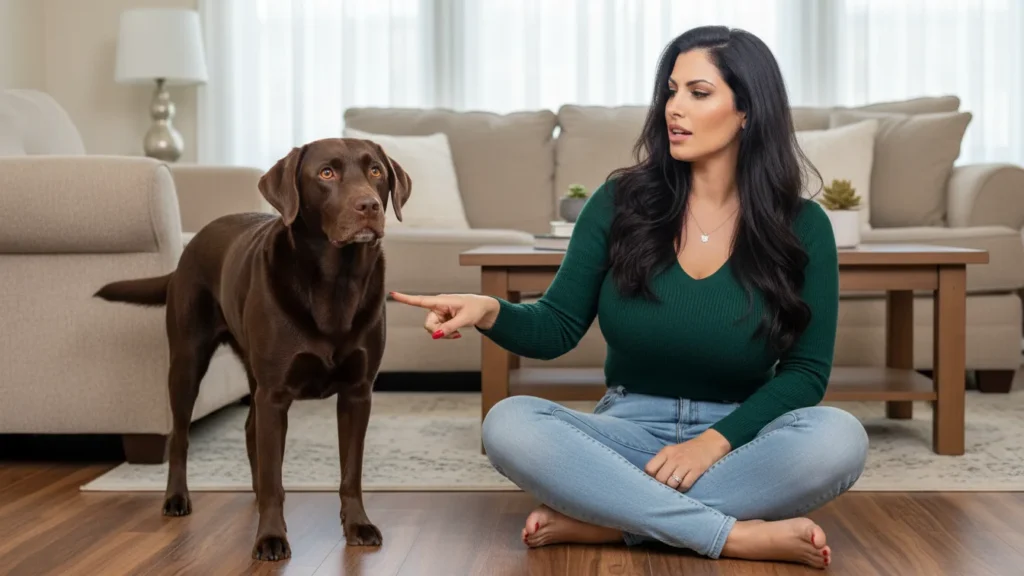
The Moment That Breaks Your Heart a Little
You give a command your dog has followed for years.
“Sit.”
“Stay.”
“Come.”
Nothing.
They look at you — not defiantly — but uncertain.
As if the word no longer connects to the action it once did.
For many owners, this moment feels personal.
Did I do something wrong?
Is my dog ignoring me?
Are they being stubborn?
The truth is gentler — and far more important.
Older dogs don’t forget training because they stop caring.
They forget because their brain is quietly changing.
Why This Happens So Suddenly (Even in Well-Trained Dogs)
One of the hardest parts of canine aging is how abrupt it can feel.
Your dog may have followed commands perfectly for years — then suddenly struggle.
That’s because training isn’t stored in one place.
It relies on a combination of:
- Memory recall
- Sensory input (hearing, vision)
- Processing speed
- Physical ability
- Emotional regulation
A small change in any one of these can break the chain.
To owners, it looks like “forgetting.”
To dogs, it feels like losing clarity.
1️⃣ Aging Brains Process Information More Slowly
Senior dogs don’t lose intelligence.
They lose processing speed.
Think of it like an older computer:
- The files are still there
- The system just opens them more slowly
Commands that once triggered instant responses may now require extra time.
When owners repeat commands quickly or raise their voice, dogs can become overwhelmed — not more obedient.
This is often mistaken for defiance.
It’s actually delay.
2️⃣ Memory Retrieval Weakens Before Memory Disappears
Dogs don’t store training the way humans store facts.
Commands are linked to:
- Context
- Routine
- Tone
- Environment
As dogs age, retrieval pathways weaken first.
That means your dog may:
- Respond at home but not outside
- Follow commands in the morning but not evening
- Obey one person but not another
The memory isn’t gone — it’s harder to access.
3️⃣ Hearing and Vision Changes Break the Signal
Many “training failures” are actually sensory failures.
Senior dogs commonly experience:
- High-frequency hearing loss
- Reduced depth perception
- Difficulty seeing facial cues
- Trouble distinguishing background noise
If your dog doesn’t clearly hear the command — or see your gesture — they can’t respond correctly.
They’re not ignoring you.
They’re guessing.
4️⃣ Physical Discomfort Changes Willingness to Respond
Training requires movement.
Even simple commands involve:
- Sitting
- Standing
- Turning
- Lying down
Joint stiffness, muscle soreness, or subtle pain can make dogs hesitate.
Instead of refusing, they may:
- Pause
- Look away
- Respond inconsistently
- Avoid certain commands entirely
This is self-protection — not disobedience.
5️⃣ Cognitive Changes Can Disrupt Learned Patterns
Some senior dogs experience age-related cognitive decline.
This doesn’t mean full dementia.
Early changes are often mild and selective:
- Confusion during familiar routines
- Trouble linking commands to actions
- Increased anxiety during training
- Reduced problem-solving flexibility
Training regression is often one of the first visible signs.
What This Behavior Is NOT
Let’s clear this up.
❌ Not stubbornness
❌ Not dominance
❌ Not manipulation
❌ Not “bad behavior”
❌ Not lack of respect
Your dog isn’t challenging you.
They’re asking for clarity.
Normal Aging vs. Concerning Training Changes
| Behavior | Normal Aging | Needs Attention |
|---|---|---|
| Slower response time | ✅ | ❌ |
| Occasional missed command | ✅ | ❌ |
| Forgetting multiple commands | ❌ | ✅ |
| Confusion in familiar settings | ❌ | ✅ |
| Anxiety during training | ❌ | ✅ |
| Inconsistent obedience | ⚠️ | ⚠️ |
Why This Matters More Than Obedience
Training isn’t just about manners.
It’s about:
- Communication
- Safety
- Confidence
- Trust
When dogs stop understanding what’s expected, they can feel anxious, insecure, and disconnected.
That emotional stress can accelerate cognitive decline.
Helping your dog adapt protects their mental health, not just behavior.
8 Gentle Ways to Support an Aging Dog’s Training
1. Slow Everything Down
Give commands once.
Wait longer for response.
Silence is okay.
2. Re-Teach Without Pressure
Think of it as refreshing, not retraining.
Short sessions.
Low expectations.
High rewards.
3. Use Clear Hand Signals
Visual cues often outlast verbal ones.
4. Train in Familiar Environments
Reduce distractions to improve success.
5. Reward Effort, Not Perfection
Trying matters more than accuracy now.
6. Break Commands into Steps
“Down” may become:
Pause → bend → lie → relax
7. Watch Body Language Closely
Hesitation often signals discomfort or confusion.
8. End Sessions Early
Quit while your dog still feels successful.
Common Owner Mistakes That Make It Worse
- ❌ Repeating commands louder
- ❌ Assuming the dog is ignoring you
- ❌ Punishing non-response
- ❌ Expecting senior dogs to learn like puppies
- ❌ Training for too long
Frustration erodes trust — and learning.
Why This Matters Today (And Going Forward)
Dogs live longer than ever.
Which means more dogs are reaching ages where brain and body changes overlap.
Understanding training regression helps owners:
- Prevent unnecessary conflict
- Spot early health changes
- Maintain emotional connection
- Improve quality of life
This isn’t about lowering standards.
It’s about raising compassion.
Frequently Asked Questions
Is my dog becoming senile?
Not necessarily. Mild training regression often appears before major cognitive decline.
Should I stop training my senior dog?
No. Gentle, adapted training keeps the brain engaged and confident.
Can retraining help restore lost commands?
Often, yes — especially when done slowly and positively.
Is this painful for my dog?
The confusion can be stressful, even without obvious pain.
When should I see a vet?
If training loss is sudden, severe, or paired with personality changes.
Key Takeaways
- Older dogs forget training due to brain, sensory, or physical changes
- It’s a communication issue — not defiance
- Slower, gentler training preserves confidence
- Punishment worsens confusion
- Adaptation strengthens trust and safety
A Calm, Honest Conclusion
Your dog isn’t unlearning years of love and effort.
They’re navigating a new version of themselves.
When you meet them where they are — patiently, gently, without blame — training becomes connection again.
And that matters more than perfect obedience ever did.
Disclaimer: This article is for general education and does not replace professional veterinary or behavioral advice. If your dog’s behavior changes suddenly or significantly, consult a qualified professional.

Dr. Sofia Romano, DVM, is an experienced veterinarian specializing in small-animal medicine and preventive care. She has treated thousands of cases using evidence-based diagnostics and modern clinical practices. Dr. Romano is dedicated to providing science-backed pet-health guidance that helps owners make informed decisions and improve their pets’ quality of life.




Pingback: Why Dogs Wake Up Confused At Night — The Hidden Brain, Sleep, And Emotional Reasons Most Owners Never Realize
Pingback: Why Dogs Develop Sudden Phobias With Age — The Hidden Brain, Body, And Emotional Changes Most Owners Never Expect