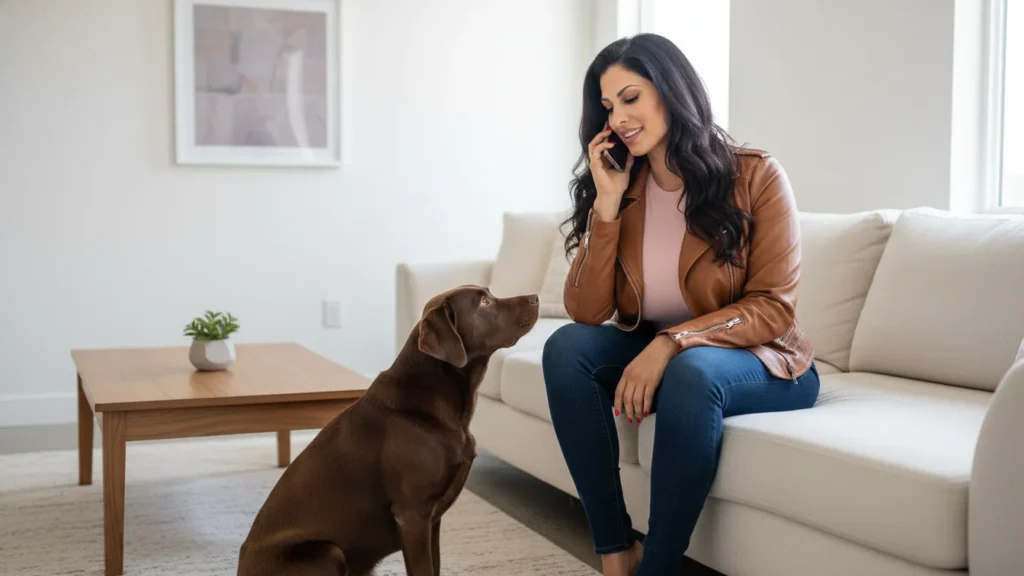
The Quiet Shift Almost Every Dog Owner Has Seen
You’re relaxed.
Sitting comfortably.
Scrolling or resting.
Then your phone rings.
You answer.
Within seconds, your dog changes.
They lift their head.
Sit up straighter.
Watch you closely.
Sometimes they move closer.
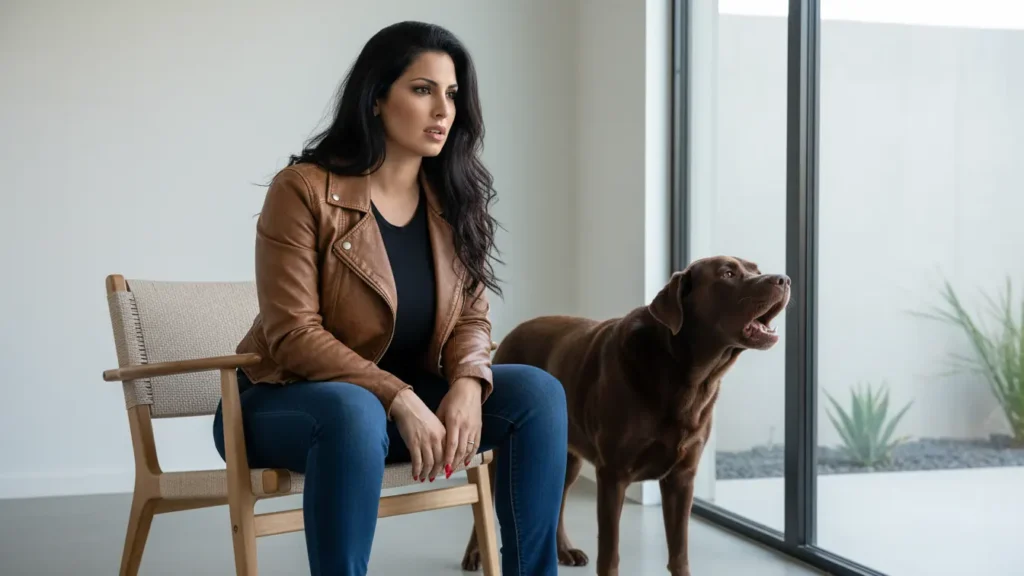
Sometimes they freeze.
Nothing loud happened.
Nothing scary happened.
And yet—your dog is suddenly alert.
This moment is so common that most owners stop questioning it.
But it isn’t random.
Your dog isn’t reacting to the phone itself.
They’re reacting to you.
Phone Calls Change More Than Sound — They Change You
From a dog’s perspective, phone calls are unusual events.
Not because of technology—but because of behavioral disruption.
When you answer a call:
- Your tone shifts
- Your breathing pattern changes
- Your attention disconnects
- Your body language tightens or stills
Dogs are experts at noticing these micro-changes.
To them, a phone call is a moment when:
“Something about my human just changed.”
That’s worth paying attention to.
Dogs Are Wired to Track Human Attention
Dogs evolved alongside humans by monitoring us closely.
In survival terms, human attention meant:
- Safety
- Food
- Direction
- Stability
When your attention suddenly shifts to an unseen “other,” your dog notices immediately.
Phone calls create:
- One-sided conversation
- Unusual pauses
- Emotional tone without physical cues
To a dog, that’s confusing—and important.
Why Dogs Become Alert During Phone Calls
This behavior usually comes from several overlapping reasons, not one.
1. Sudden Attention Withdrawal
During a call, your dog often loses:
- Eye contact
- Verbal engagement
- Responsiveness
Dogs are social animals.
Abrupt disengagement triggers monitoring behavior.
2. Tone Without Context
You may sound:
- Serious
- Excited
- Concerned
- Animated
But there’s no visible person.
Dogs rely on context.
When tone doesn’t match the environment, alertness increases.
The Role of Voice and Rhythm
Phone conversations sound different than normal speech.
They include:
- Irregular pauses
- Changes in pitch
- Emotional shifts
- Lack of dog-directed cues
Dogs don’t understand the words—but they track rhythm and energy.
A call breaks the usual conversational pattern dogs feel comfortable with.
Is This a Sign of Anxiety?
Most of the time, no.
Alertness does not automatically mean stress.
Normal Alertness Looks Like:
- Calm posture
- Quiet observation
- Curiosity
- Ability to relax afterward
Stress-Driven Reactions Look Like:
- Pacing
- Whining or barking
- Clinging excessively
- Inability to settle
The difference lies in recovery.
Comparison: Healthy Alertness vs. Stress Response
| Feature | Healthy Alertness | Stress-Based Reaction |
|---|---|---|
| Body language | Loose, balanced | Tense, restless |
| Vocalization | Minimal or none | Whining, barking |
| Focus | Curious | Fixated |
| Recovery | Quick | Slow |
| Impact on routine | None | Disruptive |
Understanding this distinction prevents unnecessary concern.
Why Dogs Watch Your Face During Calls
Many dogs stare at their owner’s face during phone calls.
This isn’t accidental.
Dogs look for:
- Emotional cues
- Eye movement
- Facial tension
- Expression changes
Since your attention is divided, your dog tries to reconnect emotionally by watching closely.
It’s not jealousy.
It’s social tracking.
Real-Life Example: The Calm Dog Who Sits Up
A dog is sleeping peacefully.
Phone rings.
Owner answers calmly.
Dog doesn’t panic—but sits up and watches quietly.
Why?
Because:
- Attention shifted
- Tone changed
- Interaction pattern broke
The dog is simply updating their understanding of the environment.
Once the call ends, they settle again.
Why Some Dogs React More Than Others
Sensitivity varies.
Dogs more likely to stay alert during calls include:
- Highly bonded dogs
- Emotionally sensitive dogs
- Dogs with strong routine awareness
- Dogs in quiet households
In calm environments, even small changes stand out.
Common Mistakes Owners Make
Phone-call alertness is often misunderstood.
Mistakes include:
- Assuming it’s always anxiety
- Over-reassuring during the call
- Repeatedly telling the dog to “relax”
- Interpreting attention as misbehavior
- Ignoring signs when stress is present
Not every alert moment needs intervention.
Hidden Tip: Your Dog Is Taking Social Cues
In social species, watching during communication is normal.
Dogs stay alert because:
- They’re learning
- They’re monitoring emotional tone
- They’re ensuring stability
This behavior shows engagement, not insecurity.
When Phone-Call Alertness Signals a Deeper Issue
Pay closer attention if alertness is paired with:
- Separation distress
- Increased clinginess outside calls
- Destructive behavior
- Inability to relax even after calls end
In these cases, the phone call isn’t the cause—it’s the trigger revealing underlying stress.
How to Respond the Right Way (Actionable Steps)
1. Stay Emotionally Consistent
Keep your tone calm and steady when answering calls.
2. Avoid Over-Reaction
Don’t repeatedly reassure or scold.
Neutral behavior communicates safety.
3. Maintain Predictable Routines
Consistent schedules reduce over-monitoring.
Predictability calms the nervous system.
4. Offer a Passive Comfort Option
A familiar bed or resting spot helps dogs self-regulate.
No need to distract—just allow comfort.
Why This Matters Today
Phones are constant.
Calls interrupt routines multiple times a day.
For dogs:
- These micro-disruptions add up
- Emotional patterns matter more than noise
Understanding your dog’s response:
- Strengthens communication
- Prevents misinterpretation
- Builds trust
Sometimes, alertness is simply awareness.
Key Takeaways
- Dogs stay alert during phone calls due to attention shifts
- They read tone, posture, and emotional energy
- Alertness ≠ anxiety in most cases
- Body language and recovery matter most
- Calm consistency helps dogs regulate
- This behavior often reflects strong social bonding
Frequently Asked Questions (FAQ)
1. Why does my dog stare at me when I’m on the phone?
They’re tracking emotional and social cues after attention shifts.
2. Is this behavior a sign of separation anxiety?
Only if paired with distress behaviors like pacing or whining.
3. Should I ignore my dog during phone calls?
Yes—calm neutrality is usually best.
4. Why does my dog react more to work calls than casual ones?
Work calls often carry different emotional tones dogs can sense.
5. Can training stop this behavior?
It doesn’t need stopping unless it causes stress.
A Calm Conclusion
When your phone rings, your dog isn’t confused.
They’re attentive.
They’re reading changes you don’t notice—
tone, focus, energy, connection.
Most of the time, your dog isn’t worried.
They’re simply staying in sync with the human they trust most.
Disclaimer: This article is for general educational purposes and does not replace individualized veterinary or behavioral advice.

Dr. Sofia Romano, DVM, is an experienced veterinarian specializing in small-animal medicine and preventive care. She has treated thousands of cases using evidence-based diagnostics and modern clinical practices. Dr. Romano is dedicated to providing science-backed pet-health guidance that helps owners make informed decisions and improve their pets’ quality of life.




Pingback: Why Dogs Seem “Jealous” Of Attention — The Emotional Signal Most Owners Misread