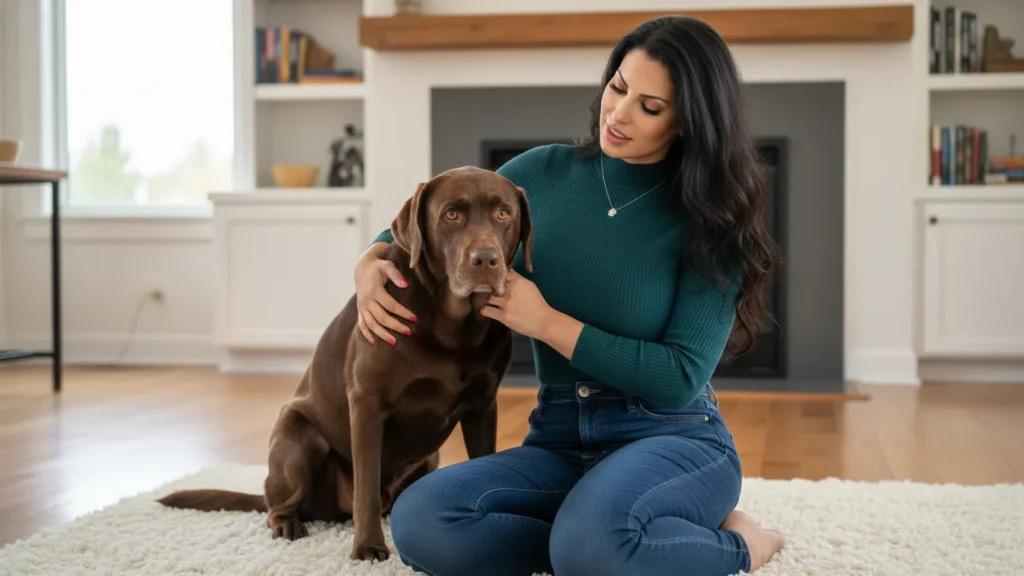
The Moment That Feels Almost Unexplainable
You haven’t said anything.
Your voice sounds normal.
Your face looks fine.
And yet—
your dog changes.
They come closer.
Sit beside you.
Rest their head on your leg.
Or sometimes, they grow distant.
Alert.
Watchful.
Most people describe it the same way:
“It’s like my dog just knew.”
And they’re right.
Dogs don’t wait for words to understand how you feel.
They sense emotional shifts before language ever enters the picture.
Dogs Don’t Listen the Way Humans Do — They Scan
Humans rely heavily on words.
Dogs rely on patterns.
Instead of listening for meaning, dogs observe:
- Micro-changes in posture
- Muscle tension
- Breathing rhythm
- Movement speed
- Facial stillness
- Energy in the room
To a dog, emotion isn’t spoken.
It’s broadcast.
And it happens long before you realize anything has changed.
The Canine Brain Is Built to Detect Emotional Change
Dogs evolved alongside humans for thousands of years.
Not just to hunt or guard—
but to read us.
Over generations, dogs that could:
- Detect mood shifts
- Anticipate reactions
- Adjust behavior quickly
…were more likely to survive near humans.
This shaped a brain that prioritizes:
“What is this person feeling right now?”
Not later.
Not after explanation.
Now.
Why Emotional Shifts Register Faster Than Words
Words are slow.
Emotion is fast.
Before you speak:
- Your nervous system changes
- Your breathing shifts
- Muscle tone tightens or loosens
- Movement becomes sharper or slower
Dogs pick up on these changes instantly.
In many cases, your dog senses your emotional shift seconds or minutes before you’re consciously aware of it yourself.
The Role of Scent: The Invisible Emotional Signal
One of the most overlooked factors is smell.
Dogs can detect:
- Stress-related chemical changes
- Hormonal shifts linked to emotion
- Subtle differences in body odor
When humans feel:
- Anxiety
- Sadness
- Anger
- Fear
The body releases chemicals dogs can smell—even when we feel “fine.”
This isn’t mystical.
It’s biology.
Why Dogs React Differently to Different Emotions
Dogs don’t respond to all emotions the same way.
They distinguish between:
- Calm sadness
- Tense anxiety
- Suppressed anger
- Quiet grief
Each emotion produces a different pattern of:
- Movement
- Energy
- Scent
- Facial expression
That’s why:
- Some dogs comfort
- Some become alert
- Some withdraw
- Some follow closely
They’re not confused.
They’re responding precisely.
Emotional Contagion: Dogs Feel Before They Think
Dogs experience what scientists call emotional contagion.
This means:
- They don’t analyze your feelings
- They absorb them
Your emotional state influences:
- Their heart rate
- Their stress hormones
- Their behavior choices
This is why a tense household creates tense dogs—
even without arguments or noise.
Real-Life Example: The “Nothing’s Wrong” Evening
You come home after a difficult day.
You don’t talk about it.
You smile.
You move on.
But your dog:
- Follows you room to room
- Refuses to settle
- Keeps watching your face
Nothing happened outwardly.
But emotionally, something shifted.
Your dog noticed.
Why Dogs Sometimes React Before You Feel Anything
Many people say:
“My dog acted weird, and later I realized I was stressed.”
This happens because:
- Emotional shifts start in the nervous system
- Conscious awareness comes later
Dogs read the first signal, not the explanation.
They don’t wait for proof.
Comparison: Human Emotional Awareness vs. Dog Emotional Awareness
| Feature | Humans | Dogs |
|---|---|---|
| Primary signal | Words | Body + scent |
| Emotional detection | Often delayed | Immediate |
| Awareness of micro-signals | Low | Extremely high |
| Reaction speed | Slow | Instant |
| Emotional filtering | Logical | Direct |
Dogs don’t overthink emotion.
They respond.
When Emotional Sensitivity Becomes a Challenge
Highly sensitive dogs may:
- Mirror stress too strongly
- Become anxious around emotional shifts
- Struggle in chaotic environments
This doesn’t mean the dog is “too emotional.”
It means they are highly tuned.
Sensitive dogs need:
- Emotional consistency
- Calm transitions
- Predictable routines
Stability helps regulate their empathy.
Common Mistakes Owners Make
Many owners unintentionally confuse emotionally sensitive dogs.
Common mistakes:
- Saying “I’m fine” while emotionally dysregulated
- Ignoring subtle stress signals
- Over-correcting emotional reactions
- Assuming the dog is misbehaving
- Forgetting dogs respond to energy, not explanations
Dogs don’t understand reassurance that doesn’t match reality.
They trust signals, not statements.
How to Support Dogs Who Sense Emotional Shifts Deeply
1. Regulate Yourself First
Calm presence helps more than words.
Slow movements.
Steady breathing.
Your nervous system teaches theirs.
2. Maintain Predictable Routines
Consistency provides emotional safety:
- Same walk times
- Same rest periods
- Same interaction rhythms
Predictability buffers emotional fluctuation.
3. Avoid Over-Attention During Stress
Excessive reassurance can amplify concern.
Calm neutrality often helps more.
4. Create Emotional “Safe Zones”
Quiet spaces allow dogs to self-regulate.
This builds resilience.
Hidden Tip: Emotional Sensitivity Is a Strength
Dogs who sense emotional shifts early often:
- Form deep bonds
- Excel as therapy or support dogs
- Show exceptional social awareness
Sensitivity isn’t fragility.
It’s emotional intelligence.
Why This Matters Today
Modern life is emotionally complex.
People suppress feelings.
Move fast.
Stay busy.
Dogs, however, live in the emotional present.
Understanding their sensitivity:
- Reduces misunderstanding
- Prevents stress-related behavior issues
- Strengthens the human–dog bond
Dogs don’t judge emotions.
They respond to them.
Key Takeaways
- Dogs sense emotional shifts before words are spoken
- They read body language, scent, and nervous system changes
- Emotional awareness is biologically wired, not learned
- Dogs often react before humans feel conscious stress
- Sensitivity is a strength, not a flaw
- Calm consistency supports emotionally aware dogs
Frequently Asked Questions (FAQ)
1. Can dogs really sense emotions humans hide?
Yes. Dogs detect involuntary physical and chemical changes.
2. Do all dogs have this ability?
Yes, but sensitivity varies by temperament and experience.
3. Can emotional stress in humans affect dog behavior?
Absolutely. Dogs often mirror emotional environments.
4. Why does my dog comfort me when I’m sad?
They respond to emotional cues, not verbal explanations.
5. Can this sensitivity be trained out?
No—and it shouldn’t be. It can be guided and supported.
A Quiet Conclusion
Dogs don’t wait for explanations.
They don’t need confessions.
They sense emotional shifts the moment they begin—
long before words ever form.
That’s not coincidence.
That’s connection.
Disclaimer: This article is for general educational purposes and does not replace individualized veterinary or behavioral guidance.

Dr. Sofia Romano, DVM, is an experienced veterinarian specializing in small-animal medicine and preventive care. She has treated thousands of cases using evidence-based diagnostics and modern clinical practices. Dr. Romano is dedicated to providing science-backed pet-health guidance that helps owners make informed decisions and improve their pets’ quality of life.





Pingback: Why Dogs Seem “Jealous” Of Attention — The Emotional Signal Most Owners Misread