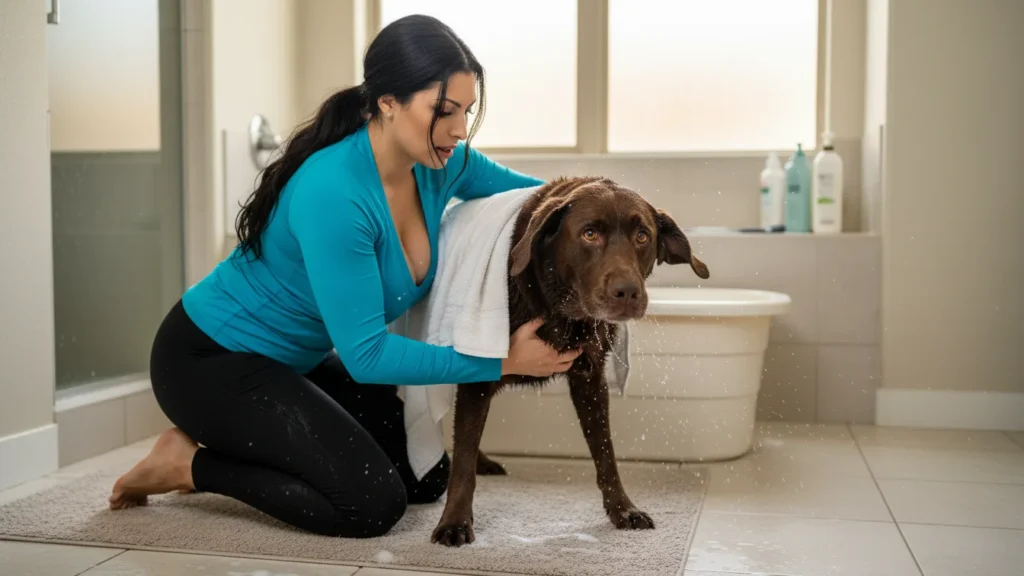
“Why Bath Time Ends With a Full-Body Shake”
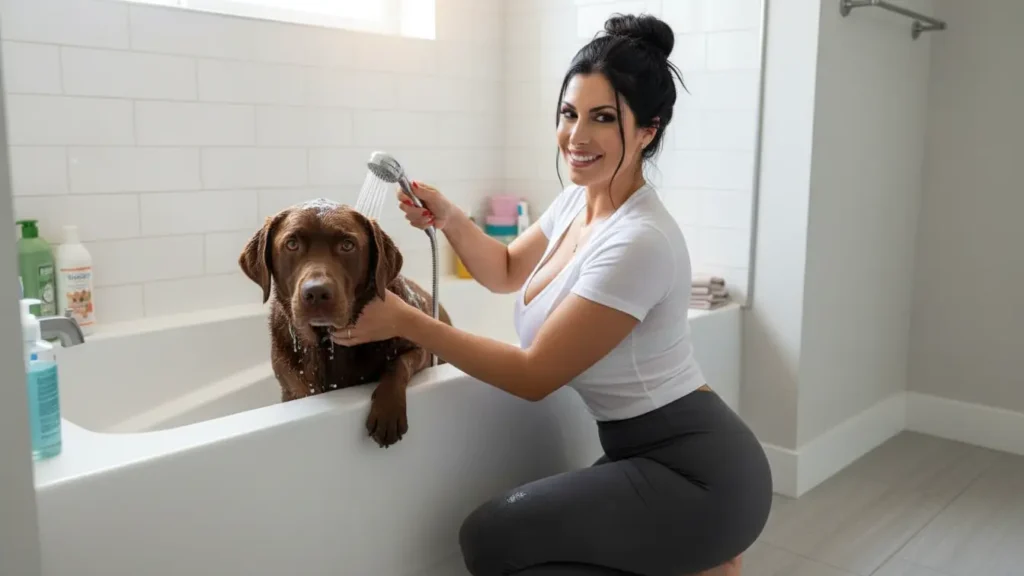
You finish bathing your dog.
The towel comes out.
You step back.
And suddenly—
WHAM.
A full-body shake sends water everywhere.
Sometimes they keep shaking.
Again.
And again.
It can look funny.
It can look dramatic.
And sometimes, it even looks a little worrying.
But here’s the reassuring truth:
👉 Shaking after a bath is one of the most normal, instinct-driven behaviors dogs have.
And it’s doing far more than just drying fur.
The Primary Reason: A Built-In Drying System
Dogs evolved long before towels, dryers, or heated rooms.
Their bodies developed an incredibly efficient mechanism to remove water fast.
When a dog shakes:
- Their skin twists independently from muscle
- Water is expelled outward at high speed
- Up to 70% of surface water can be removed in seconds
This protects dogs from:
- Losing body heat
- Feeling weighed down
- Skin irritation
What looks chaotic is actually biological precision.
Why the Shaking Feels So Urgent
Water on fur creates a problem dogs are wired to solve immediately.
Wet fur:
- Traps cold
- Feels heavy
- Reduces sensory awareness
- Makes movement feel awkward
From your dog’s perspective, staying wet is uncomfortable — even risky.
So the brain sends a clear signal:
“Fix this now.”
Shaking is the fastest solution.
Temperature Plays a Bigger Role Than You Think
Even in warm homes, water evaporating from the skin causes rapid cooling.
Dogs are especially sensitive to this.
They shake more when:
- Bath water is cooler than body temperature
- The room feels drafty
- Air conditioning is on
- Baths happen in winter or rainy weather
That shake is often about regaining thermal comfort, not stress.
Emotional Release After Bath Time
Baths aren’t always relaxing for dogs.
Even calm dogs experience:
- Slippery surfaces
- Unfamiliar handling
- Loss of control
- Strange sounds
- Strong smells
Once the bath ends, shaking becomes a reset button.
It releases:
- Muscle tension
- Mild stress
- Emotional buildup
Think of it like a deep exhale.
Why Some Dogs Shake More Than Others
Not all dogs react the same way.
Factors that increase shaking include:
- Thin or short coats
- Low body fat
- High sensitivity to touch
- Nervous temperament
- Previous negative bath experiences
Smaller dogs often shake longer because they lose heat faster.
The Sensory Overload Factor
Bath time overwhelms the senses.
Dogs experience:
- Loud water sounds
- Echoing bathrooms
- Shampoo scents far stronger than humans perceive
- Hands touching sensitive areas
Once free, the shake helps “reboot” the nervous system.
It’s not panic.
It’s regulation.
Is Shaking After a Bath Ever a Sign of Fear?
Sometimes — but context matters.
Normal shaking:
- Happens immediately after bathing
- Stops within a few minutes
- Occurs alongside normal behavior
- No hiding or avoidance
Stress-related shaking:
- Continues long after drying
- Comes with tucked tail or ears
- Includes avoidance or hiding
- Appears before the bath even starts
The timing tells the story.
Shaking vs. Anxiety: How to Tell the Difference
| Behavior | Normal Shake | Stress Shake |
|---|---|---|
| Timing | Right after bath | Long after bath |
| Duration | Short, bursts | Continuous |
| Body language | Relaxed after | Tense throughout |
| Appetite/play | Normal | Reduced |
| Recovery | Quick | Slow |
Most post-bath shaking is not anxiety.
The Hidden Skin Reason Dogs Shake
Water changes how fur lies on the skin.
This can:
- Trap moisture
- Create itchiness
- Shift natural oils
- Cause mild tingling
Shaking helps:
- Redistribute oils
- Free trapped moisture
- Restore normal sensation
Especially important for dogs with dense or double coats.
Why Dogs Shake Even After Being Towel-Dried
Towels remove surface water — not trapped moisture near the skin.
Dogs know this instinctively.
So even after thorough drying:
- The shake finishes the job
- Remaining droplets are expelled
- Comfort is restored
To your dog, the towel is helpful.
The shake is essential.
Common Owner Mistakes After Bath Time
Many well-meaning actions actually increase discomfort.
Avoid:
- Blocking the shake
- Holding your dog still
- Using loud dryers too close
- Rushing the process
- Bathing too frequently
Let the shake happen.
It’s helping.
How to Make Post-Bath Shaking Easier
1. Control the Environment
- Warm the room
- Turn off fans
- Close windows
2. Use Warm (Not Hot) Water
- Close to body temperature
- Prevents thermal shock
3. Towel First, Then Shake
- Blot gently
- Let the dog finish naturally
4. Keep Calm Energy
- Speak softly
- Avoid excitement or scolding
Your calm helps their body settle faster.
Real-Life Example: Two Dogs, Same Bath
Dog A:
- Shakes once
- Walks away
- Lies down calmly
Dog B:
- Shakes repeatedly
- Paces briefly
- Then relaxes
Both are normal.
Different nervous systems.
Same instinct.
Why This Matters Today
Dogs today:
- Live indoors more
- Experience frequent bathing
- Encounter stronger grooming products
- Are handled more than ever
Understanding normal post-bath behavior prevents:
- Unnecessary worry
- Overcorrection
- Stress escalation
- Misreading your dog’s signals
Knowledge builds trust.
When Shaking Might Need Attention
Rarely, shaking may signal something else if it:
- Occurs without a bath
- Comes with lethargy
- Includes whining or pain
- Persists for hours
- Appears alongside skin redness
In these cases, observation matters.
Key Takeaways
- Shaking after a bath is instinctive and healthy
- It removes water, restores warmth, and releases tension
- Most shaking is not anxiety
- Blocking the shake increases discomfort
- Calm environments reduce excessive shaking
- Timing and body language reveal what’s normal
Frequently Asked Questions
1. Why does my dog shake even after being completely dried?
Because moisture remains near the skin. Shaking removes what towels can’t.
2. Can shaking after a bath mean my dog hates baths?
Not necessarily. It’s often physical comfort, not dislike.
3. Is it bad to stop my dog from shaking?
Yes. It prevents natural drying and stress release.
4. Why do small dogs shake more?
They lose heat faster and feel temperature changes more strongly.
5. Should I use a hair dryer?
Only if your dog is comfortable, at low heat, and from a safe distance.
A Simple Final Thought
That dramatic post-bath shake isn’t chaos.
It’s your dog restoring balance — physically and emotionally.
Let it happen.
It’s one of the clearest signs their body knows exactly what to do.
Disclaimer: This content is for general education and does not replace personalized advice from a veterinary or animal care professional.

Dr. Sofia Romano, DVM, is an experienced veterinarian specializing in small-animal medicine and preventive care. She has treated thousands of cases using evidence-based diagnostics and modern clinical practices. Dr. Romano is dedicated to providing science-backed pet-health guidance that helps owners make informed decisions and improve their pets’ quality of life.
Pingback: Why Dogs Fear Vacuum Cleaners — The Instinctive Threat Their Brain Can’t Ignore
Pingback: Why Dogs Act Strange During Weather Changes — The Hidden Signals Their Bodies Sense Before You Do