The Small Change That Feels Big
You notice it slowly.
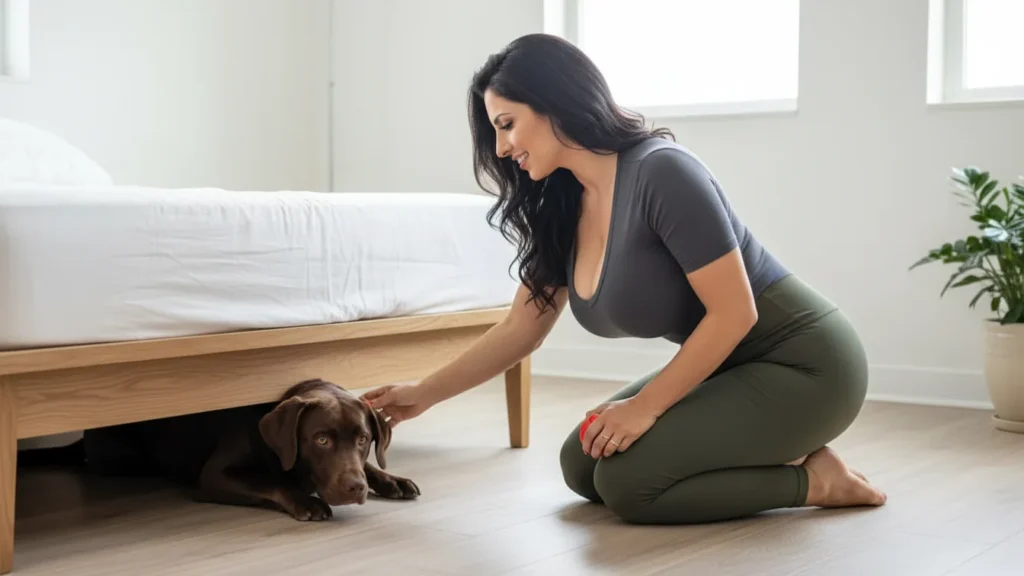
Your dog spends more time under the bed.
Behind the couch.
In a corner of the room you rarely use.
They still eat.
They still walk.
But they’re less visible.
Many owners assume:
“They just want some alone time.”
Sometimes that’s true.
But when hiding becomes frequent or sudden, it’s usually a message—not a preference.
👉 Dogs hide when something doesn’t feel right—emotionally, physically, or environmentally.
First, Let’s Clear a Common Misbelief
Hiding is not bad behavior.
It’s a natural coping strategy.
In the wild, withdrawing:
- Conserves energy
- Avoids conflict
- Reduces risk
Domestic dogs still carry this instinct.
So when a dog hides more than usual, they’re not being distant—they’re self-protecting.
Normal Hiding vs Concerning Hiding
All dogs hide occasionally.
The difference is pattern and change.
Normal hiding:
- Short periods
- Predictable times
- Dog remains responsive
Concerning hiding:
- Appears suddenly
- Happens daily
- Dog avoids interaction
- Pairs with behavior or appetite changes
👉 Change is the clue—not the hiding itself.
The Most Common Reasons Dogs Hide More Than Usual
1. Emotional Stress or Anxiety (Most Common)
Stress pushes dogs to seek quiet, enclosed spaces.
Common triggers include:
- Loud noises (construction, storms)
- Guests or unfamiliar people
- Household tension
- Schedule disruptions
- New pets or babies
Behavior guidance from the American Kennel Club explains that hiding is a classic avoidance behavior used to reduce emotional overload.
Your dog isn’t ignoring you.
They’re trying to feel safe.
2. Fear and Loss of Confidence
A single negative experience can shift behavior.
Examples:
- Being startled
- Being scolded
- Slipping on floors
- Rough handling
- Forced interactions
Dogs remember emotional experiences more than details.
Hiding becomes a way to:
“Make sure that doesn’t happen again.”
3. prolonged stress
Pain changes behavior quietly.
Dogs may hide because:
- Movement hurts
- Interaction feels overwhelming
- They want to rest undisturbed
Common hidden causes:
- Dental pain
- Ear infections
- Joint stiffness
- Abdominal discomfort
- Early illness
Dogs rarely cry out in pain.
They withdraw.
4. Overstimulation or Sensory Overload
Modern homes can be intense for dogs.
Triggers include:
- Bright lights
- Constant noise
- Too much attention
- Children’s activity
- Continuous interaction
Some dogs hide simply to decompress.
This is especially common in:
- Sensitive breeds
- Older dogs
- Rescue dogs
- Puppies learning boundaries
5. Cognitive Changes in Senior Dogs
In older dogs, hiding may be neurological.
Canine Cognitive Dysfunction can cause:
- Confusion
- Disorientation
- Increased anxiety
- Seeking enclosed spaces
Veterinary aging insights aligned with the World Small Animal Veterinary Association note that environmental withdrawal is often an early sign of cognitive change.
This isn’t stubbornness.
It’s the brain seeking comfort.
Hiding vs Resting vs Avoidance (Comparison Table)
| Behavior | What You See | What It Means |
|---|---|---|
| Resting | Relaxed, visible | Normal |
| Alone time | Short withdrawal | Healthy |
| Hiding | Enclosed, hard to reach | Coping |
| Avoidance | Actively retreats | Stress |
| Withdrawal | Isolates consistently | Concerning |
👉 Persistent hiding is a signal—not a mood.
Why This Matters More Than You Think
Hiding is often an early warning sign.
If ignored, it can progress to:
- Chronic anxiety
- Appetite changes
- Reactivity
- Depression-like behavior
- Reduced quality of life
Public health summaries from the Centers for Disease Control and Prevention highlight how prolonged stress affects health across species—impacting immunity, digestion, and behavior.
Early attention prevents escalation.
What You Should Do (Practical, Gentle Steps)
Step 1: Respect the Hiding
Do not drag your dog out.
Forcing interaction:
- Increases stress
- Damages trust
- Makes hiding worse
Step 2: Observe the Pattern
Ask:
- When did hiding start?
- Is it time-specific?
- Is it location-specific?
- What changed recently?
Context reveals cause.
Step 3: Reduce Environmental Pressure
- Lower noise
- Create quiet zones
- Avoid sudden movements
- Maintain routines
Safety encourages re-emergence.
Step 4: Check Physical Comfort
Look for:
- Stiffness
- Head shaking
- Licking
- Sensitivity to touch
- Changes in posture
Pain hides behind silence.
Step 5: Offer Choice, Not Control
Sit nearby.
Speak softly.
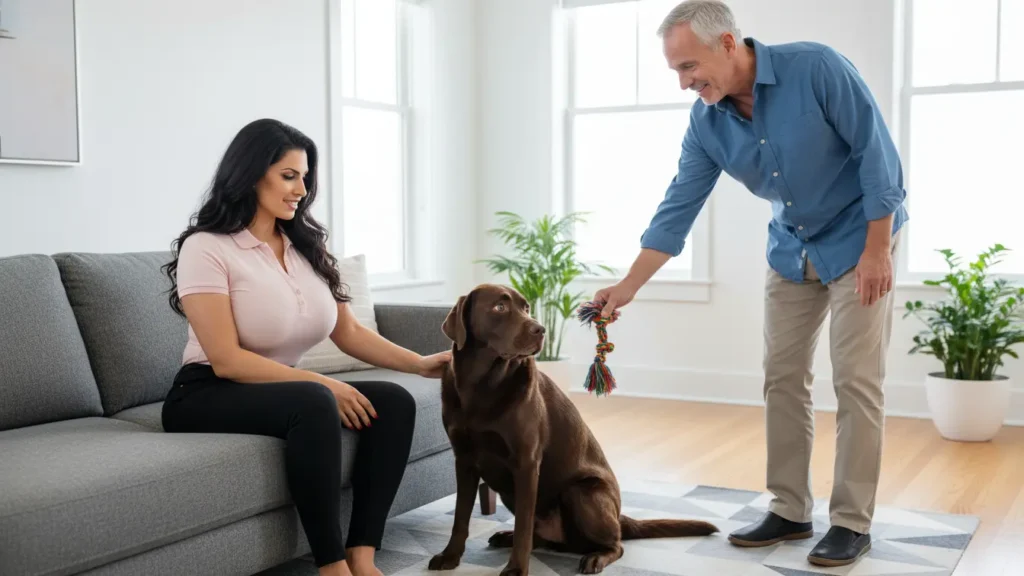
Let your dog come to you.
Trust rebuilds when dogs feel in control of space.
Hidden Tip Most Owners Miss
Dogs hide where they feel protected.
Under beds, behind furniture, in closets—these are places with:
- Reduced stimulation
- Physical boundaries
- Predictable surroundings
Creating a designated safe space can reduce random hiding and anxiety.
Common Mistakes Owners Make
- ❌ Forcing the dog out “to socialize”
- ❌ Taking hiding personally
- ❌ Ignoring subtle changes
- ❌ Increasing stimulation
- ❌ Waiting too long to address pain
Calm presence helps more than intervention.
Real-Life Example
A normally social dog began hiding every evening.
No appetite loss.
No aggression.
The cause?
- Evening noise from nearby construction
Solution:
- Quiet room
- Soft background noise
- Predictable routine
Hiding stopped within weeks—no training required.
When You Should Be Concerned
Seek professional advice if hiding:
- Appears suddenly
- Lasts more than a week
- Comes with appetite loss
- Includes trembling or vocalizing
- Is paired with pain or confusion
Behavior change + persistence deserves attention.
FAQ: Dogs Hiding More Than Usual
1. Is hiding always a sign of anxiety?
Often—but pain and cognitive changes can also cause it.
2. Do some breeds hide more?
Yes. Sensitive and independent breeds are more prone.
3. Should I encourage my dog to come out?
Gently—but never force.
4. Can illness cause hiding?
Yes. It’s a common early sign.
5. Will hiding go away on its own?
Sometimes—but only if the underlying cause resolves.
Key Takeaways
- Hiding is a coping strategy
- Sudden changes are meaningful
- Stress and pain are common causes
- Respecting space rebuilds trust
- Early attention prevents escalation
Final Thoughts
When your dog hides more than usual, they’re not rejecting you.
They’re seeking safety.
By responding with patience instead of pressure, you turn hiding from a mystery into a message—and strengthen the quiet trust that makes dogs feel truly at home.
Sometimes, the kindest thing you can do
is give them the space they’re asking for.
Disclaimer: This article is for general educational purposes only and does not replace professional veterinary or behavioral advice. If hiding persists or worsens, consult a qualified professional.

Dr. Sofia Romano, DVM, is an experienced veterinarian specializing in small-animal medicine and preventive care. She has treated thousands of cases using evidence-based diagnostics and modern clinical practices. Dr. Romano is dedicated to providing science-backed pet-health guidance that helps owners make informed decisions and improve their pets’ quality of life.





Pingback: Why Dogs Lick The Air Repeatedly — The Subtle Signal Your Dog Is Trying To Send
Pingback: Why Dogs Sit Facing Away From You — The Surprisingly Meaningful Behaviour Most Owners Misread
Pingback: Why Dogs Change Sleeping Spots Often — The Quiet Signals Your Dog Is Sending Without Making A Sound
Pingback: Why Dogs React To New Furniture — The Invisible Changes Their Senses Can’t Ignore
Pingback: Why Dogs Choose Specific Resting Spots — The Quiet Signals Behind Where They Feel Safest