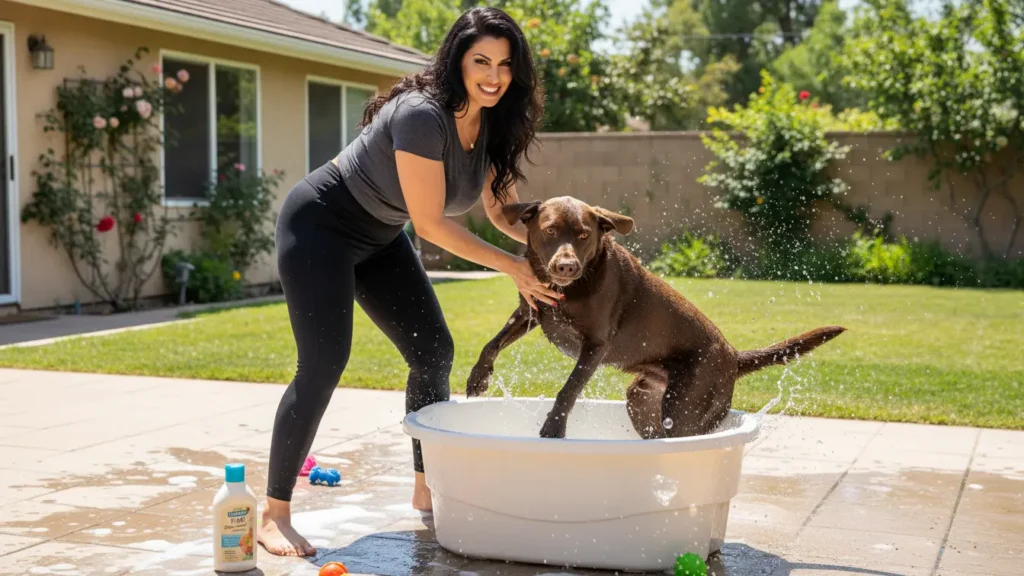
“The Moment the Bathroom Door Closes”
You turn on the tap.
Before the water even touches them, your dog knows.
They freeze.
Their ears pull back.
Their body stiffens.
Some dogs tremble.
Some try to escape.
Some shut down completely.
To owners, it looks irrational.
“They love playing in puddles.”
“They swim at the beach.”
“Why does a bath cause panic?”
Here’s the key insight veterinarians and behaviorists agree on:
👉 Dogs don’t hate bath time because of water.
👉 They hate how bath time makes them feel.
Bath fear is rooted in canine psychology, sensory processing, and learned associations — not defiance or drama.
First: Is It Normal for Dogs to Hate Bath Time?
Yes. Very normal.
In fact, the majority of dogs show at least mild stress during baths.
This reaction exists on a spectrum:
- Mild discomfort
- Avoidance
- Anxiety
- Panic
Understanding why your dog reacts the way they do helps you prevent long-term grooming trauma.
Reason #1: Loss of Control Triggers Survival Instincts
Dogs are control-sensitive animals.
During a bath:
- They’re lifted or confined
- Slippery surfaces limit movement
- Escape routes disappear
- Restraint increases
From a psychological standpoint, this activates a fight-or-flight response.
Even gentle handling can feel threatening when a dog cannot move freely.
Vet insight
A dog that panics in the tub is responding to perceived danger — not misbehaving.
Reason #2: Slippery Surfaces Create Fear of Falling
Dogs rely heavily on ground stability.
Bathtubs and tiled floors:
- Are slippery
- Feel unstable
- Trigger fear of falling
This is especially stressful for:
- Senior dogs
- Puppies
- Dogs with joint pain
- Large breeds
Real-life example
A dog that tolerates water outdoors may panic indoors because the surface beneath them feels unsafe.
Reason #3: Sensory Overload (Smell, Sound, Touch)
Dogs experience the world more intensely than humans.
During bath time, they’re bombarded with:
- Loud running water
- Strong shampoo scents
- Sudden temperature changes
- Unfamiliar tactile sensations
This overwhelms the nervous system.
What feels “refreshing” to us can feel assaulting to them.
Reason #4: Shampoo Smell Disrupts Their Identity
Dogs recognize themselves — and others — through scent.
Bathing removes:
- Natural oils
- Familiar smells
- Their own identity markers
Psychologically, this can feel disorienting.
Some dogs:
- Act withdrawn after baths
- Rub on furniture or grass
- Roll frantically outside
They’re not being silly — they’re trying to restore their scent profile.
Reason #5: Past Negative Experiences Create Fear Memory
Dogs have strong emotional memory.
One bad bath can create lasting fear:
- Water too hot or cold
- Soap in eyes
- Slipping incident
- Owner frustration
- Forced restraint
Even if it happened once, the emotional memory remains.
Important insight
Dogs don’t generalize logically. One bad bath = all baths feel dangerous.
Reason #6: Owner Stress Transfers Directly to the Dog
Dogs read human body language with incredible accuracy.
If you:
- Anticipate a struggle
- Rush the process
- Feel anxious
- Speak sharply
Your dog senses it.
This confirms their fear:
“My human is tense — something bad is coming.”
Anxiety becomes a shared experience.
Reason #7: Physical Pain or Skin Sensitivity
Bathing can worsen discomfort if a dog has:
- Arthritis
- Skin infections
- Ear issues
- Cuts or rashes
Warm water pressure and handling may trigger pain responses.
Hidden sign
If a dog suddenly starts hating baths later in life, pain should be considered.
Why Loving Water ≠ Loving Baths
Many owners say:
“But my dog loves swimming!”
Here’s the psychological difference:
| Water Play | Bath Time |
|---|---|
| Choice | Forced |
| Movement | Restricted |
| Surface | Natural |
| Sounds | Predictable |
| Control | High |
Dogs don’t fear water — they fear loss of agency.
Normal Discomfort vs Serious Bath Anxiety
| Behavior | Usually Normal | Needs Attention |
|---|---|---|
| Mild resistance | ✔ | |
| Trying to step out | ✔ | |
| Trembling | ✔ | |
| Panic scrambling | ✔ | |
| Freezing or shutdown | ✔ | |
| Growling or snapping | ✔ |
Escalating fear should never be ignored.
Common Owner Mistakes That Make It Worse
❌ Forcing the bath quickly
❌ Yelling or restraining harder
❌ Using strong fragrances
❌ Bathing too frequently
❌ Ignoring stress signals
These teach dogs that baths are dangerous events.
How to Make Bath Time Psychologically Safer (Actionable Steps)
Step 1: Change the Environment
- Use non-slip mats
- Lower water pressure
- Warm the room
- Close doors for calm
Stability reduces fear.
Step 2: Introduce Water Gradually
- Start with paws
- Use cups instead of sprayers
- Keep water level low
Slow exposure calms the nervous system.
Step 3: Use Calm, Predictable Handling
- Avoid sudden movements
- Speak softly
- Maintain gentle contact
Predictability builds trust.
Step 4: Choose Mild, Unscented Products
- Vet-approved shampoos
- No strong perfumes
- Avoid eyes and ears
Less sensory overload = less fear.
Step 5: End on a Positive Note
- Praise calm behavior
- Offer a favorite treat
- Allow post-bath freedom
Memory matters most at the end.
When Professional Help Is a Good Idea
Consider help if:
- Your dog panics intensely
- Aggression appears
- Fear worsens with time
- Pain is suspected
Professional groomers and vets are trained to handle fear safely — this is not failure.
Why This Matters Today
Bath fear doesn’t stay limited to baths.
Unchecked stress can spill into:
- Grooming avoidance
- Vet visit anxiety
- Handling aggression
- Long-term behavioral issues
Addressing bath anxiety early protects:
- Physical health
- Emotional wellbeing
- Your relationship
Key Takeaways
- Dogs hate baths due to psychology, not stubbornness
- Loss of control and sensory overload are major triggers
- Past experiences shape long-term fear
- Force worsens anxiety
- Gentle, predictable handling changes everything
Frequently Asked Questions
1. How often should dogs be bathed?
Typically every 4–6 weeks unless medically required.
2. Should I bathe my dog if they hate it?
Yes, but with gradual desensitization and calm handling.
3. Are some breeds more bath-averse?
Yes. Sensitive, anxious, and senior dogs are more prone.
4. Can treats help during baths?
Yes — but only when paired with calm, slow exposure.
5. When should I stop and seek help?
If fear escalates into panic, aggression, or shutdown.
Conclusion: Fear Isn’t Disobedience — It’s Communication
When your dog hates bath time, they’re not rejecting care.
They’re responding to:
- Fear
- Sensory overload
- Loss of control
Listening to that message — and changing how baths feel — transforms the experience.
Baths don’t have to be battles.
With patience, understanding, and psychology-informed care, they can become just another calm routine.
And your dog will trust you more for it.
Disclaimer: This article is for educational purposes only and does not replace professional veterinary or behavioral advice. If your dog shows extreme fear or pain, consult a qualified professional.

Dr. Sofia Romano, DVM, is an experienced veterinarian specializing in small-animal medicine and preventive care. She has treated thousands of cases using evidence-based diagnostics and modern clinical practices. Dr. Romano is dedicated to providing science-backed pet-health guidance that helps owners make informed decisions and improve their pets’ quality of life.

Pingback: How To Socialize A Fearful Dog Without Breaking Their Trust — What Actually Works