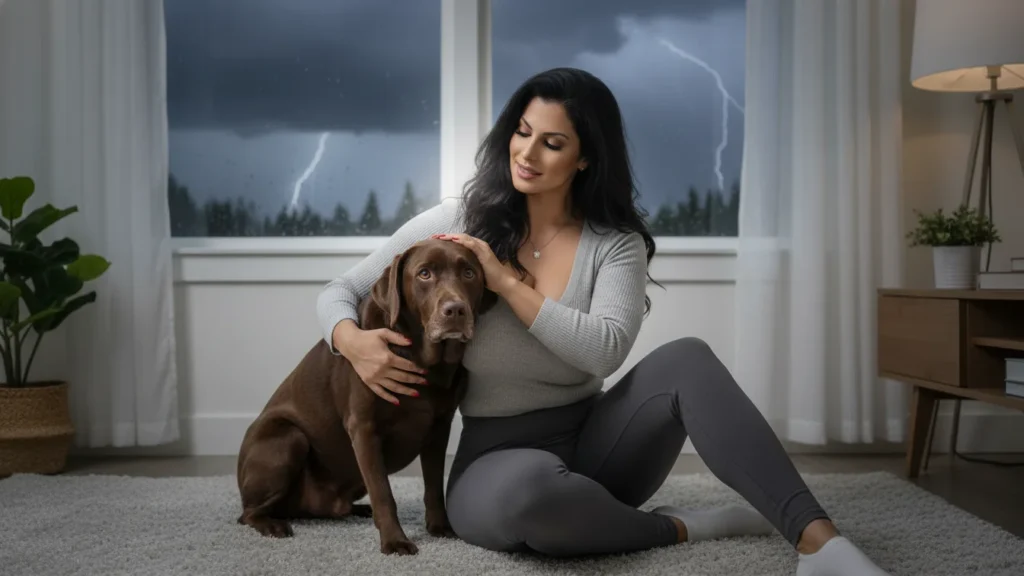
The Moment That Catches Owners Completely Off Guard
Your dog has always been confident.
Thunder never bothered them.
Vacuum cleaners were ignored.
Guests came and went without drama.
Then one day, something changes.
They panic during a normal walk.
They tremble at a sound they’ve heard for years.
They refuse to enter a familiar room.
Nothing obvious happened.
For many owners, this shift feels sudden—and frightening.
But here’s the truth most people aren’t told:
Sudden phobias in aging dogs are usually not about weakness or “bad behavior.” They’re about how the brain and body change with time.
Understanding this replaces fear with clarity—and helps you respond in a way that truly supports your dog.
Aging Changes How Dogs Interpret the World
Dogs don’t just get older physically.
They age neurologically.
As dogs mature, subtle changes occur in how their brains filter information. Stimuli that were once neutral—sounds, shadows, movements—can suddenly feel intense or unpredictable.
This isn’t imagination.
It’s the result of reduced sensory processing efficiency, meaning the brain struggles to separate harmless signals from potential threats.
For your dog, the world hasn’t changed.
Their interpretation of it has.
Sensory Decline Makes Everyday Life Feel Unstable
Hearing and vision decline gradually in most senior dogs.
The problem isn’t just that dogs hear or see less—it’s that what they perceive becomes inconsistent.
- Sounds appear suddenly, without warning
- Shadows seem to move unpredictably
- Depth perception weakens
- Familiar spaces feel unfamiliar
Imagine living in a world where cues you rely on no longer arrive in the right order.
That unpredictability creates fear—even without a traumatic event.
Pain Is One of the Most Overlooked Fear Triggers
Chronic pain quietly reshapes behavior.
Arthritis, dental pain, spinal discomfort, or joint stiffness don’t always cause obvious limping—but they do increase sensitivity.
A dog in pain becomes more vigilant.
Why?
Because their brain associates sudden movement or sound with the risk of discomfort.
This is why an older dog may suddenly fear:
- Being touched
- Walking on slippery floors
- Loud or sharp noises
- Stairs or doorways
The fear isn’t of the object—it’s of what might hurt next.
Emotional Memory Becomes Stronger With Age
As dogs age, emotional memory tends to dominate over rational filtering.
This means negative associations stick more firmly.
A single uncomfortable experience—like slipping, falling, or being startled—can form a lasting fear response, even if the event seemed minor to you.
Older brains are less flexible.
Once fear pathways form, they’re harder to override.
That’s why senior dogs can develop intense phobias seemingly “out of nowhere.”
Canine Cognitive Changes Play a Role
Some aging dogs experience canine cognitive dysfunction, a condition similar to early-stage dementia in humans.
One of its earliest signs isn’t memory loss—it’s increased anxiety and fear.
Dogs may:
- React fearfully to familiar environments
- Panic when routines change slightly
- Show heightened startle responses
- Become clingy or withdrawn
These behaviors aren’t defiance.
They’re confusion layered with fear.
Common Phobias That Appear With Age
Owners often report new fears involving:
- Loud or sudden noises
- Household appliances
- Night-time darkness
- Being alone briefly
- New flooring textures
- Car rides
- Rain or wind sounds
The pattern is important:
These are sensory-rich experiences.
As processing ability declines, complexity becomes threatening.
Sudden Phobia vs Normal Caution: How to Tell the Difference
| Behavior Change | Often Normal Aging | Needs Attention |
|---|---|---|
| Mild hesitation | ✅ | |
| Avoiding slippery floors | ✅ | |
| Increased startle response | ✅ | |
| Intense panic episodes | ⚠️ | |
| Freezing or shaking daily | ⚠️ | |
| Aggression linked to fear | ⚠️ | |
| Rapid personality shift | ⚠️ |
The key factors are intensity, frequency, and impact on daily life.
Why This Matters Today
Dogs are living longer than ever.
Longer life means more time for subtle neurological and emotional changes to appear.
When owners mistake fear for stubbornness—or punish anxiety—they unintentionally worsen the problem.
Understanding age-related phobias isn’t just compassionate.
It preserves trust, safety, and quality of life during a dog’s most vulnerable years.
Mistakes That Make Age-Related Phobias Worse
Many owners unintentionally escalate fear by:
- Forcing exposure too quickly
- Punishing fearful reactions
- Over-reassuring with anxious energy
- Ignoring early warning signs
- Changing routines abruptly
Fear isn’t corrected by pressure.
It’s softened by predictability.
What Actually Helps an Aging Dog With New Fears
Support doesn’t need to be dramatic.
Small changes work best.
Try:
- Keeping routines consistent
- Improving lighting in key areas
- Using rugs for traction
- Reducing sudden noise exposure
- Introducing changes gradually
- Staying emotionally calm during fear episodes
Your dog reads your nervous system before anything else.
A Real-Life Example Owners Often Recognize
A 9-year-old Labrador suddenly refuses evening walks.
Nothing changed in the neighborhood.
But the dog’s eyesight declined slightly. Shadows now stretch longer at dusk. Sounds echo differently.
The fear isn’t the walk.
It’s the uncertainty.
Once walks shift to daylight and routines stabilize, the fear fades.
The solution wasn’t correction—it was understanding.
Hidden Tip Most Owners Miss
Predictability lowers fear faster than reassurance.
Same routes.
Same timing.
Same cues.
When the brain knows what’s coming next, fear loses power.
Key Takeaways
- Sudden phobias in older dogs are common and explainable
- Sensory decline and pain play major roles
- Emotional memory strengthens with age
- Fear is often about unpredictability, not trauma
- Calm, consistent responses make the biggest difference
FAQs
1. Is it normal for senior dogs to suddenly become fearful?
Yes. Aging affects how dogs process sensory information and emotional cues.
2. Can pain cause new phobias in dogs?
Absolutely. Pain increases vigilance and fear sensitivity.
3. Should I force my dog to face their fears?
No. Gradual exposure with safety works better than force.
4. Do all aging dogs develop phobias?
No—but many develop heightened caution or sensitivity.
5. Can these fears improve?
Yes. With routine, support, and patience, many dogs regain confidence.
A Calm Perspective to End On
Your dog hasn’t suddenly become fragile.
They’ve become aware in a different way.
When you respond with understanding instead of frustration, you don’t just reduce fear—you strengthen the bond that matters most during their later years.
Disclaimer: This article is for general educational purposes only and is not a substitute for professional advice regarding individual pets.

Dr. Sofia Romano, DVM, is an experienced veterinarian specializing in small-animal medicine and preventive care. She has treated thousands of cases using evidence-based diagnostics and modern clinical practices. Dr. Romano is dedicated to providing science-backed pet-health guidance that helps owners make informed decisions and improve their pets’ quality of life.





Pingback: Why Female Dogs Act Differently After Heat Cycles — The Hormonal, Emotional, And Brain Changes Most Owners Never Expect
Pingback: Why Older Dogs Vocalize More Than Before — The Quiet Reasons Behind The Sudden Noise