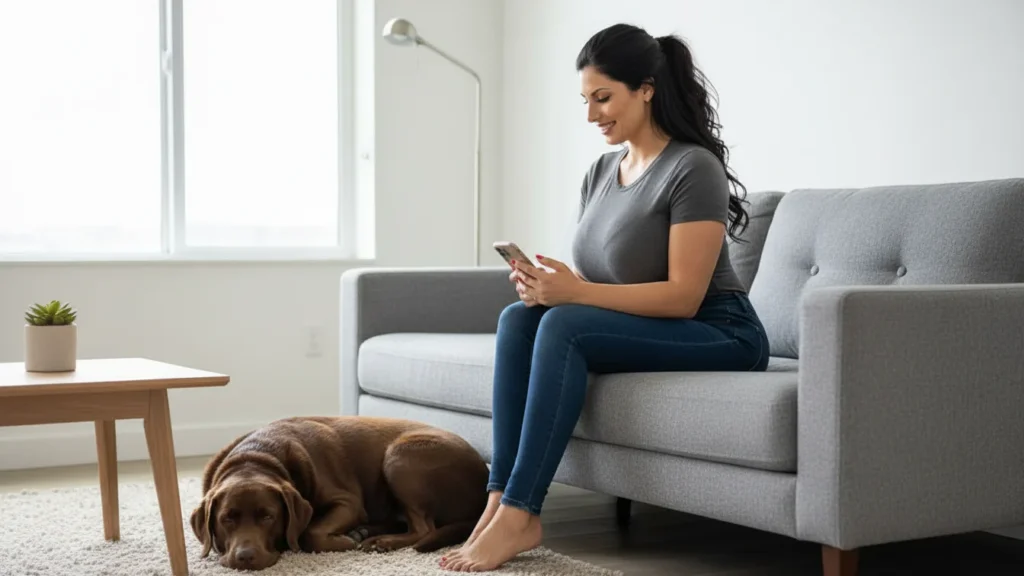
The Small Habit Most Dog Owners Notice—but Rarely Question
Your dog has options.
A soft bed.
The couch.
Multiple rooms.
Yet they keep choosing that spot.
The same corner.
The doorway.
Beside your chair.
Near the window.
Sometimes they change spots throughout the day.
Sometimes they don’t.
Most owners assume it’s about comfort alone.
But where dogs choose to rest is one of the clearest windows into how safe, secure, and regulated they feel inside your home.
And it’s never random.
Dogs Don’t “Rest” the Way Humans Do
When humans rest, we switch off.
When dogs rest, they remain aware.
Even while sleeping, dogs:
- Monitor sound
- Track movement
- Sense scent changes
- Adjust body position quickly
This means their resting spot isn’t chosen for softness alone.
It’s chosen for information, safety, and control.
Resting spots are strategic.
The Core Reason Dogs Choose Specific Resting Spots
At the deepest level, dogs choose resting spots that allow them to feel:
- Safe
- Aware
- Connected
- Comfortable
- Prepared
Each spot meets one or more of these needs.
The balance changes depending on time of day, emotional state, and environment.
The Most Common Types of Dog Resting Spots—and Why Dogs Choose Them
1. Near Their Human
Many dogs rest:
- Beside your chair
- At your feet
- Outside the bathroom door
- Near your bed
This isn’t clinginess.
This is social anchoring.
Your presence provides:
- Emotional regulation
- Predictability
- Security cues
Dogs are social sleepers.
Resting near you tells their nervous system:
“The group is intact. I can relax.”
2. Doorways and Hallways
This one puzzles many owners.
Doorways are not comfortable—but they’re popular.
Why?
Because doorways offer:
- Visual access to multiple spaces
- Early awareness of movement
- Control over entry and exit
Dogs resting here aren’t guarding.
They’re monitoring flow.
This is especially common in:
- Confident dogs
- Alert breeds
- Dogs in multi-person households
3. Near Windows or Elevated Spots
Windows provide:
- Light
- Movement
- Visual stimulation
- Environmental awareness
Dogs resting near windows aren’t being nosy.
They’re collecting information.
Elevated spots add:
- Security
- Better sightlines
- Reduced vulnerability
This behavior links directly to ancestral survival patterns.
4. Cool or Warm Surfaces
Temperature matters more to dogs than softness.
Dogs may choose:
- Tile floors in summer
- Sunlit patches in winter
- Cool corners when overstimulated
This isn’t preference—it’s body regulation.
Temperature directly affects nervous system calmness.
5. Enclosed or Corner Spaces
Some dogs prefer:
- Corners
- Under tables
- Beside furniture
- Against walls
These spaces provide:
- Reduced exposure
- Predictable boundaries
- Fewer approach angles
This is common in:
- Sensitive dogs
- Puppies
- Dogs in busy households
- Dogs needing decompression
Why Dogs Rotate Resting Spots During the Day
Many dogs don’t have one favorite spot—they have zones.
Morning spot.
Afternoon spot.
Evening spot.
This rotation aligns with:
- Light changes
- Household activity
- Temperature shifts
- Energy levels
Movement between spots is healthy.
It shows your dog is adjusting to environment—not unsettled.
Resting Spots Reflect Emotional State
Where your dog rests often changes when emotions change.
You may notice:
- Closer resting during stress
- More isolated resting when overstimulated
- Doorway resting during uncertainty
- Deeper sleep in trusted spots
Dogs choose spots that match how regulated—or dysregulated—they feel.
Resting Spot vs Sleeping Spot — Not the Same Thing
| Behavior | Purpose | What It Indicates |
|---|---|---|
| Light resting | Awareness | Monitoring |
| Deep sleeping | Safety | Trust |
| Doorway resting | Control | Vigilance |
| Near owner | Bonding | Security |
| Isolated corner | Recovery | Overstimulation |
Misinterpreting resting behavior can lead to unnecessary concern.
When a Dog Suddenly Changes Resting Spots
A sudden shift is worth noticing—but not panicking over.
Possible reasons include:
- Temperature change
- New furniture
- Household stress
- Illness or discomfort
- Routine disruption
- Emotional overload
Dogs often adjust location before showing obvious signs.
Resting spot changes are early communication.
Real-Life Example Many Owners Experience
A dog who normally sleeps on the couch suddenly chooses the floor near the bedroom door.
No limping.
No appetite change.
Days later, you realize:
- There was increased household tension
- A schedule change
- Reduced interaction time
The dog adjusted location to feel safer—not because something was “wrong.”
Common Mistakes Owners Make
Well-meaning actions can disrupt healthy resting behavior.
Avoid:
- Constantly moving your dog
- Forcing them onto beds
- Interpreting isolation as rejection
- Removing access to preferred spots
- Overanalyzing every movement
Choice builds security.
How to Support Healthy Resting Behavior
1. Allow Choice
Multiple safe spots reduce anxiety.
2. Avoid Forcing “Comfort”
Dogs define comfort differently than humans.
3. Respect Preferred Locations
If safe, let them use them.
4. Observe Patterns, Not Moments
Look for trends—not single incidents.
5. Adjust Environment Gently
Rugs, beds, or lighting can enhance comfort without control.
Hidden Tip Most Owners Miss
Dogs often choose resting spots that reflect their role in the household.
- Confident dogs monitor space
- Sensitive dogs protect boundaries
- Bonded dogs stay close
- Independent dogs rotate freely
None are wrong.
They’re adaptive.
Why This Matters Today
Modern homes are busy, loud, and stimulating.
Dogs need:
- Control over rest
- Predictable safe zones
- Permission to disengage
Understanding resting spots helps owners:
- Prevent anxiety
- Spot early stress signals
- Support emotional health
- Avoid behavior mislabeling
This is quiet communication—worth listening to.
Key Takeaways
- Dogs choose resting spots based on safety, awareness, and comfort
- Location reflects emotional and physical state
- Doorways and windows serve monitoring needs
- Spot changes often signal environmental shifts
- Choice supports confidence and calm
- Resting behavior is communication, not coincidence
Frequently Asked Questions
1. Is it normal for dogs to sleep in odd places?
Yes. Dogs choose spots based on safety and regulation, not aesthetics.
2. Why does my dog rest near the door?
It allows monitoring of movement and environmental awareness.
3. Should I worry if my dog rests away from me?
Not always. It can indicate independence or need for quiet.
4. Why does my dog move spots often?
Rotation helps regulate temperature, stimulation, and comfort.
5. When should I be concerned?
If resting changes come with pain signs, appetite loss, or distress.
A Calm Closing Thought
Your dog isn’t being picky.
They’re choosing the place where their body and mind feel most balanced.
When you respect those choices, your home becomes more than a place to live—it becomes a place where your dog truly feels safe enough to rest.
And that’s one of the clearest signs of trust a dog can give.
Disclaimer: This article is for general educational purposes and does not replace individualized veterinary or behavioral advice.

Dr. Sofia Romano, DVM, is an experienced veterinarian specializing in small-animal medicine and preventive care. She has treated thousands of cases using evidence-based diagnostics and modern clinical practices. Dr. Romano is dedicated to providing science-backed pet-health guidance that helps owners make informed decisions and improve their pets’ quality of life.