
Your dog scratches.
And scratches.
And scratches some more.
You check their fur.
No fleas.
No flea dirt.
Nothing obvious.
So why won’t the itching stop?
Veterinarians hear this question constantly—and the answer often surprises owners:
Most chronic itching in dogs has nothing to do with fleas.
In fact, by the time a dog is scratching persistently, fleas are usually the least likely cause.
This article breaks down the real, vet-approved reasons dogs scratch even without fleas, how to recognize the patterns, and what you can do before the skin damage becomes serious.
Why Fleas Are Often Blamed (Even When They’re Not the Problem)
Fleas are visible.
They’re familiar.
They’re easy to blame.
But modern flea prevention has dramatically reduced flea-related itching in many regions. Meanwhile, other skin conditions have quietly become the leading causes of chronic scratching.
The mistake isn’t checking for fleas—it’s stopping there.
The #1 Hidden Cause: Skin Allergies (Not Fleas)

The most common reason dogs itch without fleas is allergic skin disease.
Unlike humans, dogs don’t usually sneeze or get watery eyes from allergies.
They itch.
Common allergy triggers include:
- Environmental allergens (pollen, dust mites, mold)
- Food proteins
- Household chemicals
- Fabrics or cleaning products
This condition is often called allergic dermatitis, and it can exist year-round, not just seasonally.
Why Allergic Itching Looks Different From Fleas
Allergy-related itching often targets specific areas.
Watch for scratching or licking of:
- Paws
- Face and ears
- Belly
- Armpits
- Groin
- Base of the tail
Flea itching, by contrast, is usually focused on the lower back and tail area.
Location matters more than intensity.
The “Vet Secret”: Itching Starts Before Skin Looks Bad

Here’s something many owners don’t realize:
Dogs feel irritation long before redness, scabs, or hair loss appear.
Early allergic itching can look like:
- Occasional scratching
- Frequent licking
- Rubbing face on furniture
- Chewing paws at night
By the time visible sores appear, inflammation has often been present for weeks or months.
Dry Skin: A Common but Overlooked Trigger
Dry skin alone can cause intense itching—even in healthy dogs.
Common causes include:
- Over-bathing
- Low humidity
- Harsh shampoos
- Nutritional imbalance
- Aging skin
Dry skin weakens the skin barrier, allowing nerve endings to become hypersensitive.
This itch is often worse:
- At night
- After bathing
- In winter or air-conditioned environments
Yeast Overgrowth (The “Invisible Itch”)

Yeast infections are one of the most underdiagnosed causes of itching.
Yeast thrives in:
- Warm
- Moist
- Inflamed skin
Dogs with yeast overgrowth often show:
- Constant itching
- Greasy or oily coat
- Musty or “corn chip” smell
- Darkened skin
- Thickened skin folds
Fleas are not involved—but the itch can be severe.
Ear Problems That Cause Whole-Body Scratching
Dogs don’t just scratch ears when ears are infected.
They may:
- Scratch neck and shoulders
- Rub head on surfaces
- Shake head subtly
- Scratch seemingly random areas
Why?
Because ear inflammation triggers referred itching, making the entire body feel uncomfortable.
Many flea-free itchy dogs are actually reacting to early ear disease.
Food Sensitivities (Not Always Food Allergies)
True food allergies are less common than people think.
But food sensitivities—where certain ingredients trigger inflammation—are very real.
Common triggers include:
- Chicken
- Beef
- Dairy
- Wheat
- Soy
Food-related itching is often:
- Non-seasonal
- Persistent
- Focused on ears, paws, and face
And it doesn’t improve with flea treatment.
Parasites That Aren’t Fleas
Fleas aren’t the only parasites that cause itching.
Others include:
- Mites (mange)
- Lice
- Cheyletiella (“walking dandruff”)
These parasites can be microscopic and easily missed without veterinary testing.
Assuming “no fleas” means “no parasites” is a common mistake.
Behavioral or Stress-Related Itching
Not all scratching is skin-based.
Stress, anxiety, and boredom can trigger:
- Excessive licking
- Repetitive scratching
- Self-soothing behaviors
This is especially common in:
- Dogs with separation anxiety
- Dogs with limited enrichment
- Dogs experiencing routine changes
Stress itching often worsens at night or when the dog is alone.
Normal Grooming vs Problematic Scratching
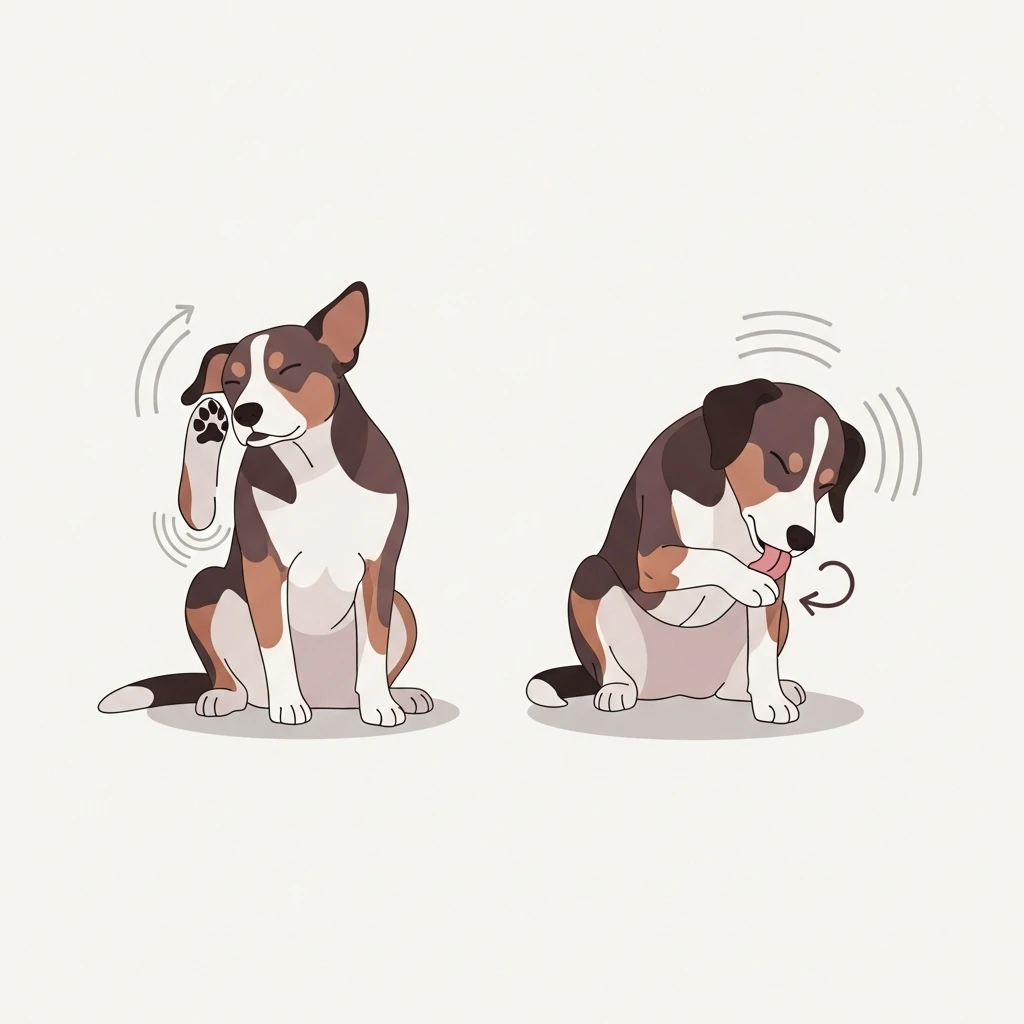
| Behavior | Normal | Concerning |
|---|---|---|
| Occasional scratch | ✔ | |
| Licking after walks | ✔ | |
| Daily scratching | ❌ | |
| Nighttime itching | ❌ | |
| Skin redness | ❌ | |
| Hair loss or sores | ❌ |
Real-Life Vet Example
A 5-year-old Beagle scratched constantly despite being flea-free year-round.
Owner tried:
- Flea shampoos
- Frequent bathing
- New collars
Diagnosis: environmental allergies with secondary yeast infection.
Once treated properly, itching reduced by over 80% within weeks.
Fleas were never the issue.
Common Mistakes Dog Owners Make
Avoid these:
- Repeating flea treatments unnecessarily
- Over-bathing itchy dogs
- Using human anti-itch products
- Ignoring paw licking
- Waiting for skin wounds before seeing a vet
Scratching is an early warning—not a cosmetic issue.
Actionable Steps If Your Dog Scratches Without Fleas
1. Note the Pattern
Track:
- Time of day
- Body areas affected
- Seasonal changes
- Diet changes
2. Protect the Skin Barrier
- Use vet-approved shampoos only
- Avoid frequent bathing
- Dry thoroughly after baths
3. Support Skin Health
- Balanced nutrition
- Fatty acid supplementation (vet-approved)
- Regular ear checks
4. See a Vet Early
Early diagnosis prevents:
- Chronic skin disease
- Infections
- Long-term medication dependence
Why This Matters Today
Dogs today:
- Live indoors
- Face constant allergens
- Have longer lifespans
That means itching has become one of the most common chronic complaints in veterinary medicine.
Treating the wrong cause delays relief—and worsens the condition.
Key Takeaways
- Fleas are not the most common cause of dog itching.
- Allergies are the leading reason flea-free dogs scratch.
- Itching often starts before visible skin damage.
- Location and pattern matter more than intensity.
- Early treatment prevents chronic skin disease.
FAQ: Dogs Scratching Without Fleas
1. Can a dog itch badly without fleas?
Yes. Most chronic itching today is allergy-related.
2. Should I still use flea prevention?
Yes—but don’t assume fleas are the cause.
3. Why does my dog itch more at night?
Inflammation and dryness feel worse at rest.
4. Can diet really affect itching?
Yes. Food sensitivities are a common trigger.
5. When should I see a vet?
If itching lasts more than a few days or worsens.
Conclusion
If your dog is scratching without fleas, they’re not being dramatic.
They’re communicating discomfort the only way they can.
The real danger isn’t the scratching itself—it’s missing the underlying cause.
When that cause is identified early, relief is not only possible—it’s often life-changing.

Dr. Sofia Romano, DVM, is an experienced veterinarian specializing in small-animal medicine and preventive care. She has treated thousands of cases using evidence-based diagnostics and modern clinical practices. Dr. Romano is dedicated to providing science-backed pet-health guidance that helps owners make informed decisions and improve their pets’ quality of life.






Pingback: Why Your Dog Smells Bad Even After a Bath — A Vet Explains the Hidden Reasons
Pingback: The Early Signs Of Skin Allergies In Dogs — The Subtle Clues Most Owners Miss
Pingback: Why Your Dog’s Eyes Won’t Stop Watering — Hidden Causes Most Owners Miss
Pingback: Why Dogs Suddenly Start Digging Indoors — The Hidden Reasons Most Owners Miss
Pingback: Why Dogs Get Yeast Infections Repeatedly — The Hidden Triggers Most Owners Never Fix
Pingback: Why Dogs Keep Getting Ear Infections — The Root Causes Most Treatments Miss
Pingback: Why Dogs Lose Hair In Patches — A Vet Diagnostic Guide To The Causes Owners Miss